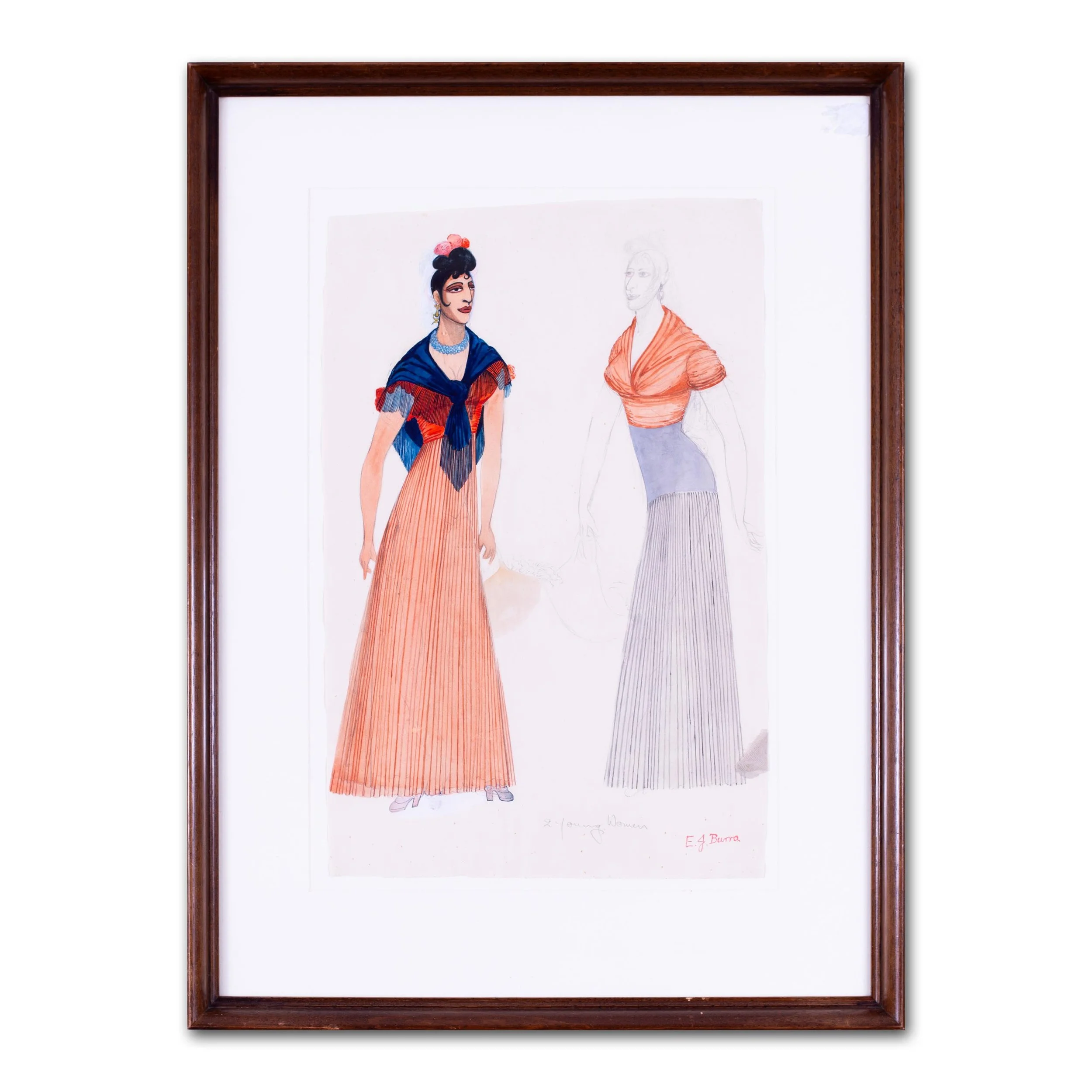
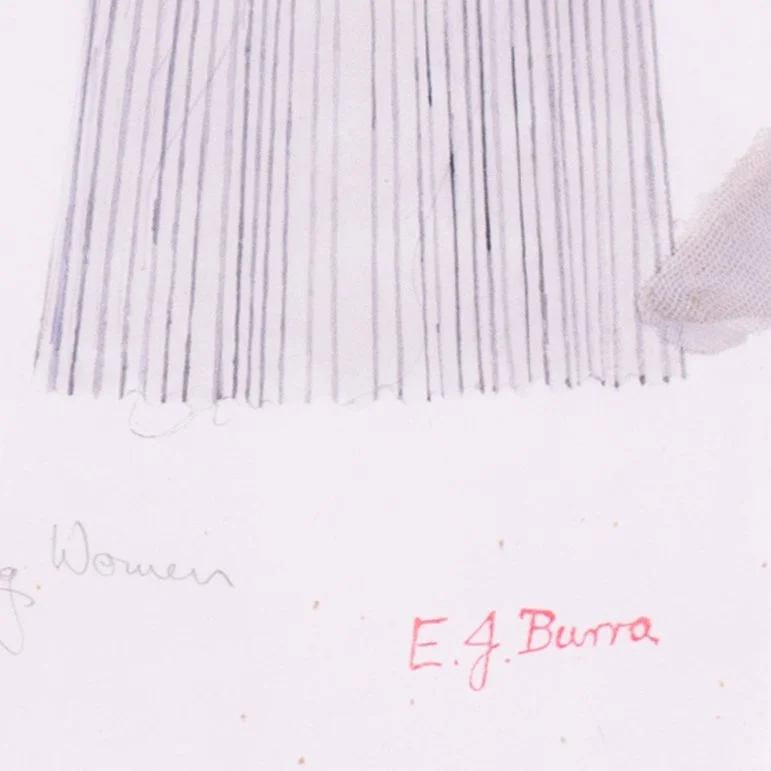
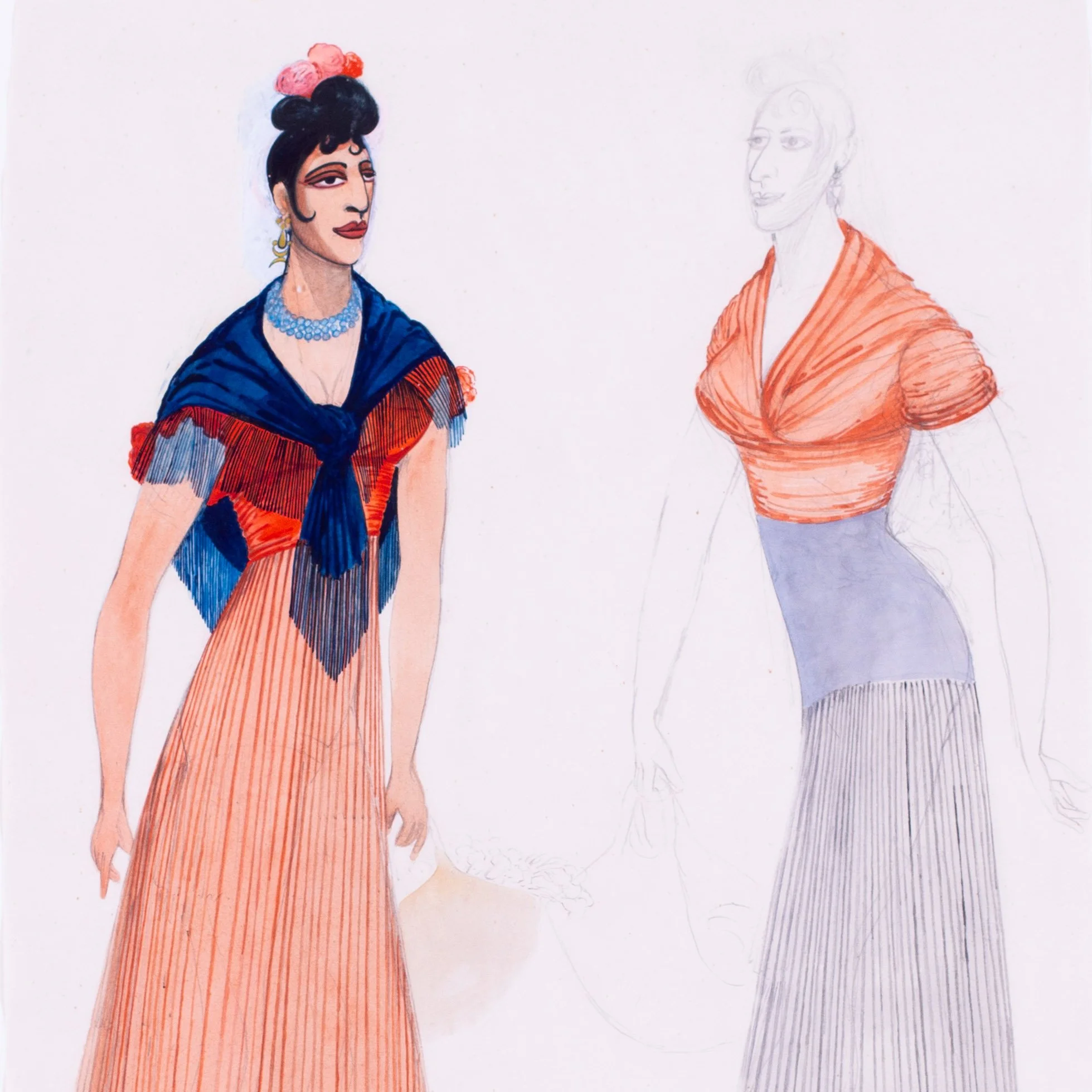
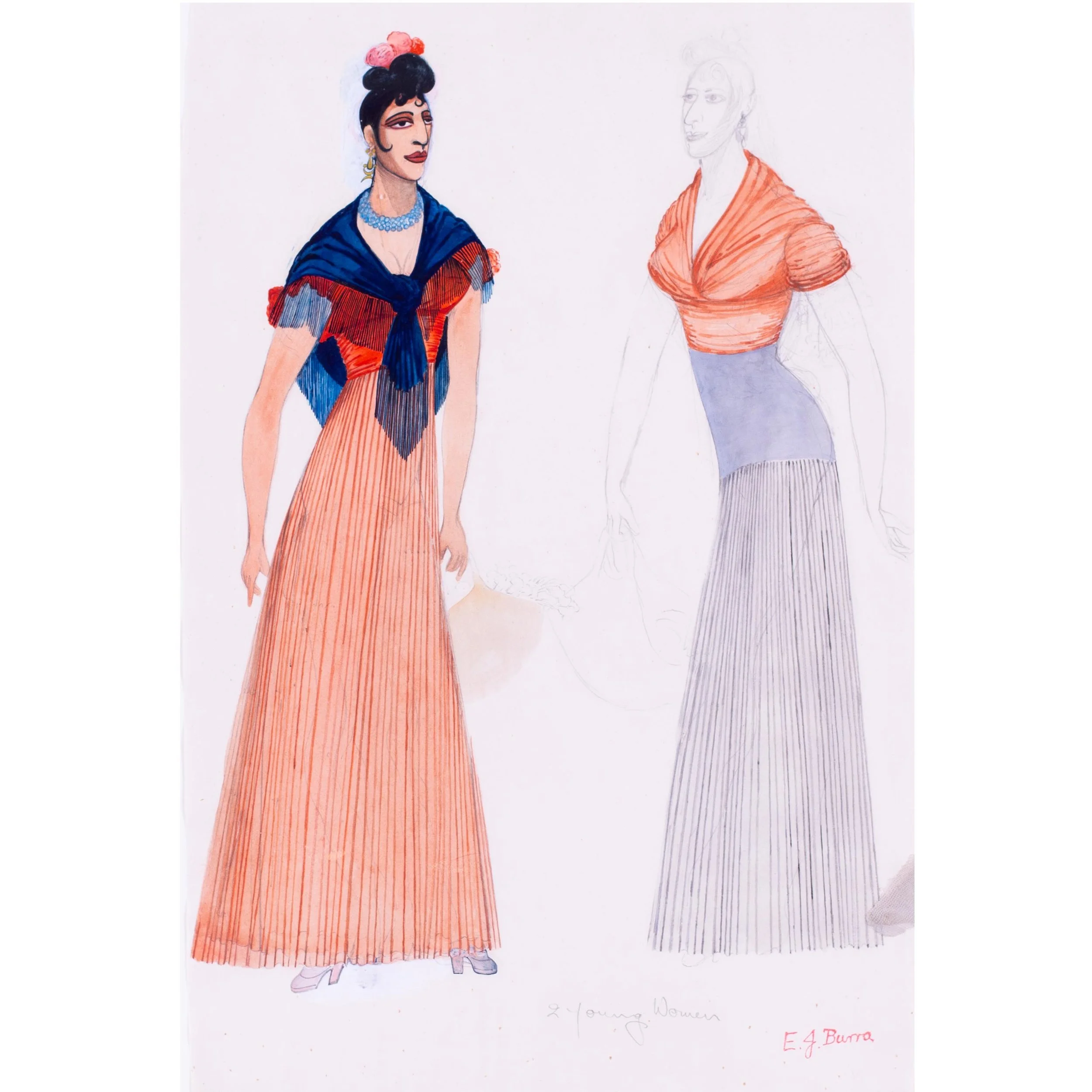
Edward Burra CBE (British, 1905 – 1976)
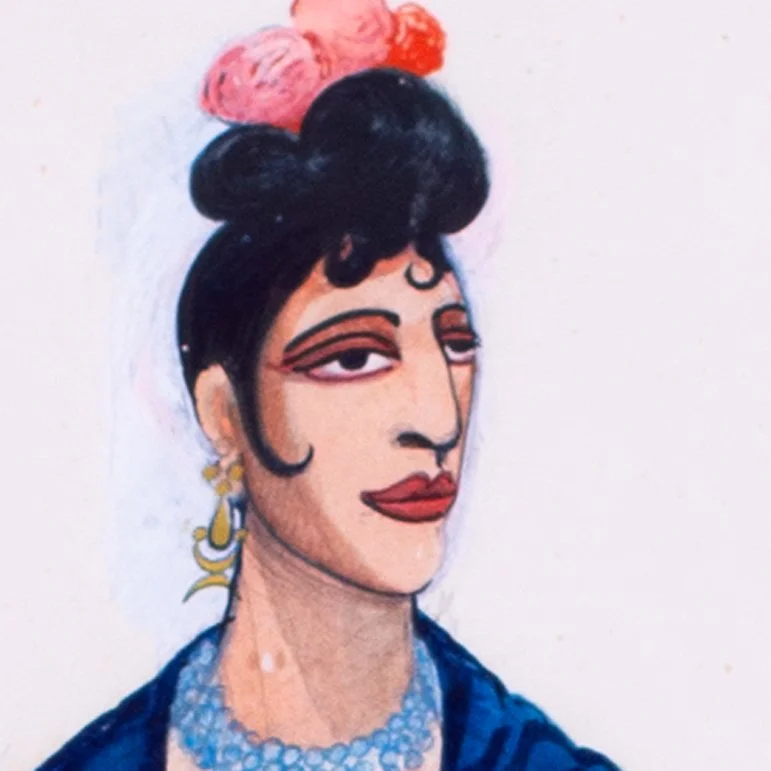
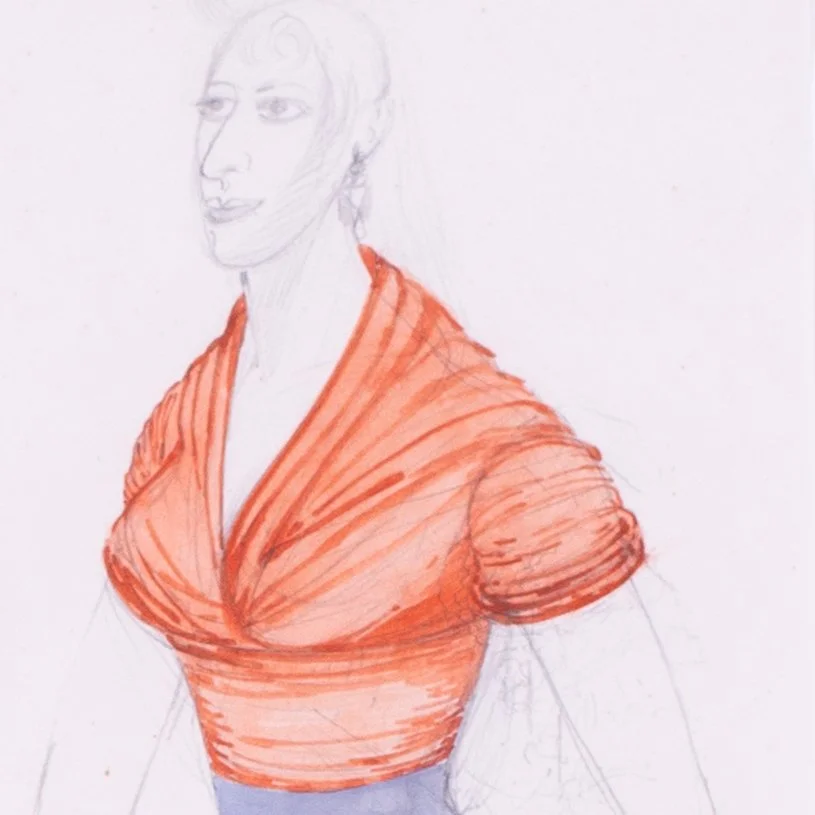
Costume design for clown
pencil, watercolour and body colour on paper
19.3/8 x 9.3/4 in. (49.3 x 24.7 cm.)
Provenance: The collection of Gillian Raffles
Read More »
Edward Burra (1905–1976) was one of the most distinctive figures in British modernism, renowned for his vivid watercolours of urban nightlife, jazz culture and theatrical life. Fiercely independent, he developed a highly personal style of expressive figures, bold colour and dramatic movement, which naturally led to collaborations with leading theatre directors and designers.
Burra was closely connected to the British avant-garde, forming lasting friendships with the Surrealist John Banting and photographer Barbara Ker-Seymer. Paul Nash introduced him to collage and encouraged his involvement with the English Surrealists, while his lifelong artistic dialogue with Nash and Geraldine Swayne placed him firmly within the progressive art world of his time. His importance has been recognised through major exhibitions at the Hayward Gallery, Pallant House and Tate Britain.

 Image 1 of 7
 Image 2 of 7
 Image 3 of 7
 Image 4 of 7
 Image 5 of 7
 Image 6 of 7
 Image 7 of 7