
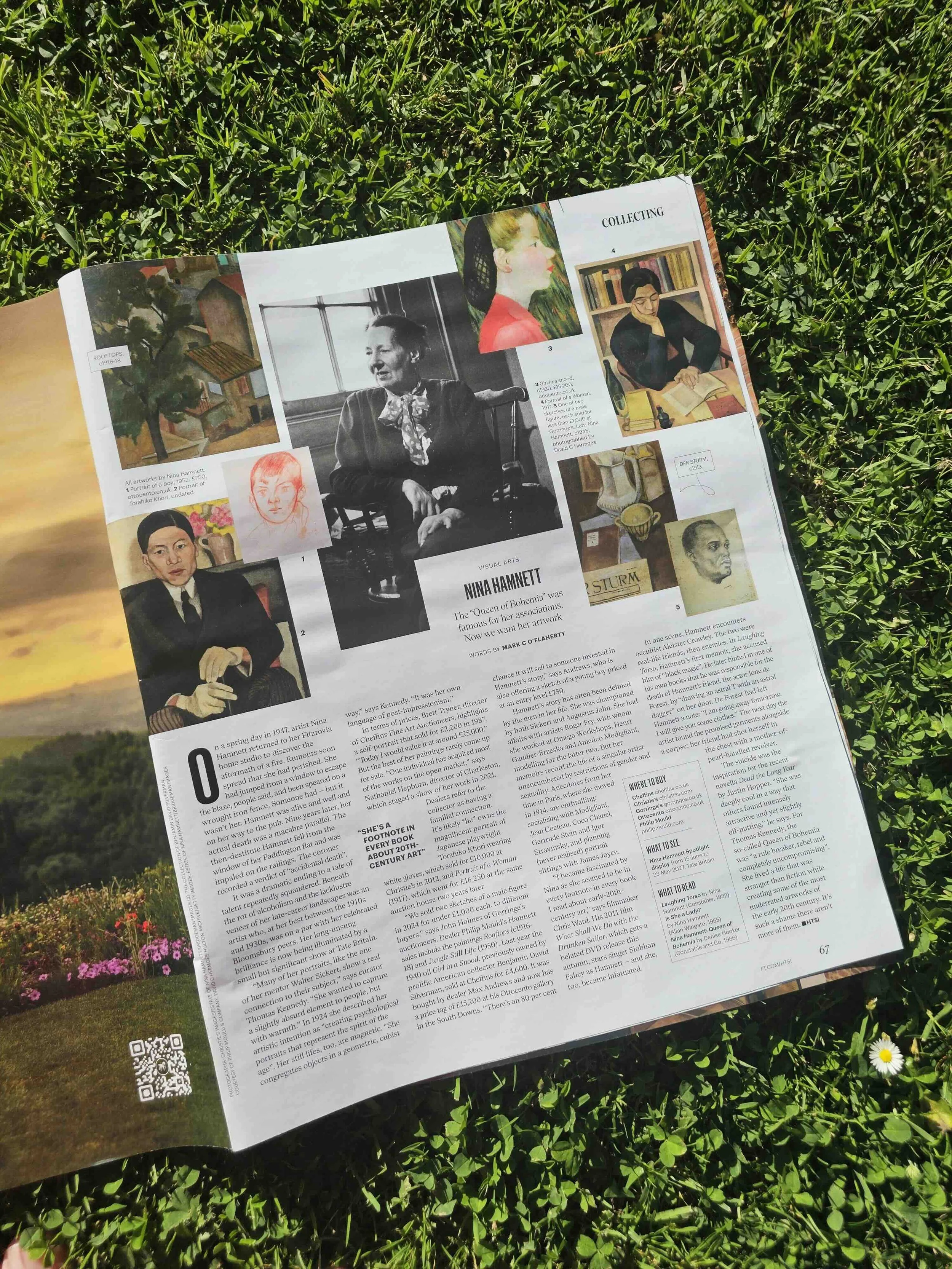
Nina Hamnett Featured in the Financial Times — Two Works Now Sold
We were delighted to see Ottocento featured in this weekend's edition of the Financial TimesHow To Spend It, in an article by Mark C O'Flaherty exploring the renewed appreciation of Nina Hamnett ahead of the forthcoming Tate exhibition dedicated to her life and work. The feature highlights the growing interest in Hamnett's remarkable contribution to British modernism and her enduring place within twentieth-century art history.
Known as the "Queen of Bohemia", Nina Hamnett occupied a unique position within the artistic circles of London and Paris during the early twentieth century. Her paintings, drawings and memoirs captured the energy of a rapidly changing cultural landscape, while her distinctive artistic voice continues to resonate with collectors and institutions alike.
We were particularly pleased that two works from our collection were selected for inclusion in the feature. Their appearance in How To Spend It reflects the increasing recognition of Hamnett's artistic achievement and the growing momentum surrounding her market and scholarship as attention turns towards the forthcoming Tate exhibition.
The response to the article was immediate, and we are delighted to report that both featured works have now been sold. Their acquisition by private collectors underscores the strength of demand for exceptional examples of Hamnett's work and highlights the wider resurgence of interest in overlooked female artists of the twentieth century. Interest in artists such as Hamnett has continued to grow in recent years, supported by major exhibitions and ongoing reassessments of their contribution to modern art.
As anticipation builds for the Tate exhibition, we look forward to following the renewed conversation around Nina Hamnett's legacy and to continuing our work in placing significant examples of her art with discerning collectors.
We extend our thanks to Mark C O'Flaherty and the Financial Times How To Spend It team for featuring these works and helping to shine a light on one of Britain's most fascinating and singular artistic figures.
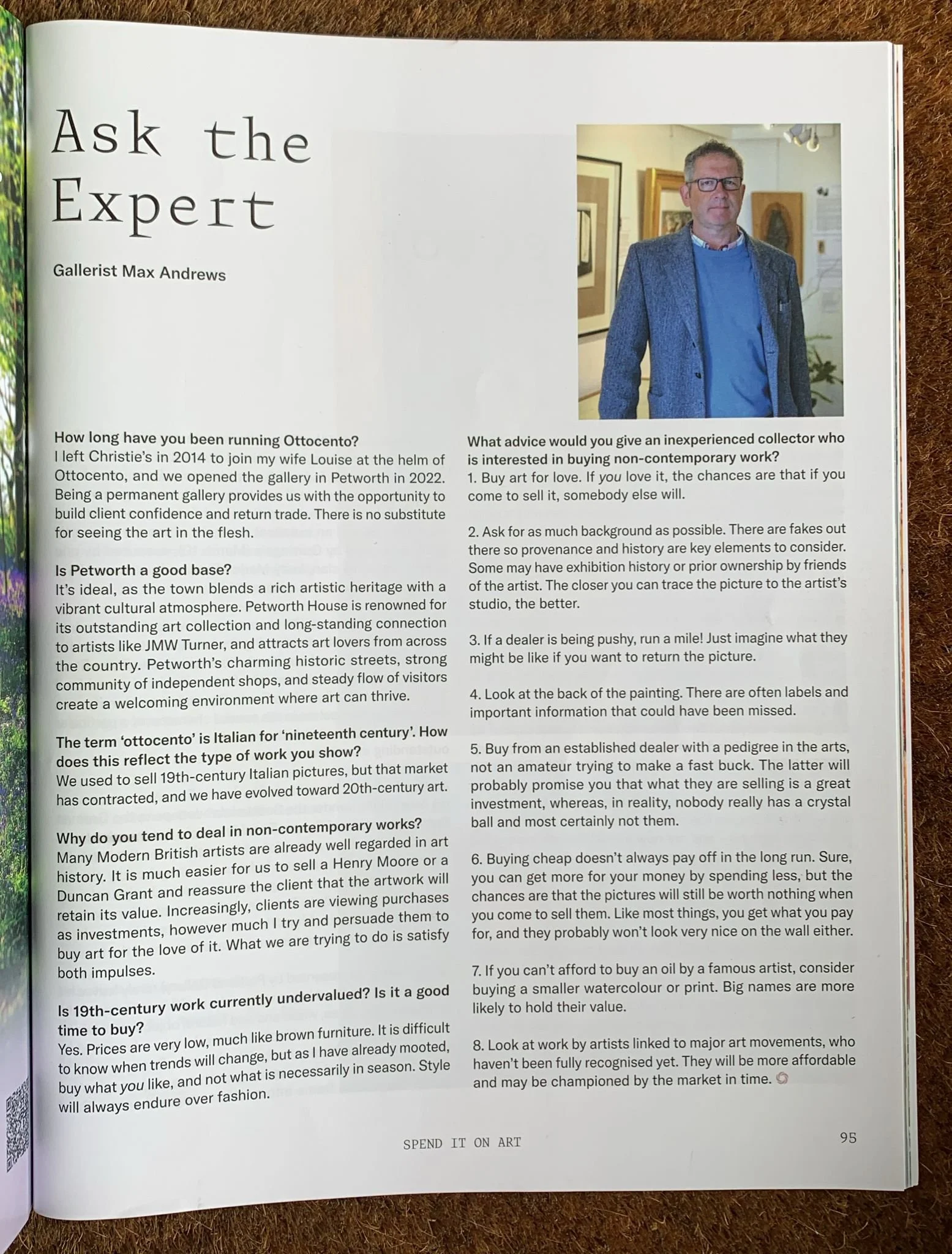
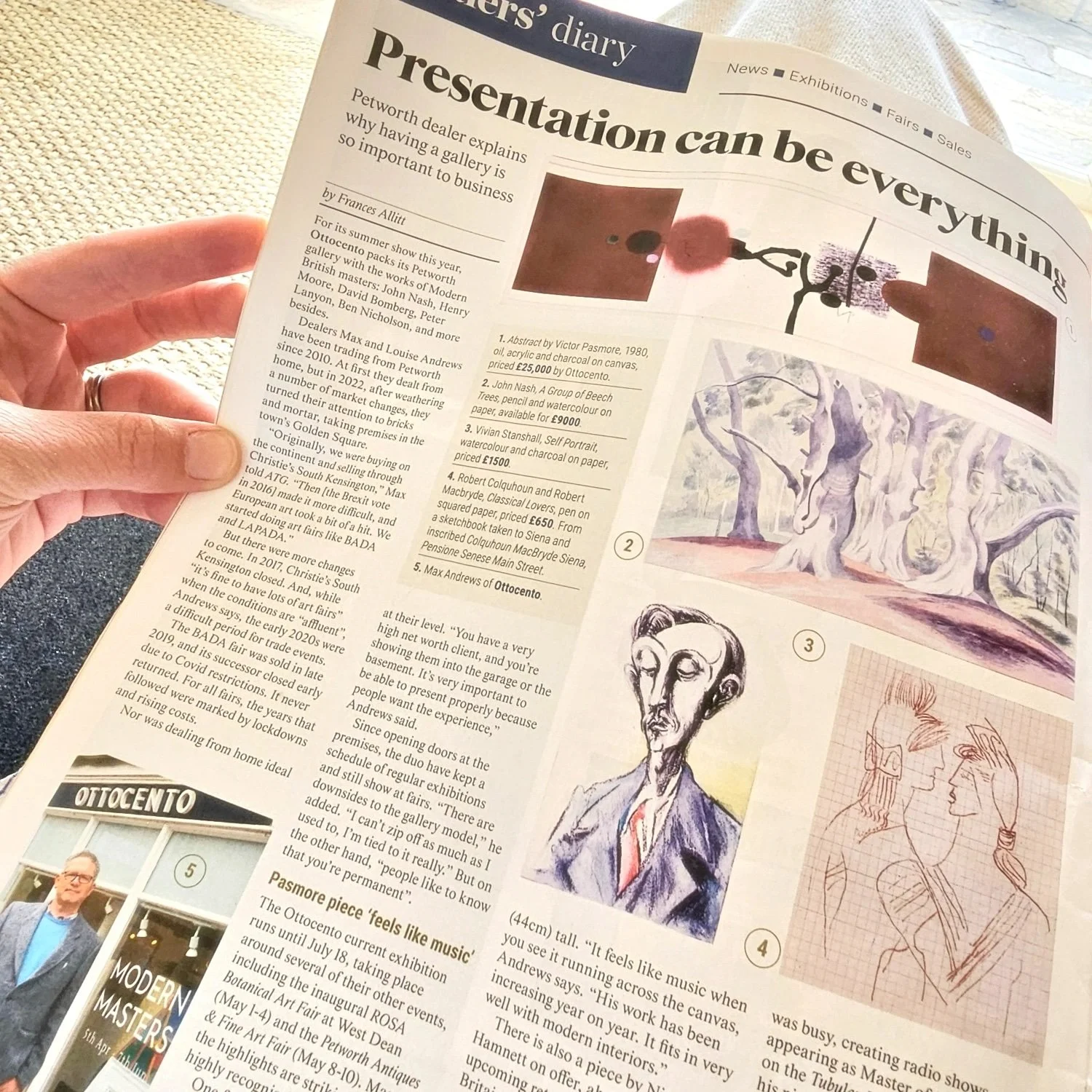
Antiques Trade Gazette article ‘presentation can be everything’ by frances Allitt
Antiques Trade Gazette Features Ottocento and Modern British Masters Exhibition
We were delighted to be featured in a recent article by Frances Allitt in Antiques Trade Gazette, which explored both our current exhibition, Modern British Masters, and the evolution of Ottocento since opening our gallery in Petworth four years ago.
The exhibition brings together an exceptional group of artists who helped shape twentieth-century British art, including John Nash, Henry Moore, David Bomberg, Peter Lanyon and Ben Nicholson, alongside other important figures of the period. The collection reflects our long-standing interest in Modern British art and our commitment to sourcing works of quality, character and historical significance.
The article also reflects on the journey of Ottocento since establishing a permanent gallery in Petworth. When we opened our doors four years ago, the art market was navigating a period of considerable change. Brexit, the Covid-19 pandemic, shifts in collecting habits and wider market fluctuations all presented challenges to dealers and collectors alike.
Despite these uncertainties, having a physical gallery has proved to be an overwhelmingly positive step for our business. While online platforms remain an important part of the art market, the opportunity to meet collectors in person, discuss works directly and present art within a gallery setting has strengthened relationships and allowed us to share our expertise in a more meaningful way.
Petworth's reputation as one of Britain's leading destinations for antiques and fine art has also enabled us to connect with a wide range of collectors, from first-time buyers to established private collections.
We are grateful to Frances Allitt and the team at Antiques Trade Gazette for highlighting our story and the current Modern British Masters exhibition. We look forward to welcoming visitors to the gallery and sharing this remarkable group of works.
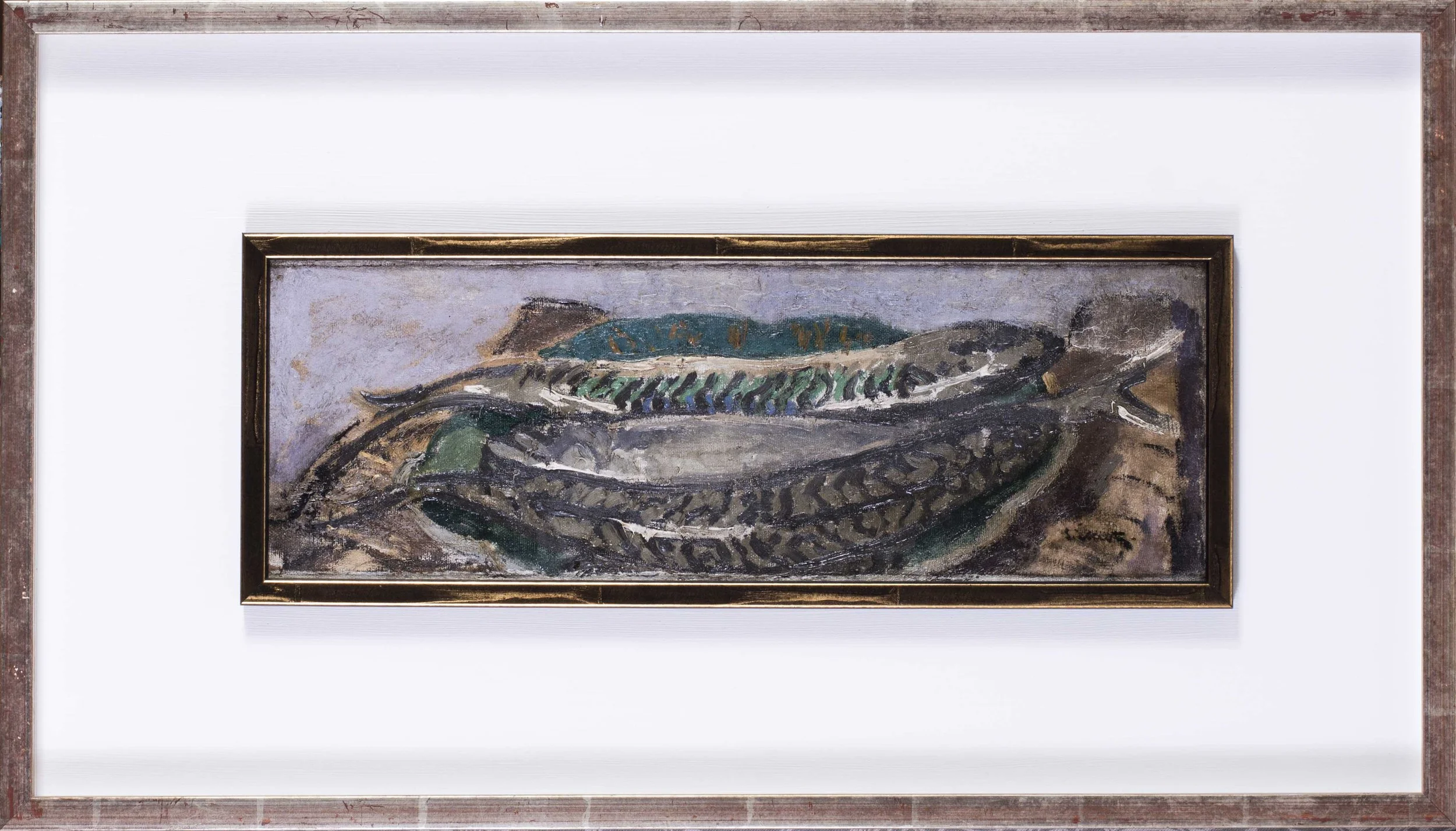
Walter Sickert : WORKING NOTES EXHIBITION at Charleston Lewes
‘Walter Sickert : Working Notes’ exhibition at Charleston Lewes
We are delighted to announce that one of our important works by Walter Sickert is currently on display at Charleston Lewes as part of the exhibition Walter Sickert: Working Notes, running from 2 May to 11 October.
The painting, Maquereaux (Mackerel), is a striking example of Sickert’s enduring fascination with still life and his distinctive approach to pictorial structure and tone. Executed in oil on canvasboard, the work reflects the artist’s ability to transform seemingly ordinary subject matter into compositions of psychological depth and modernity.
Sickert, a central figure in the development of British modern art and a member of the Camden Town Group, played a pivotal role in the transition from Impressionism to early Modernism. His innovative handling of space and his interest in the rhythms of everyday life helped shape a distinctly British response to Post-Impressionism.
The subject of Maquereaux (Mackerel) also reflects a key period in Sickert’s career, during which he worked in Dieppe and became closely engaged with scenes of everyday working life. Works from this period often demonstrate his interest in domestic interiors and still-life subjects, rendered with a deliberately understated but highly sophisticated sense of composition.
The painting has a distinguished provenance, having passed through several notable collections and galleries, including early ownership by Durand-Ruel et Fils in Paris in the early 20th century, and later appearing in important London sales and exhibitions over the course of the 20th century. Its exhibition history reflects sustained scholarly and collector interest in Sickert’s work across both Britain and Europe.
We are honoured to have this work included in Working Notes at Charleston Lewes, an exhibition that offers an important exploration of Sickert’s practice and legacy. The show brings together key works that highlight his experimental approach and his lasting influence on British modern art.
We are grateful to the curators at Charleston Lewes for including this painting in such a thoughtful presentation, and we warmly encourage visitors to see the exhibition while it is on display.