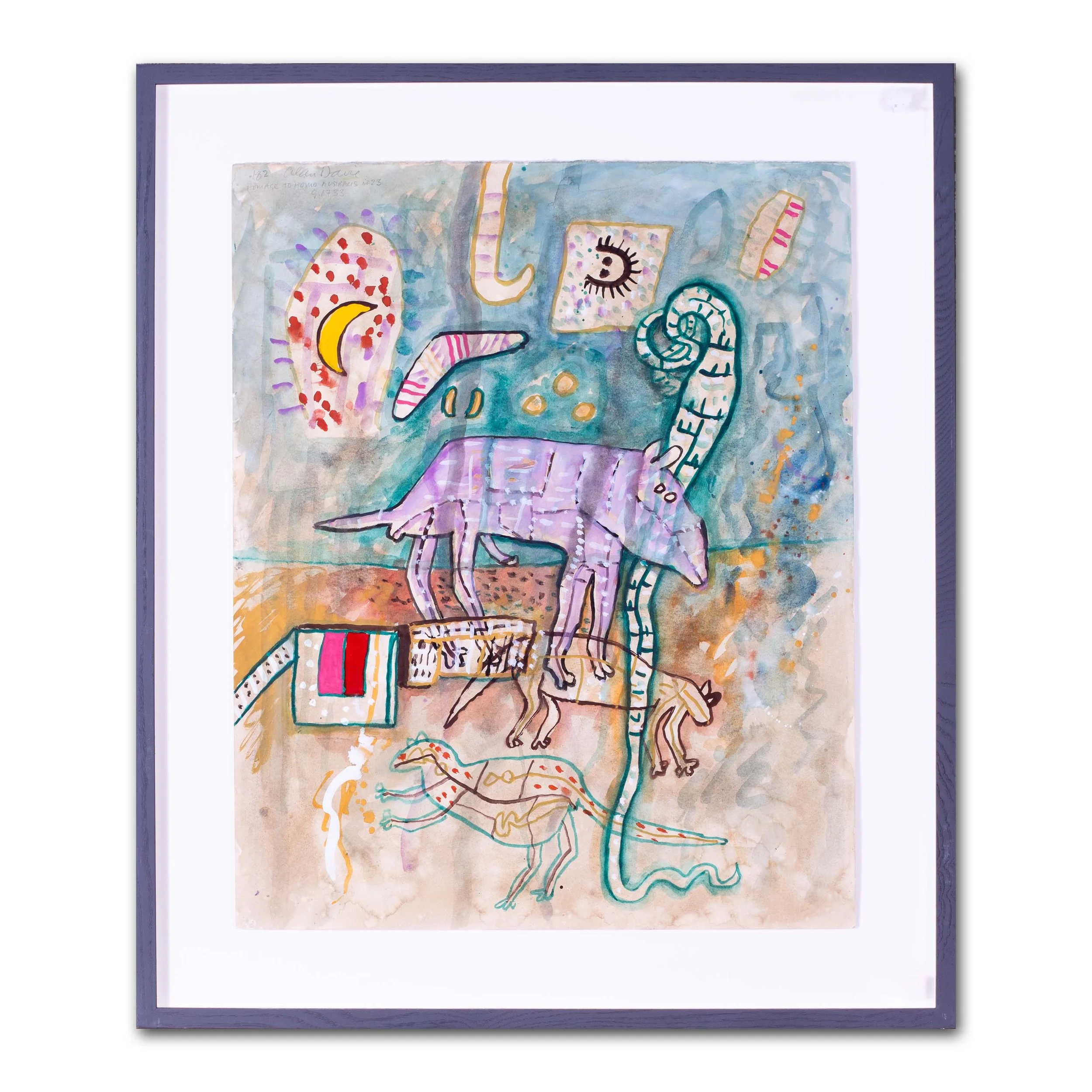
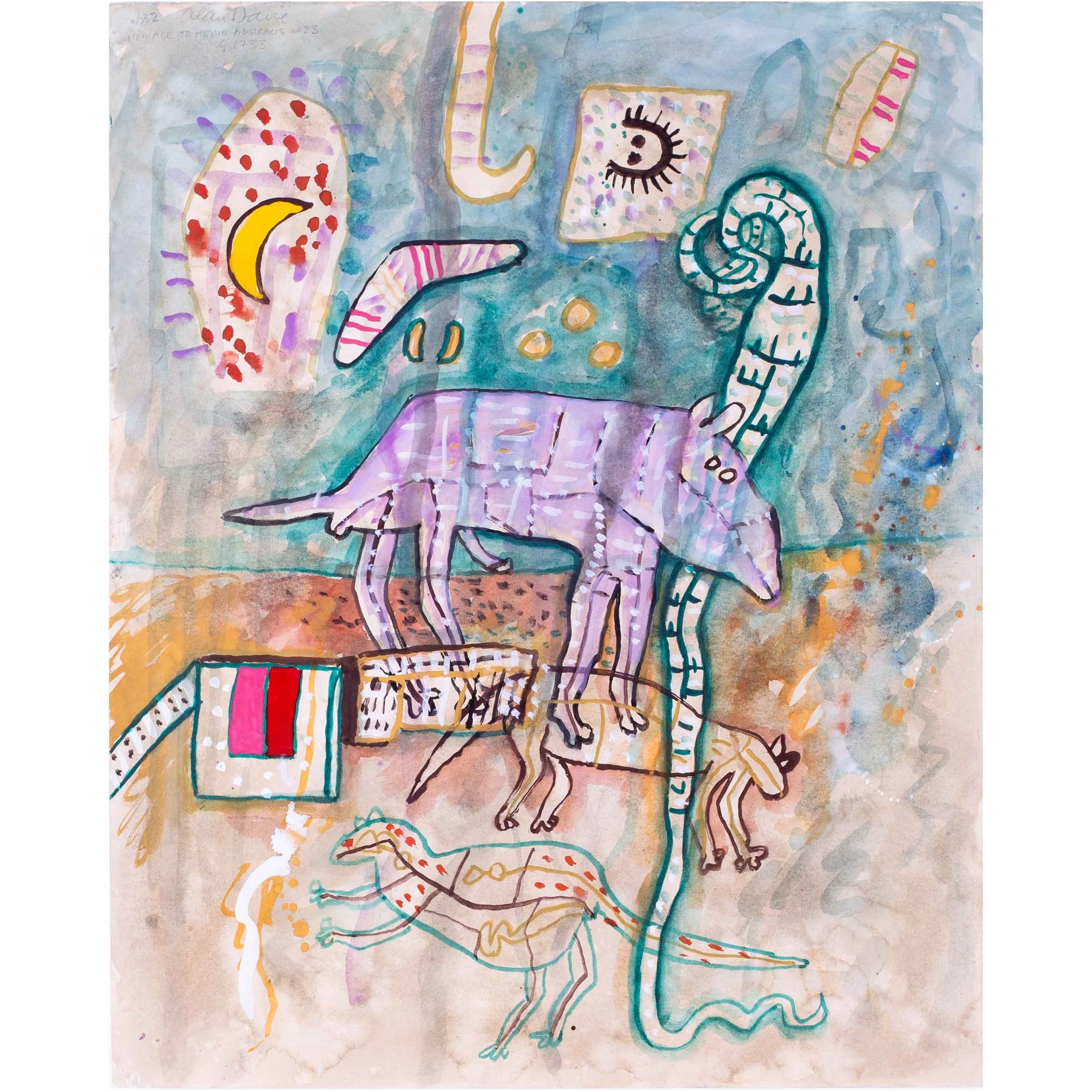
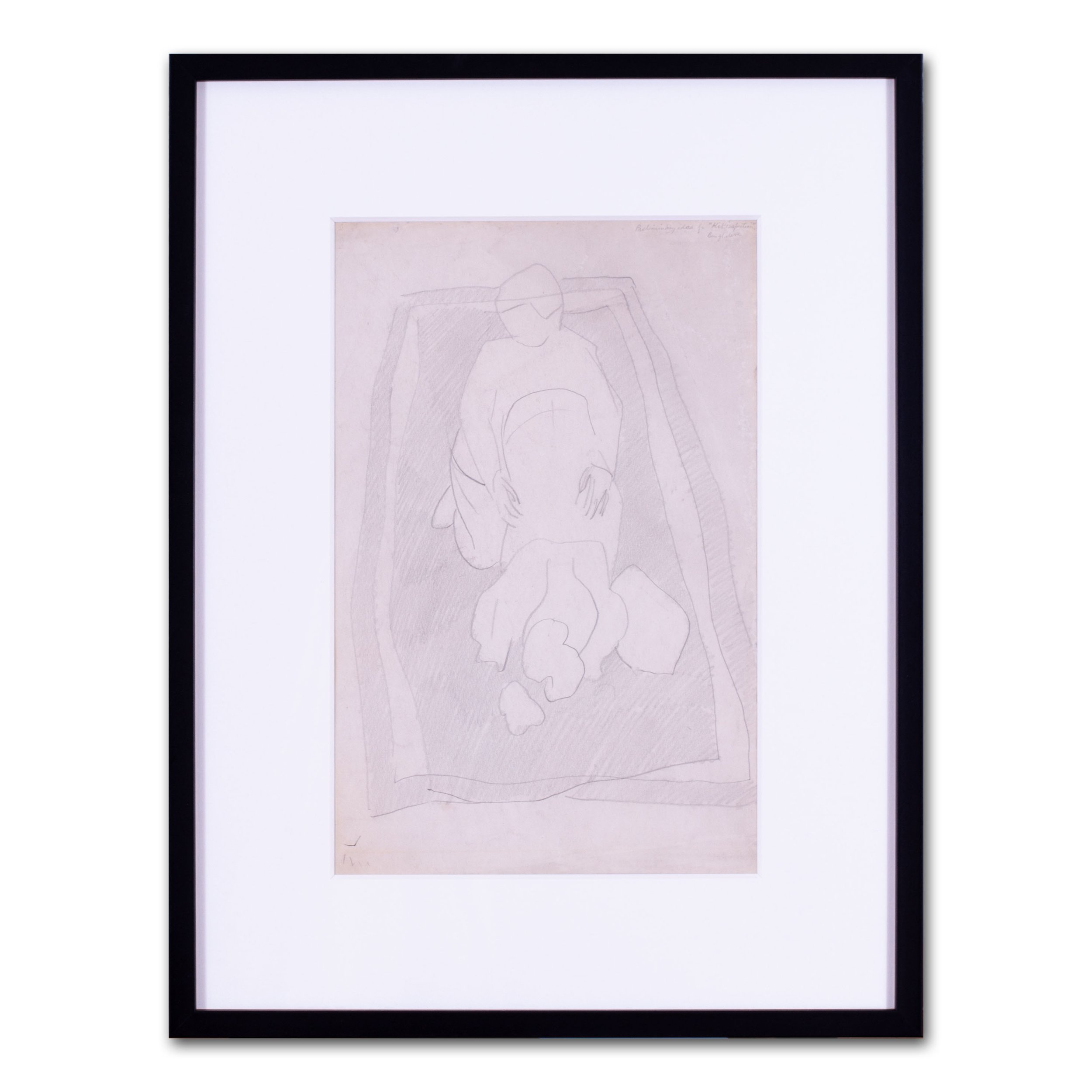
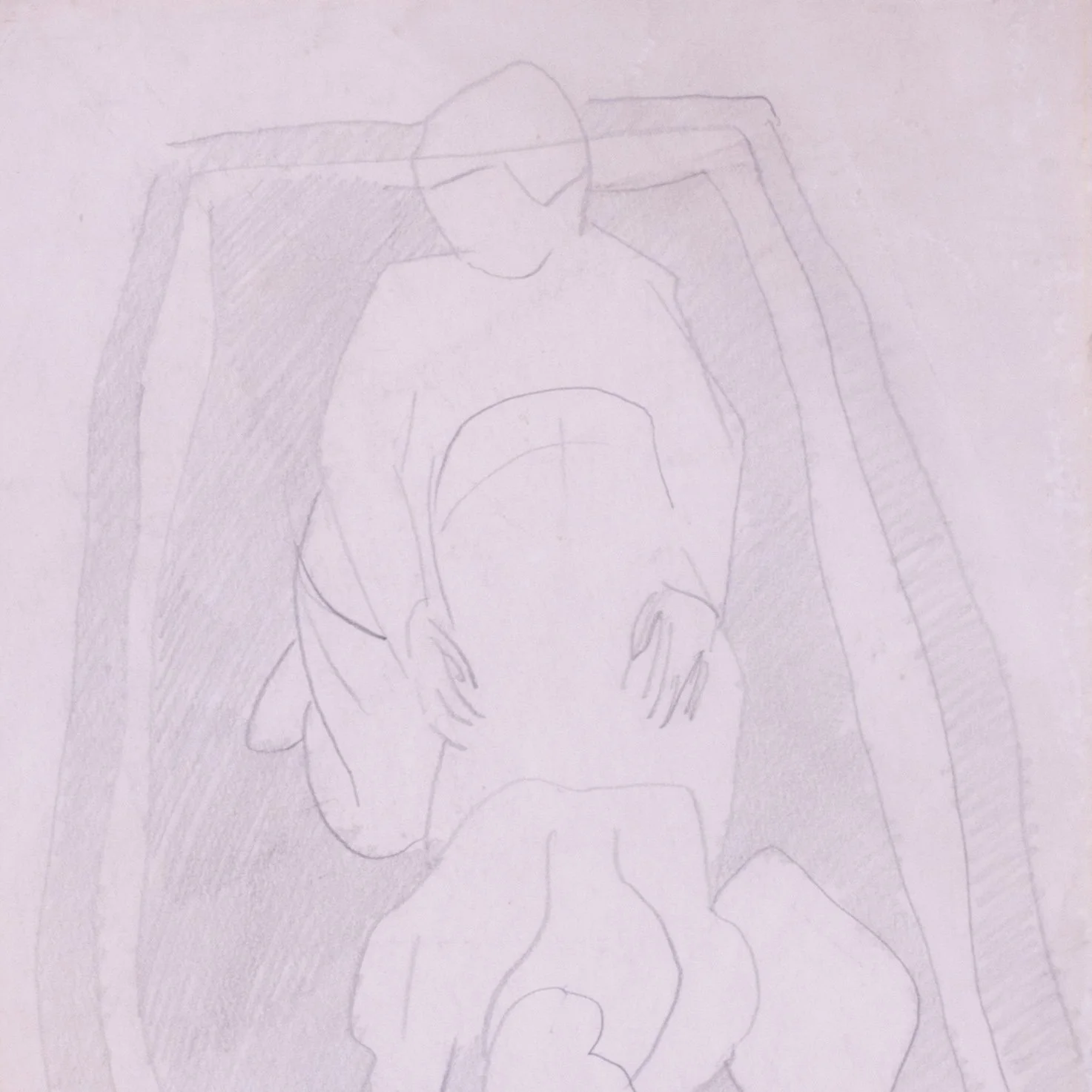
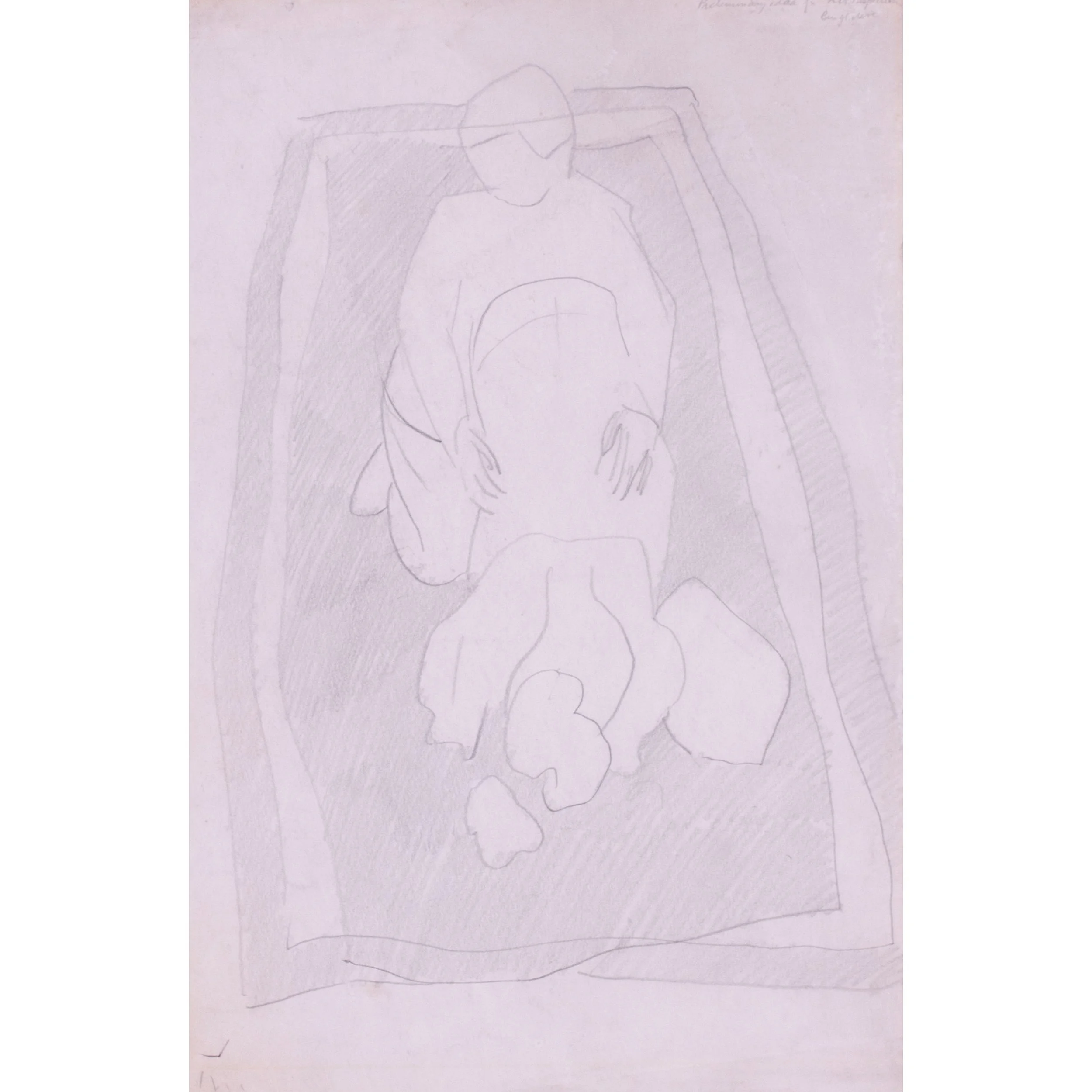
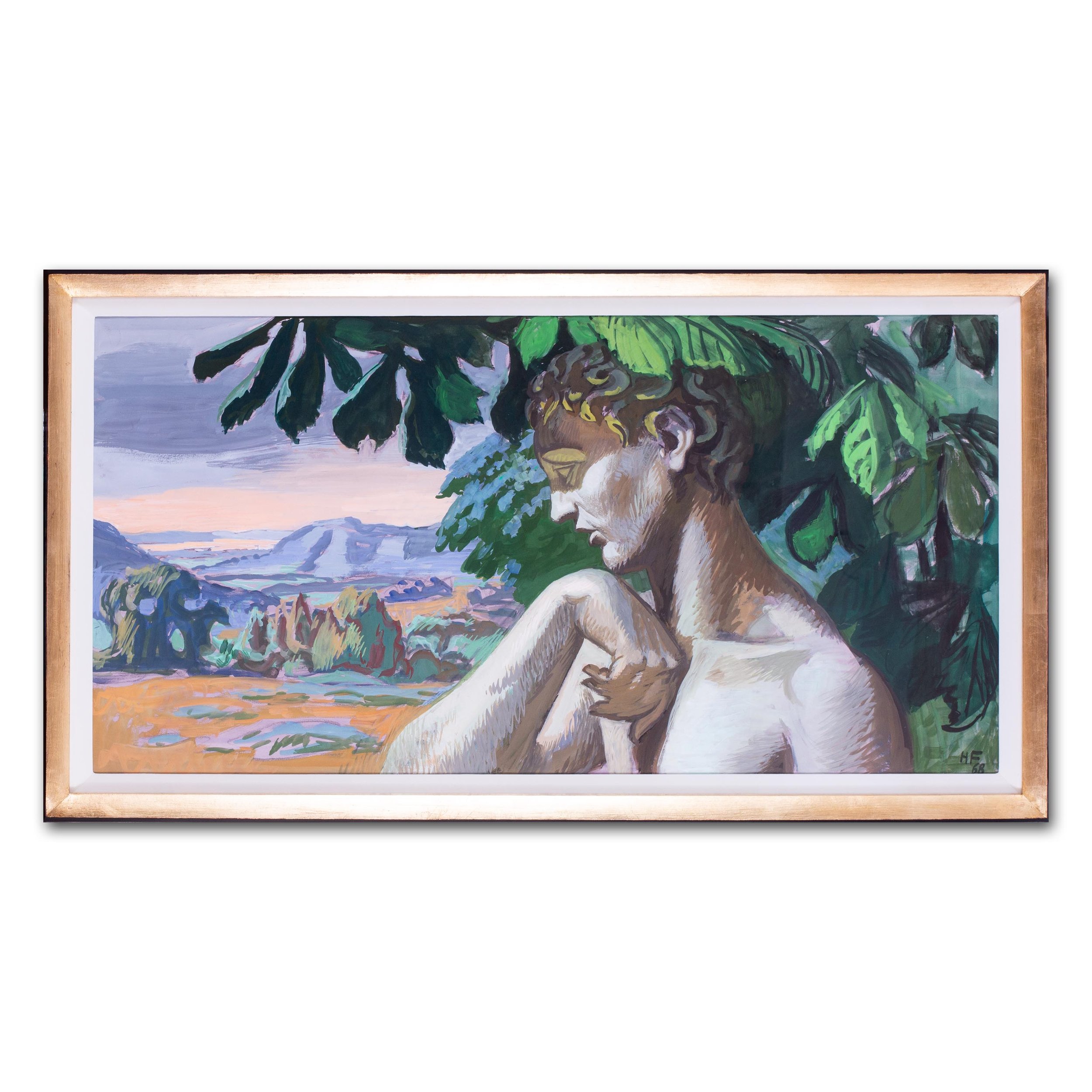
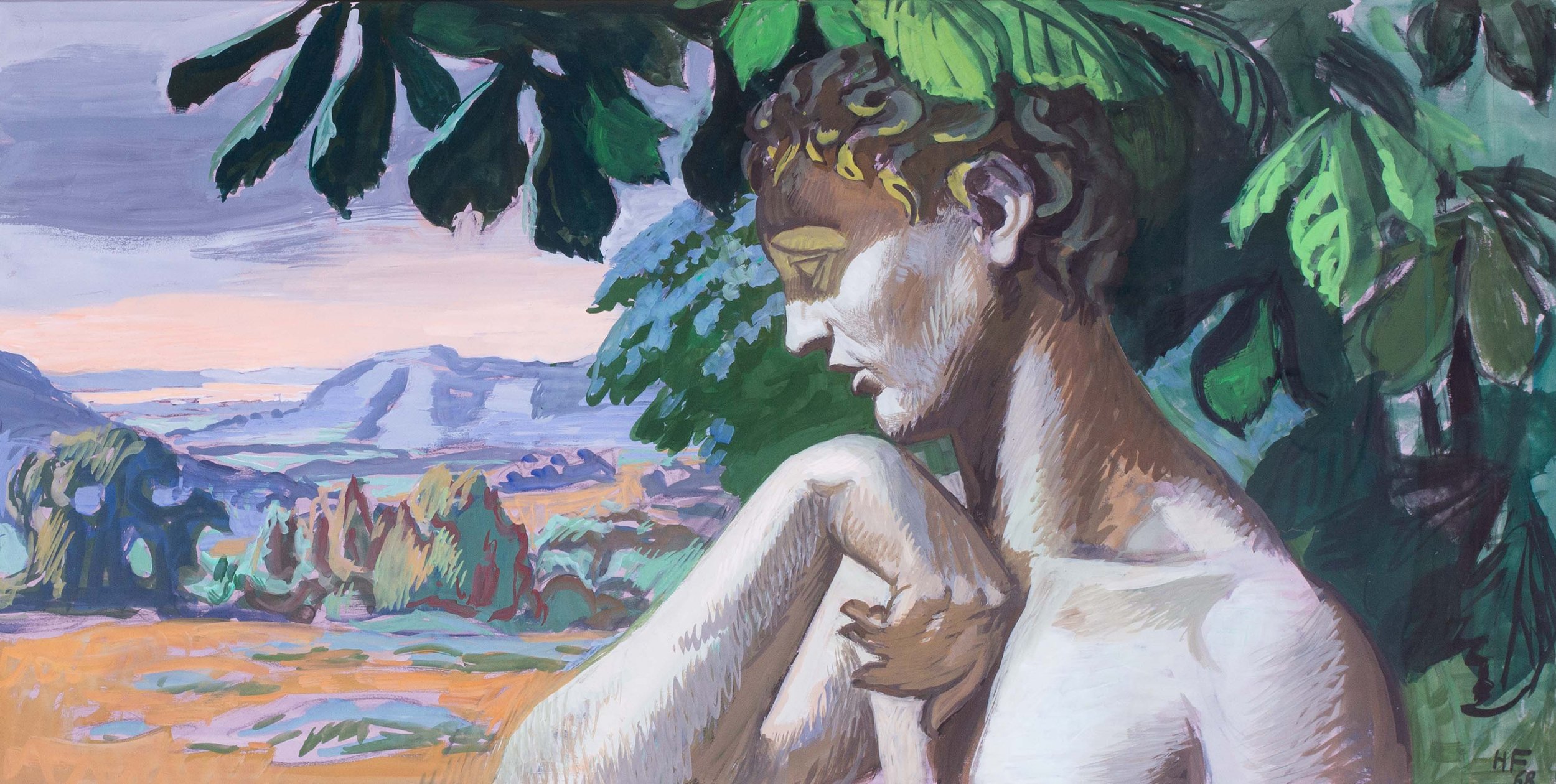
Duncan Grant (British, 1885 – 1978)
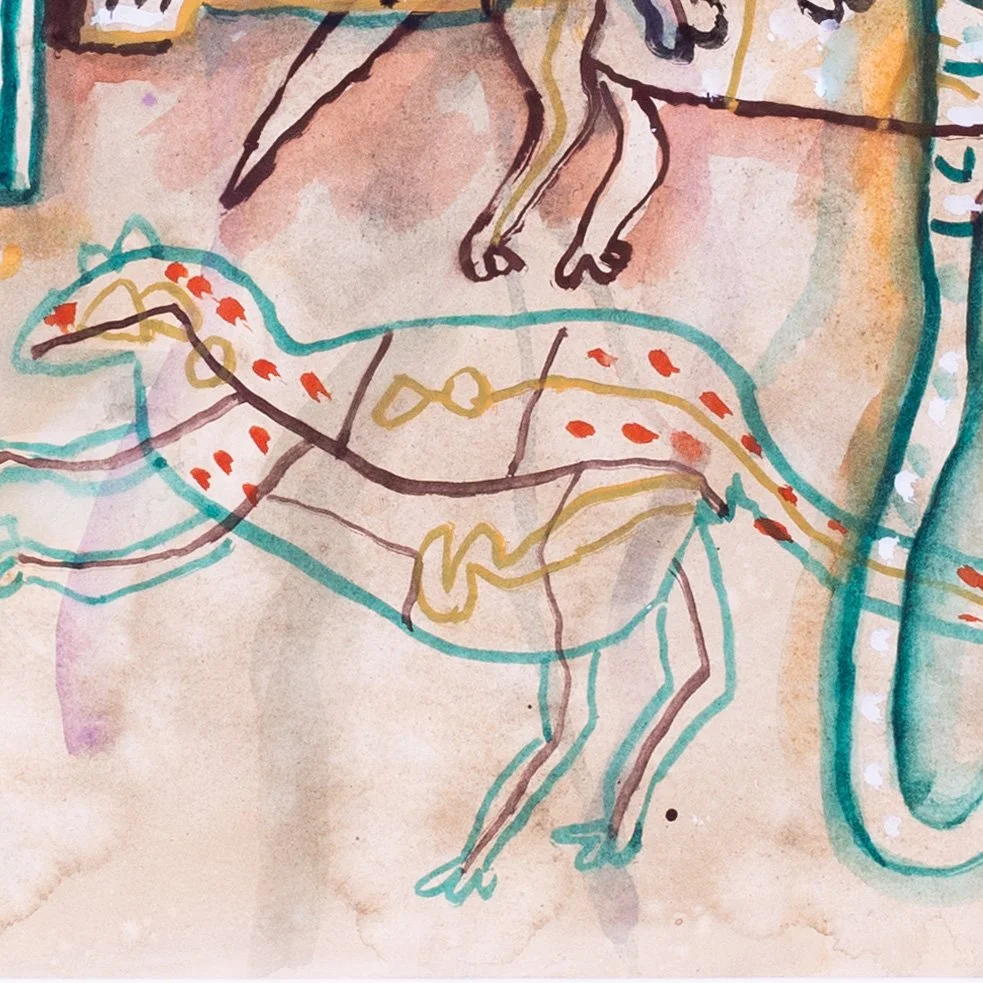
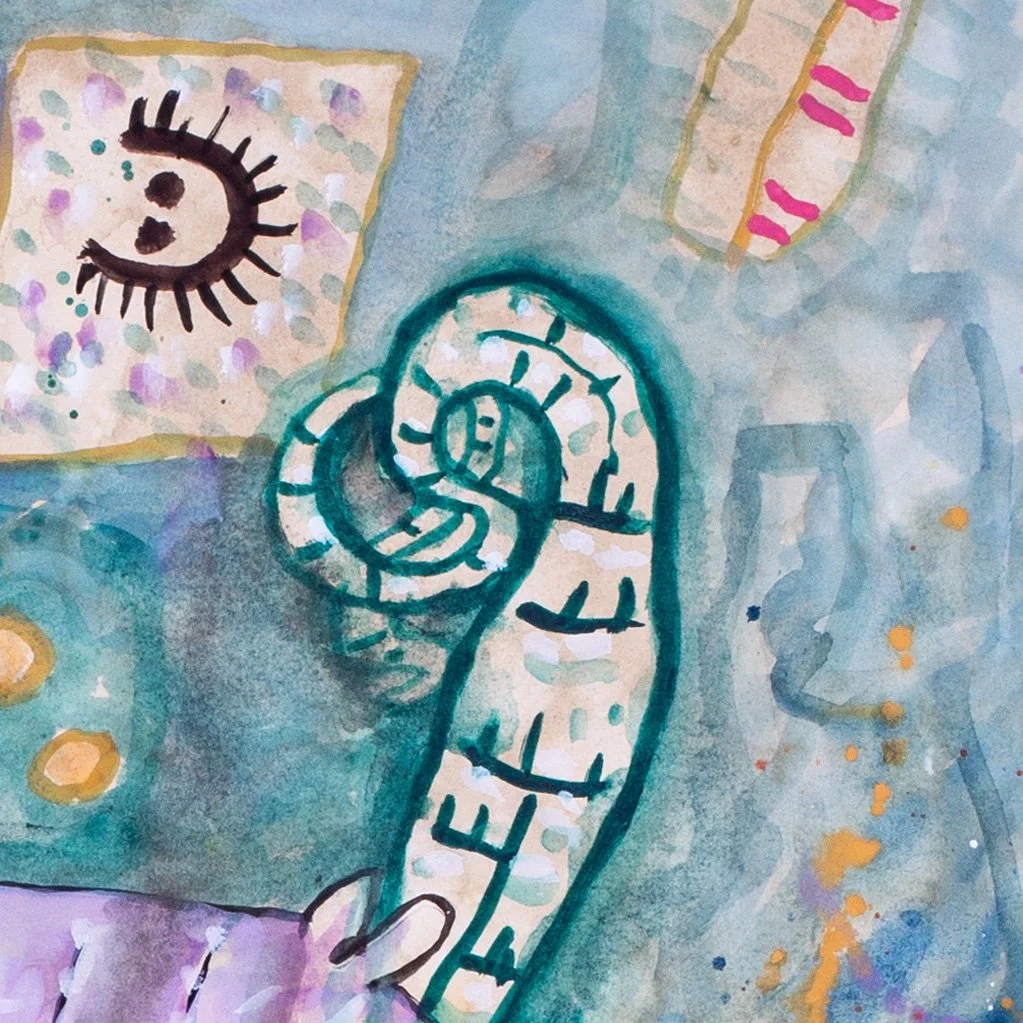
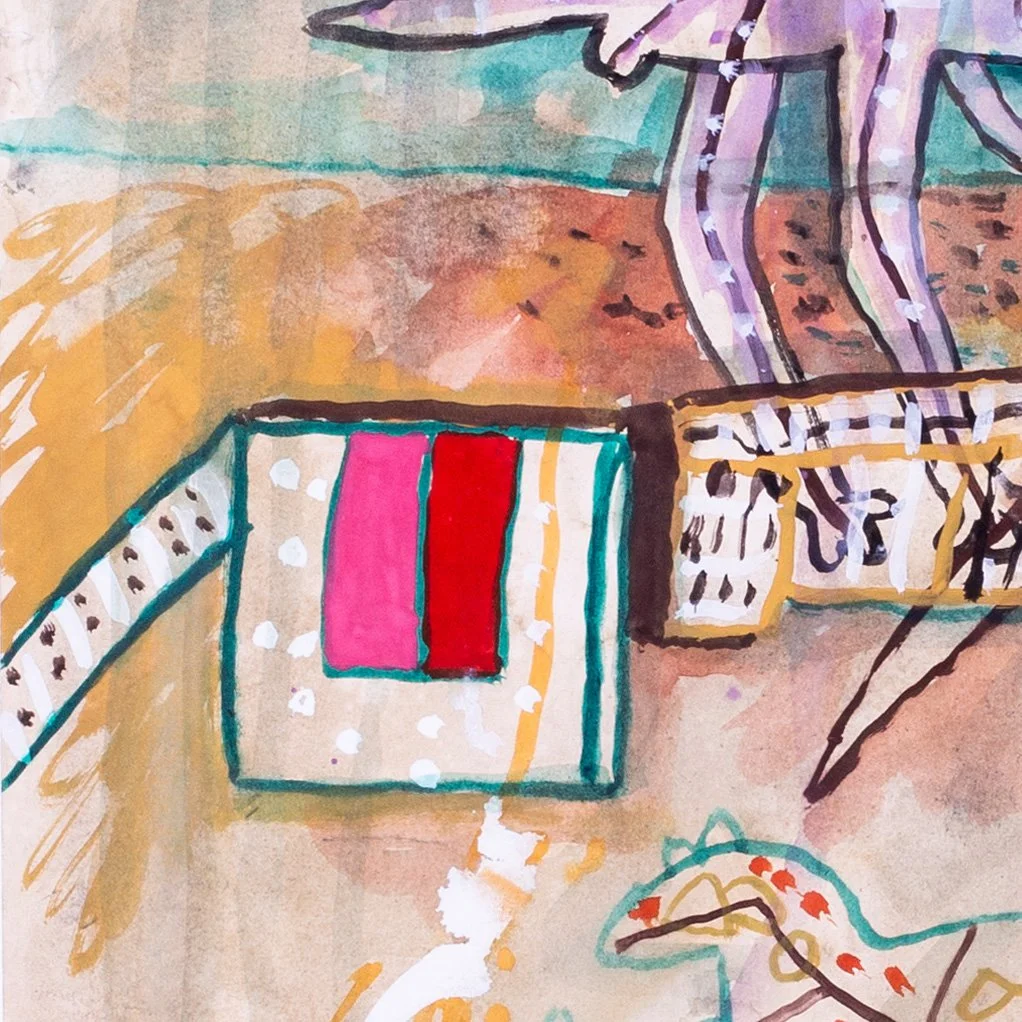
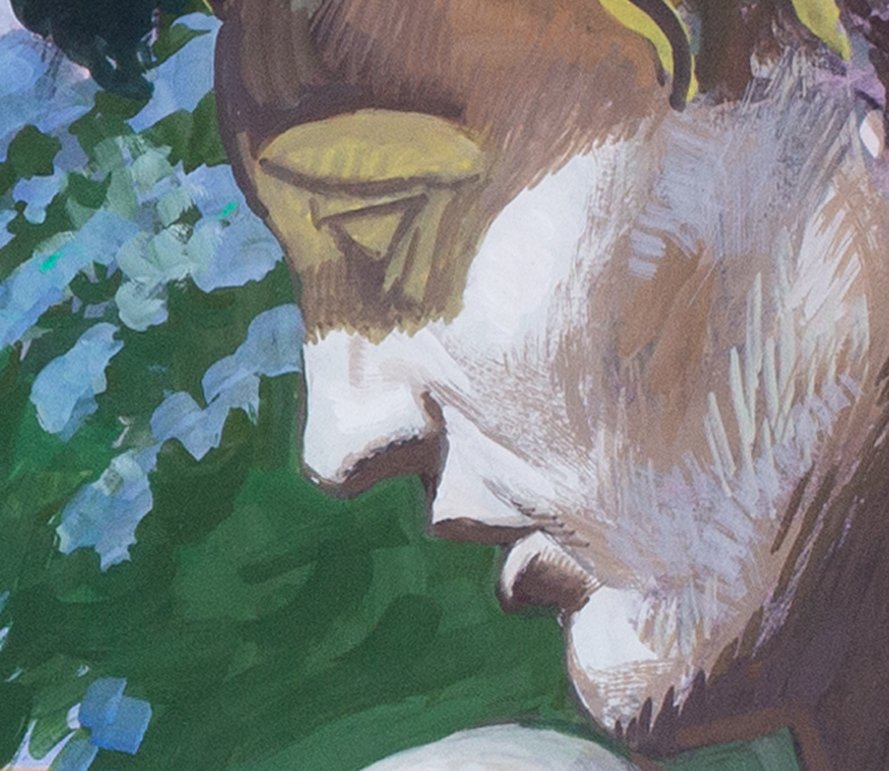
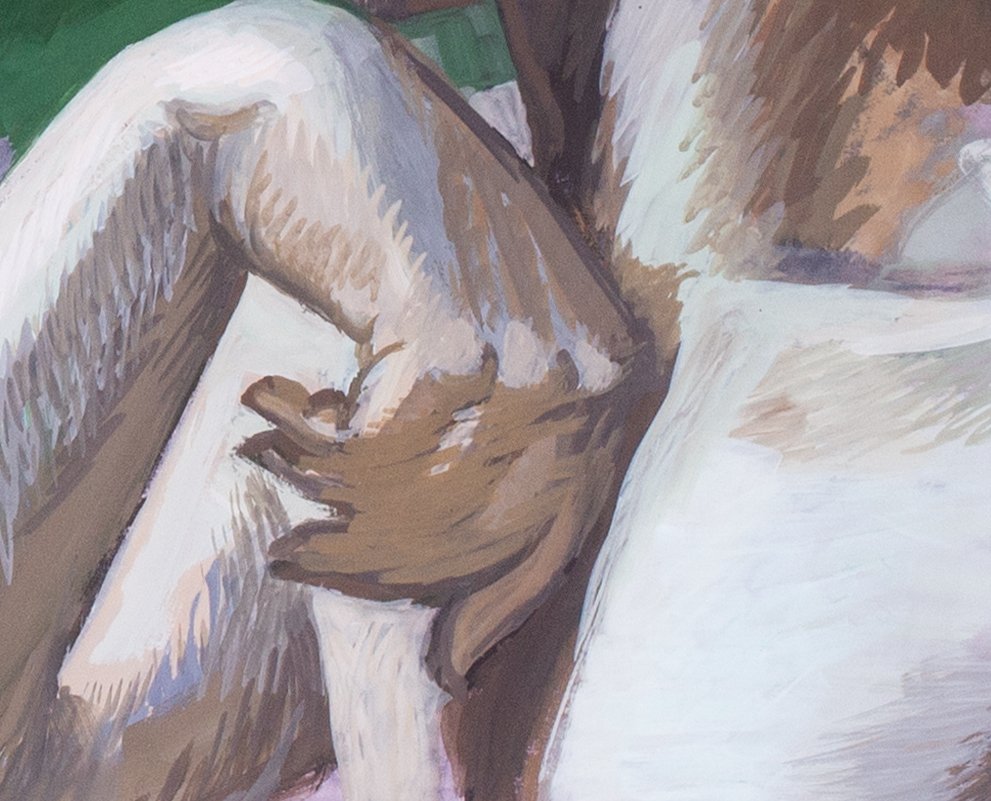
Hero and Leander, 1954
watercolour and gouache with crayon
signed with initials and dated ‘DG. / 54’ (lower right)
8.3/4 x 13.7/8 in. (22.3 x 35.3 cm.)
Provenance: Paul Roche, and thence by descent to Martin Roche.
Read More »
Duncan Grant’s artistic journey began early, encouraged by family friend and French painter Simon Bussy. After studying in Paris and London, he settled in Fitzroy Square, where he formed close friendships with Adrian and Virginia Stephens (later Woolf) and reconnected with their sister, Vanessa Bell. In 1910, he exhibited with Bell’s Friday Club, an informal art group promoting modern artistic ideas. That same year, Grant attended Roger Fry’s landmark Post-Impressionist exhibition at the Grafton Galleries, an experience that profoundly influenced his painting style, characterised by bold colour and direct observation.
As the Bloomsbury Group took shape, Grant, Bell, and Fry became central figures, fostering a progressive and bohemian artistic environment. In 1913, Fry established the Omega Workshops, with Grant and Bell as creative directors, aiming to merge Post-Impressionist painting with decorative arts. The workshop produced furniture, textiles, and interior designs, embracing a collaborative approach that extended modernist aesthetics beyond traditional galleries and into everyday life.
During World War I, Grant moved to Charleston in East Sussex with Vanessa Bell and David Garnett. The house became a hub for artists, writers, and intellectuals, its interiors reflecting the creativity of its residents. Charleston remained a vital part of Grant’s life, providing inspiration for his landscapes, portraits, and still lifes. His enduring connection to the house, its idyllic setting, and the vibrant artistic community surrounding it is evident throughout his work.
Duncan Grant (British, 1885 – 1978)
Hero and Leander, 1954
watercolour and gouache with crayon
signed with initials and dated ‘DG. / 54’ (lower right)
8.3/4 x 13.7/8 in. (22.3 x 35.3 cm.)
Provenance: Paul Roche, and thence by descent to Martin Roche.
Read More »
Duncan Grant’s artistic journey began early, encouraged by family friend and French painter Simon Bussy. After studying in Paris and London, he settled in Fitzroy Square, where he formed close friendships with Adrian and Virginia Stephens (later Woolf) and reconnected with their sister, Vanessa Bell. In 1910, he exhibited with Bell’s Friday Club, an informal art group promoting modern artistic ideas. That same year, Grant attended Roger Fry’s landmark Post-Impressionist exhibition at the Grafton Galleries, an experience that profoundly influenced his painting style, characterised by bold colour and direct observation.
As the Bloomsbury Group took shape, Grant, Bell, and Fry became central figures, fostering a progressive and bohemian artistic environment. In 1913, Fry established the Omega Workshops, with Grant and Bell as creative directors, aiming to merge Post-Impressionist painting with decorative arts. The workshop produced furniture, textiles, and interior designs, embracing a collaborative approach that extended modernist aesthetics beyond traditional galleries and into everyday life.
During World War I, Grant moved to Charleston in East Sussex with Vanessa Bell and David Garnett. The house became a hub for artists, writers, and intellectuals, its interiors reflecting the creativity of its residents. Charleston remained a vital part of Grant’s life, providing inspiration for his landscapes, portraits, and still lifes. His enduring connection to the house, its idyllic setting, and the vibrant artistic community surrounding it is evident throughout his work.

 Image 1 of 7
 Image 2 of 7
 Image 3 of 7
 Image 4 of 7
 Image 5 of 7
 Image 6 of 7
 Image 7 of 7