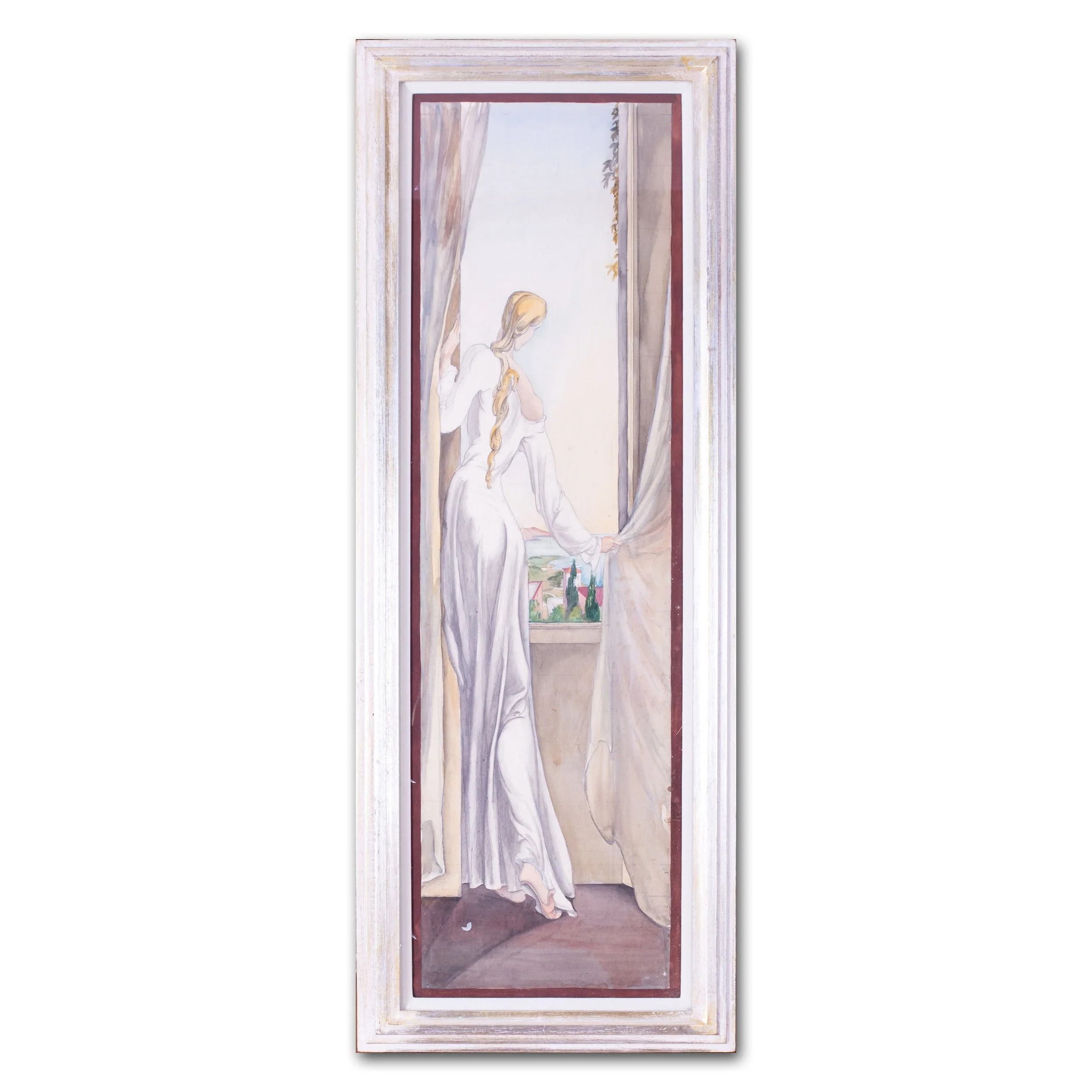
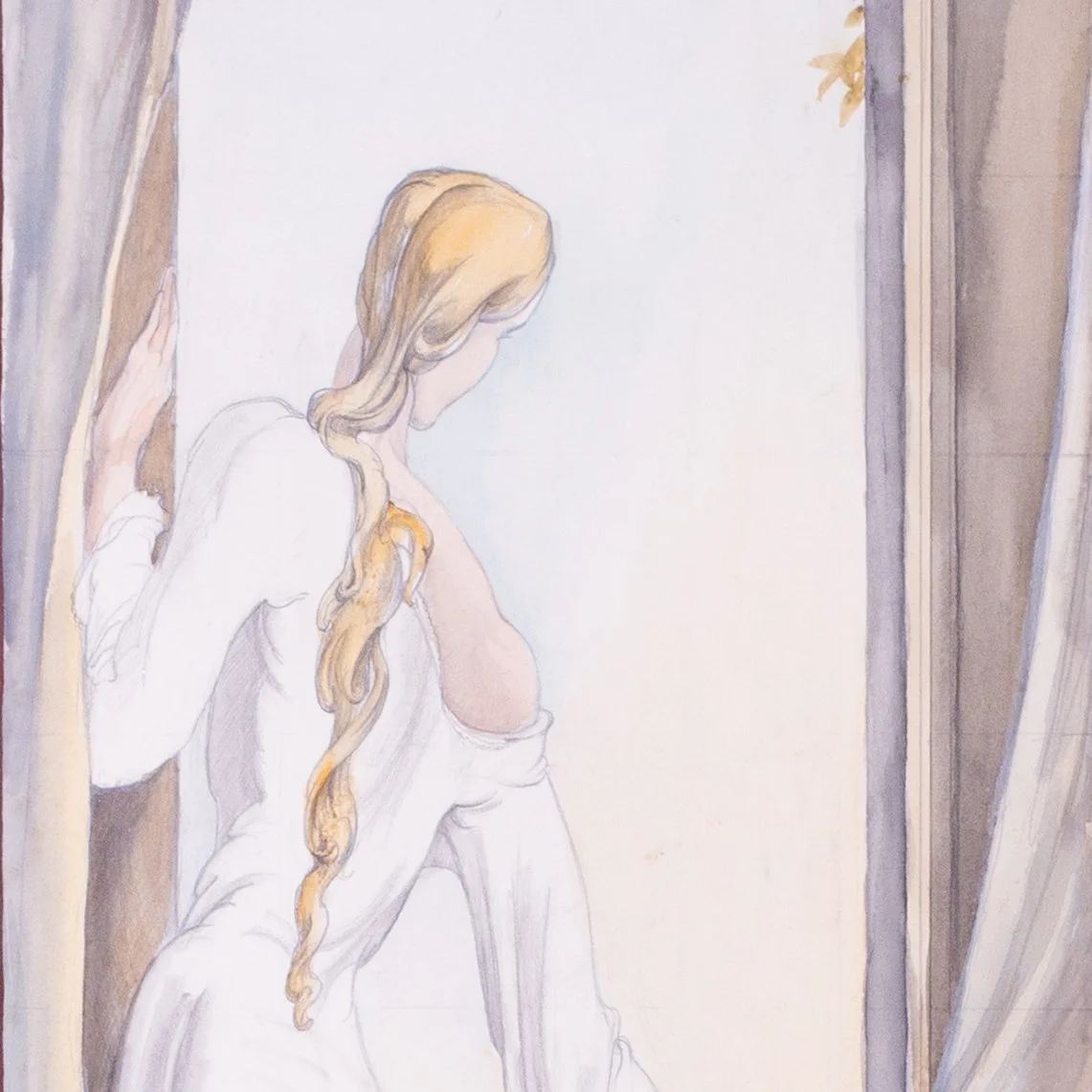
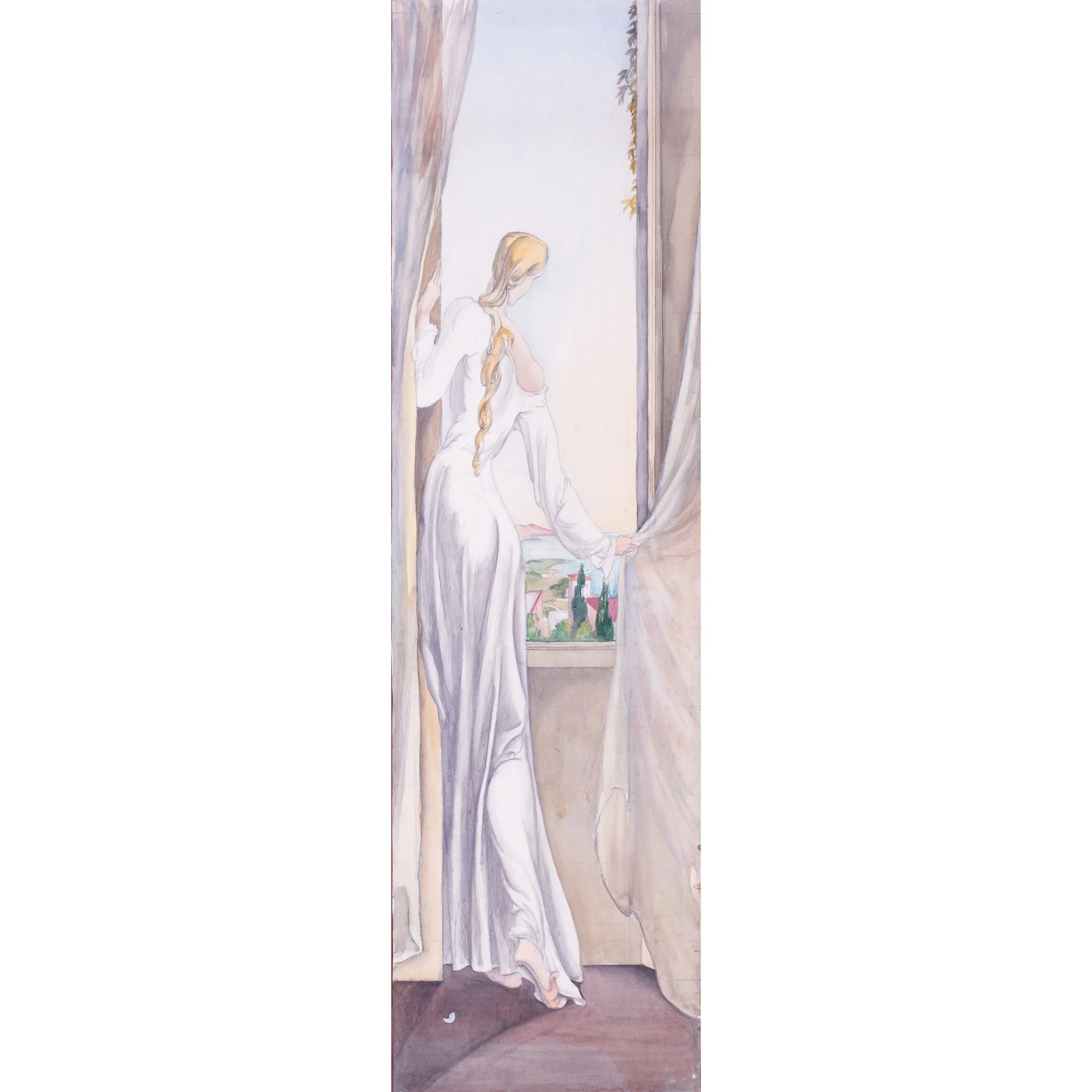
Albert Victor Ormsby Wood (British, 1904 - 1977)
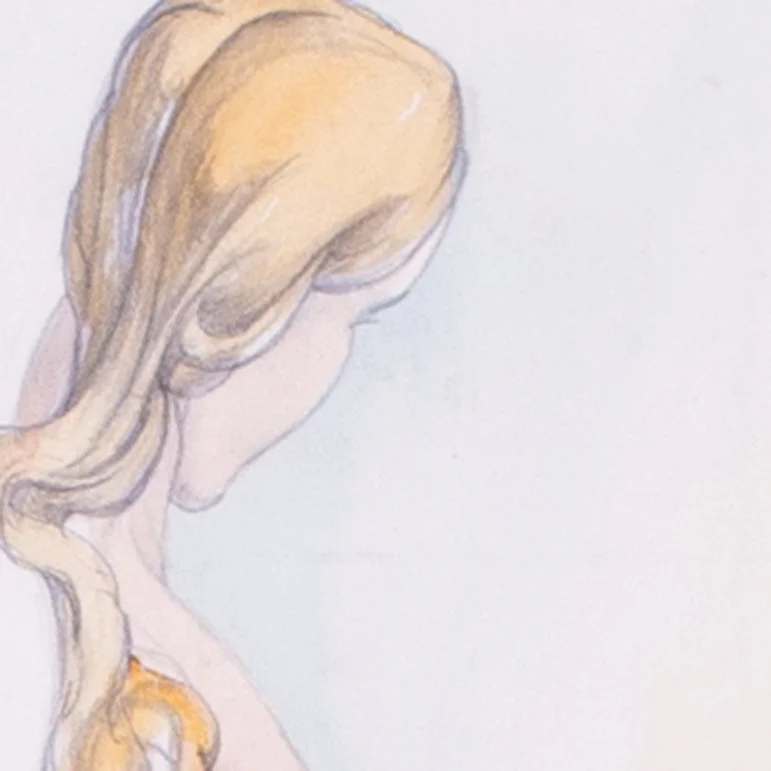
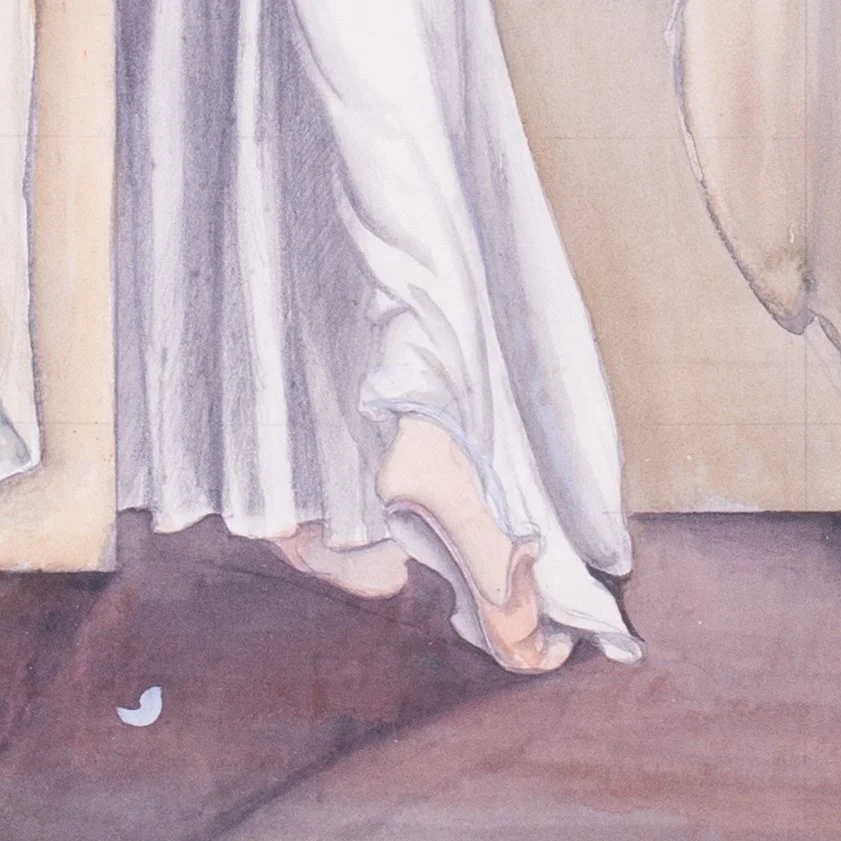
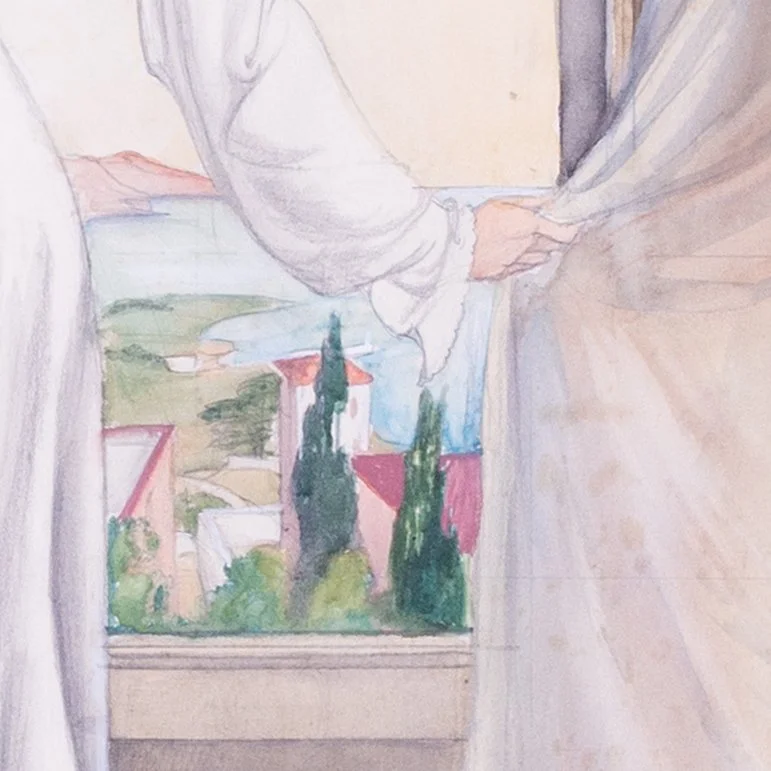
The water carrier
oil on board
22 x 14 in. (56 x 35.5 cm.), including the frame
Read More »
Albert Victor Ormsby Wood (1904–1977) occupies a unique place in 20th-century British and Irish art. Born into a prominent Dublin family, he trained in the stained-glass studios of the celebrated Irish artist Harry Clarke, absorbing his meticulous craftsmanship and decorative approach. Under the guidance of National Gallery of Ireland director Dr Thomas Bodkin, Wood also developed a mastery of egg tempera, creating luminous, highly stylised paintings of femininity.
Wood’s promising early career in London, where he founded an art school and exhibited at the Royal Academy, was interrupted by the Second World War. Severely injured during the Blitz, he subsequently withdrew from public life, moving to the English countryside in 1949 and painting largely in isolation.
Detached from the prevailing trends of post-war abstraction, Wood developed an intensely private world of dreamlike domestic scenes, often featuring Edwardian women and interiors. His work remained virtually unknown during his lifetime, but a 1992 retrospective, A Voyeur in Art, at London’s Michael Parkin Gallery brought his remarkable and highly individual vision to wider attention.

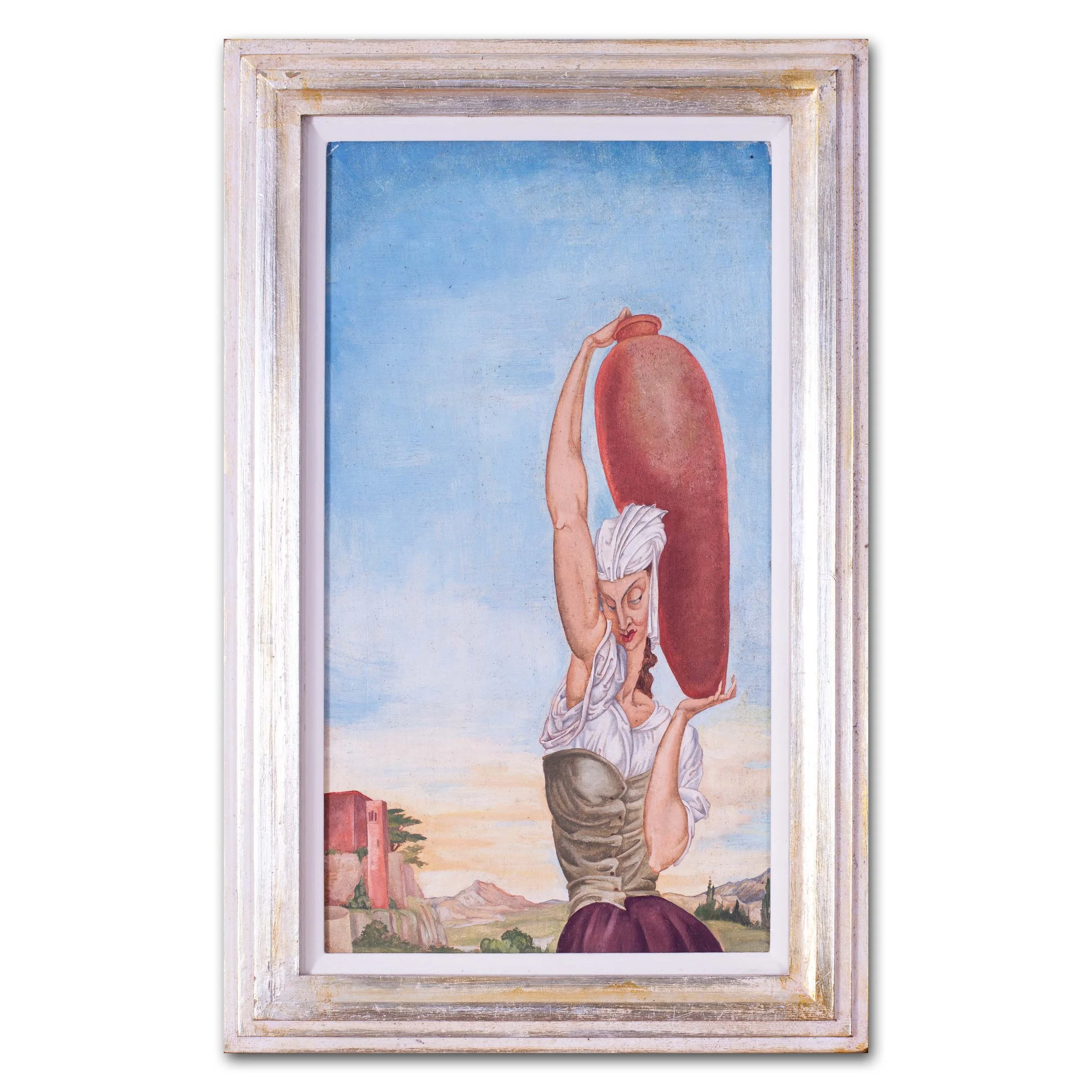 Image 1 of 8
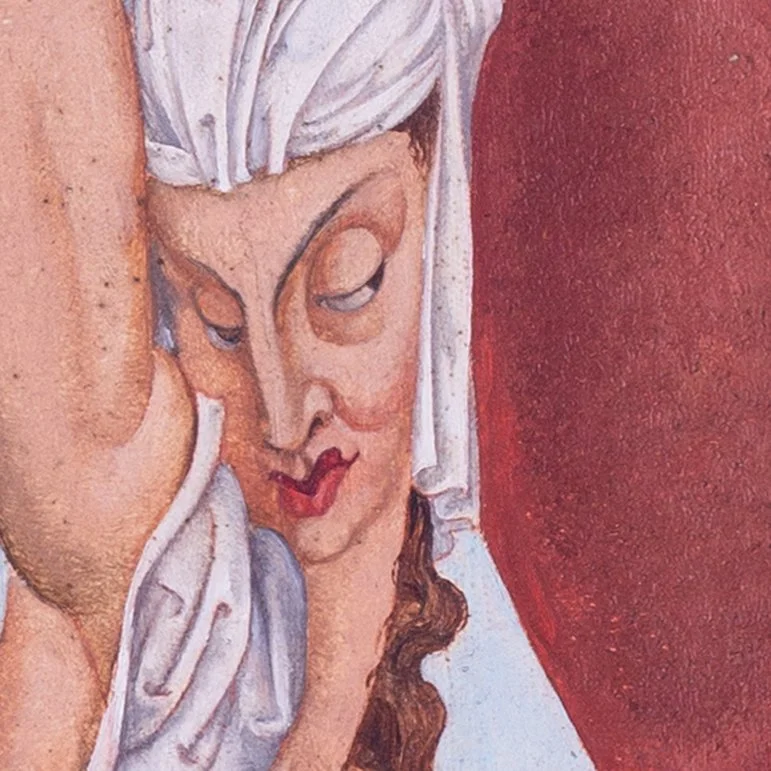 Image 2 of 8
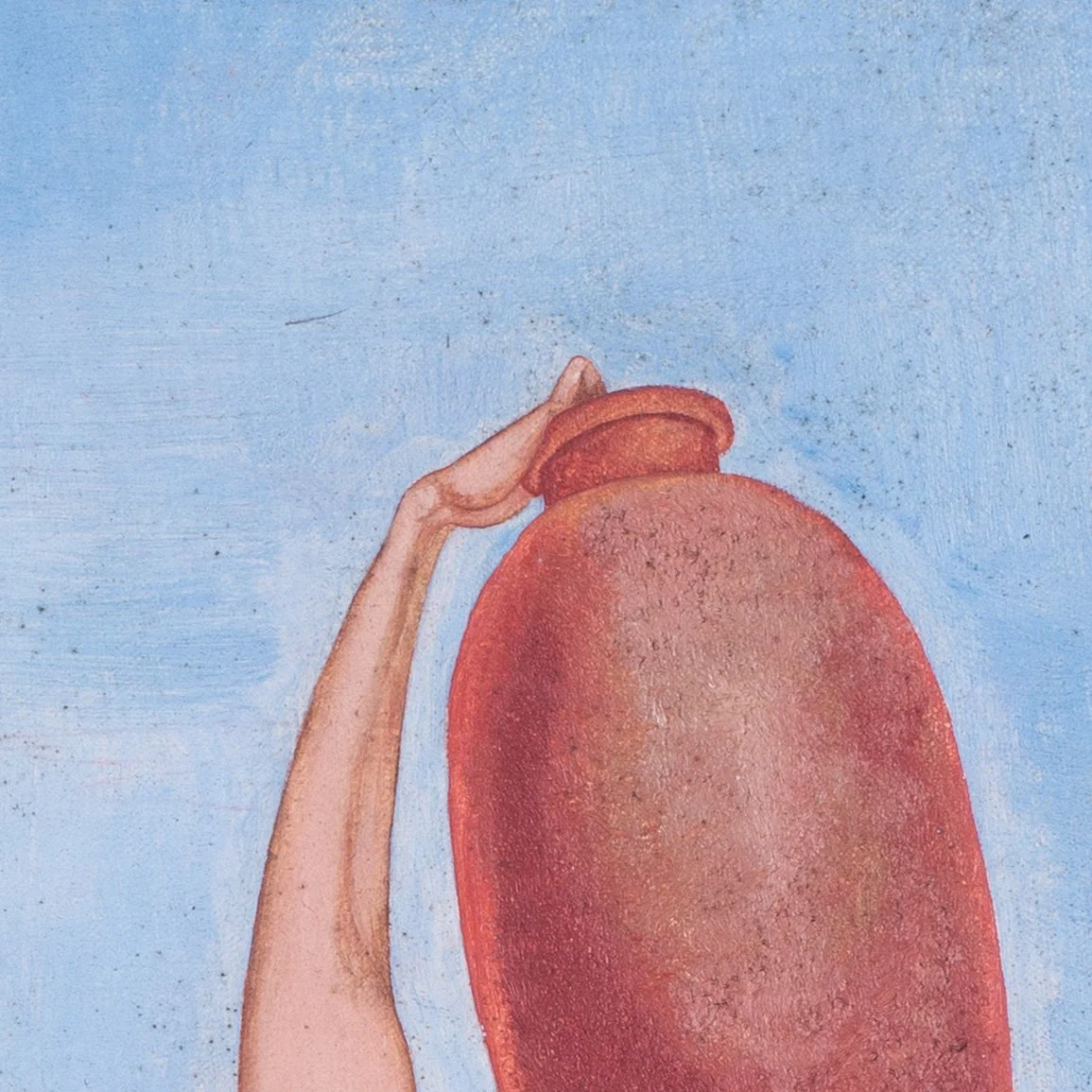 Image 3 of 8
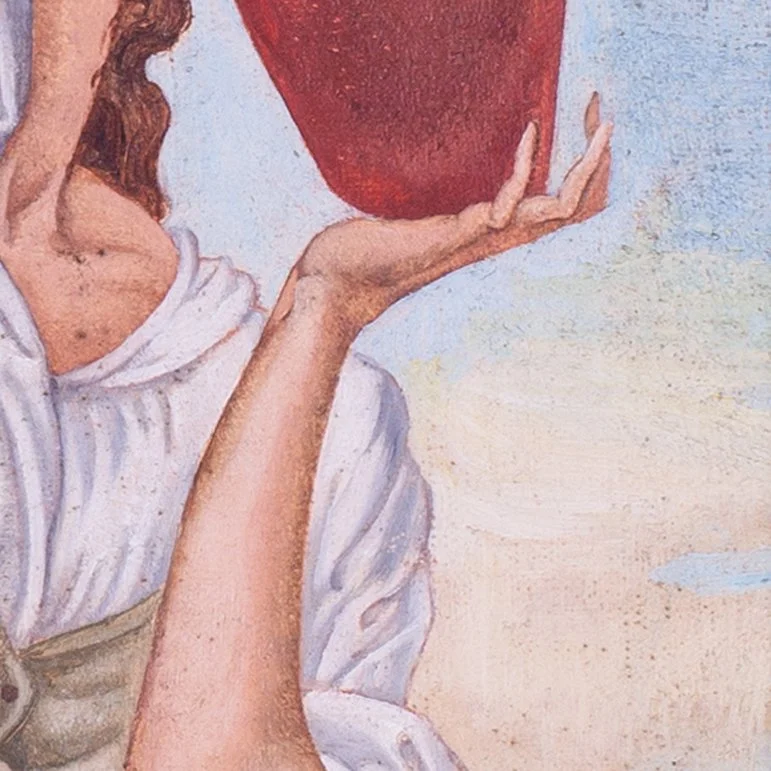 Image 4 of 8
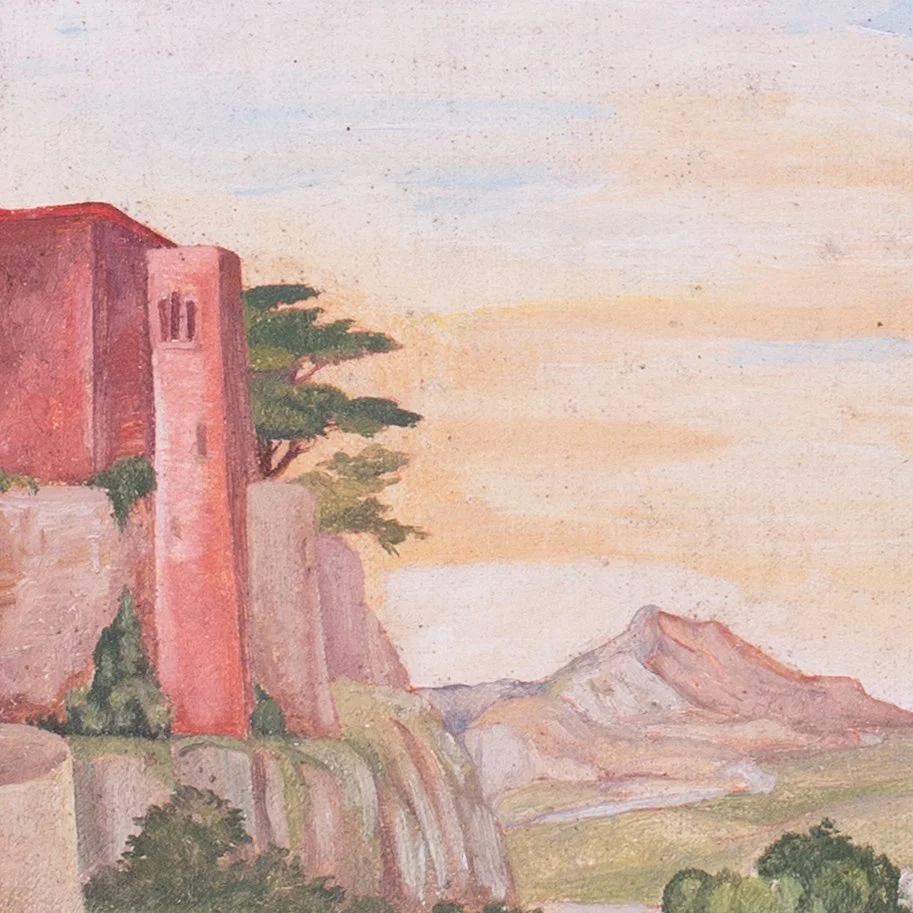 Image 5 of 8
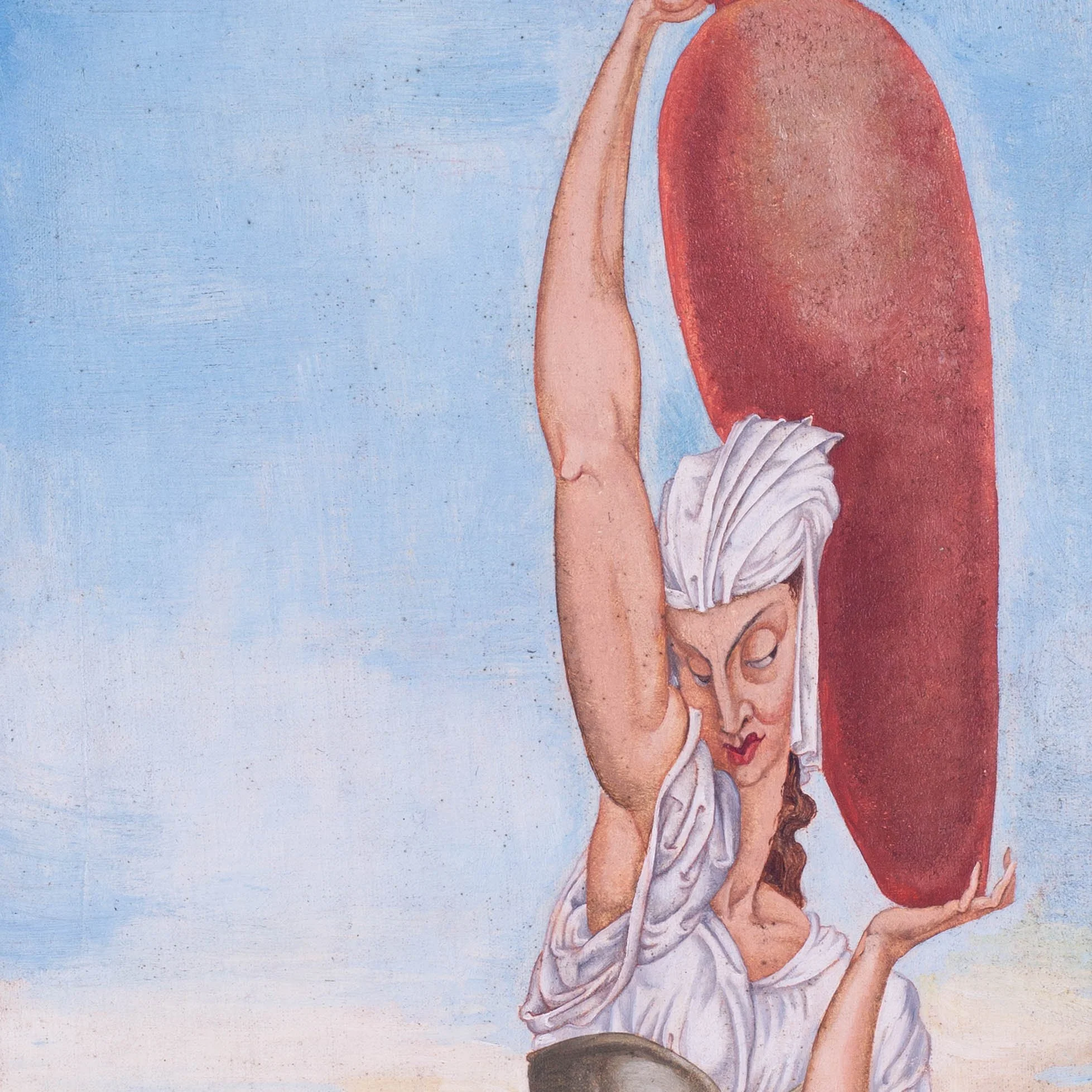 Image 6 of 8
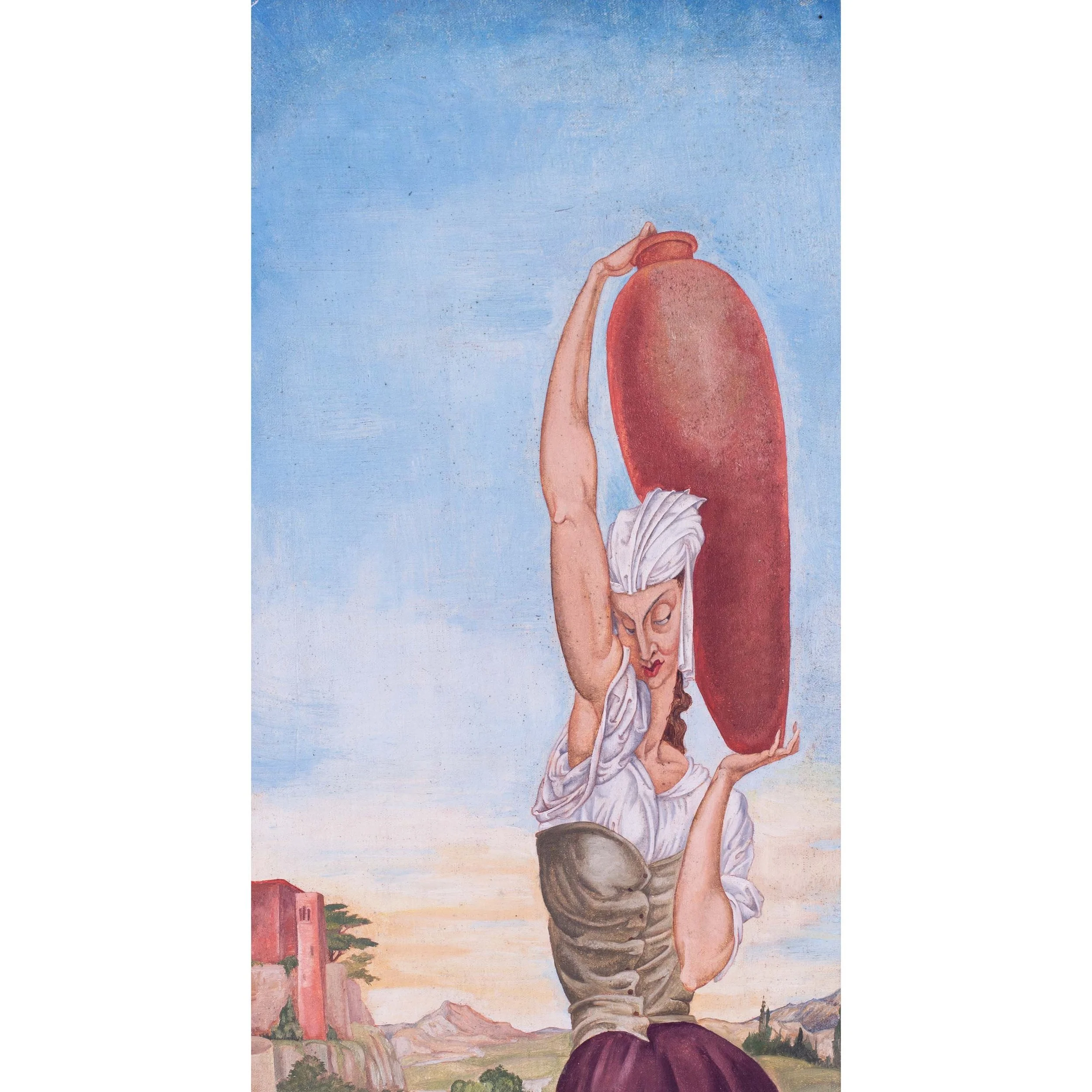 Image 7 of 8
 Image 8 of 8