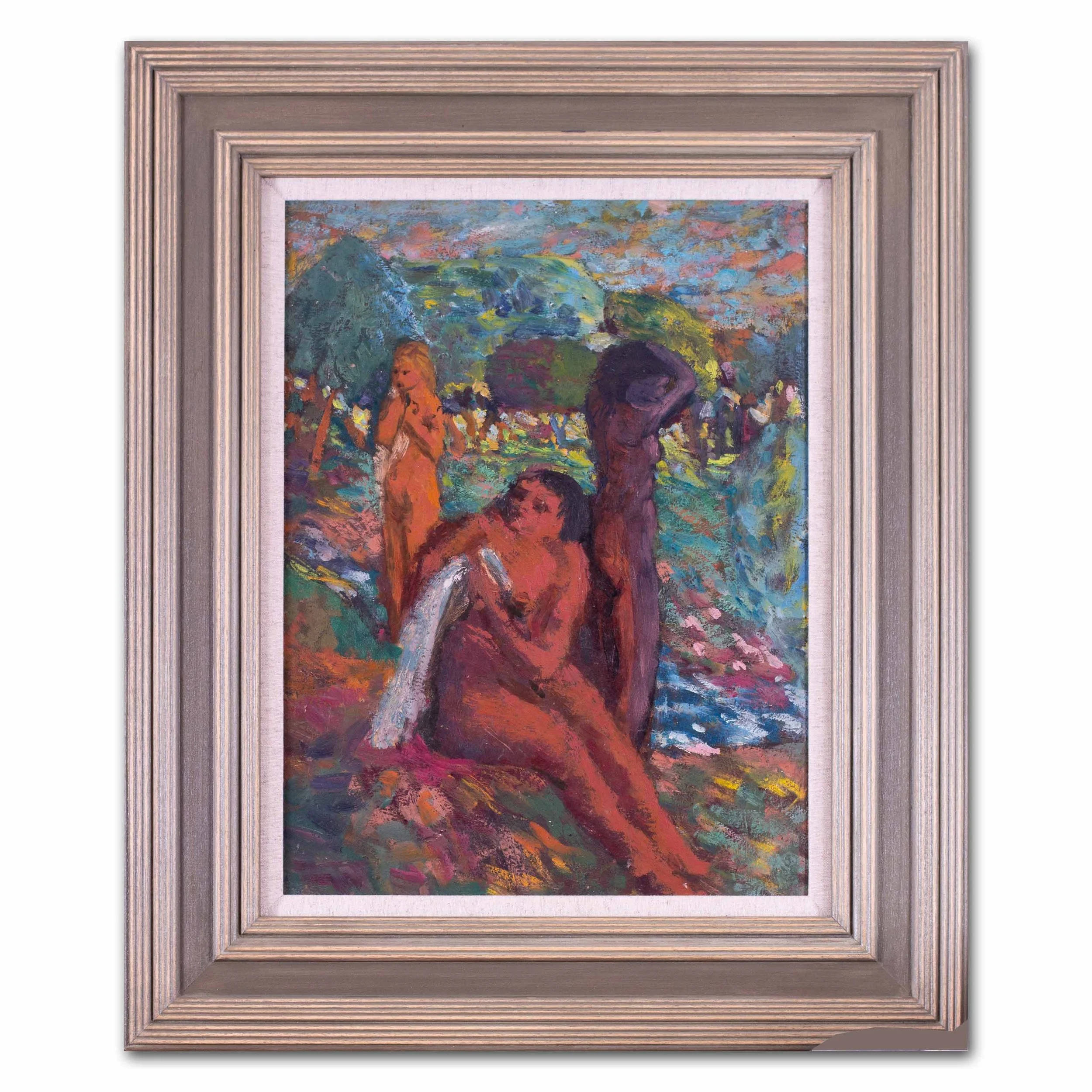
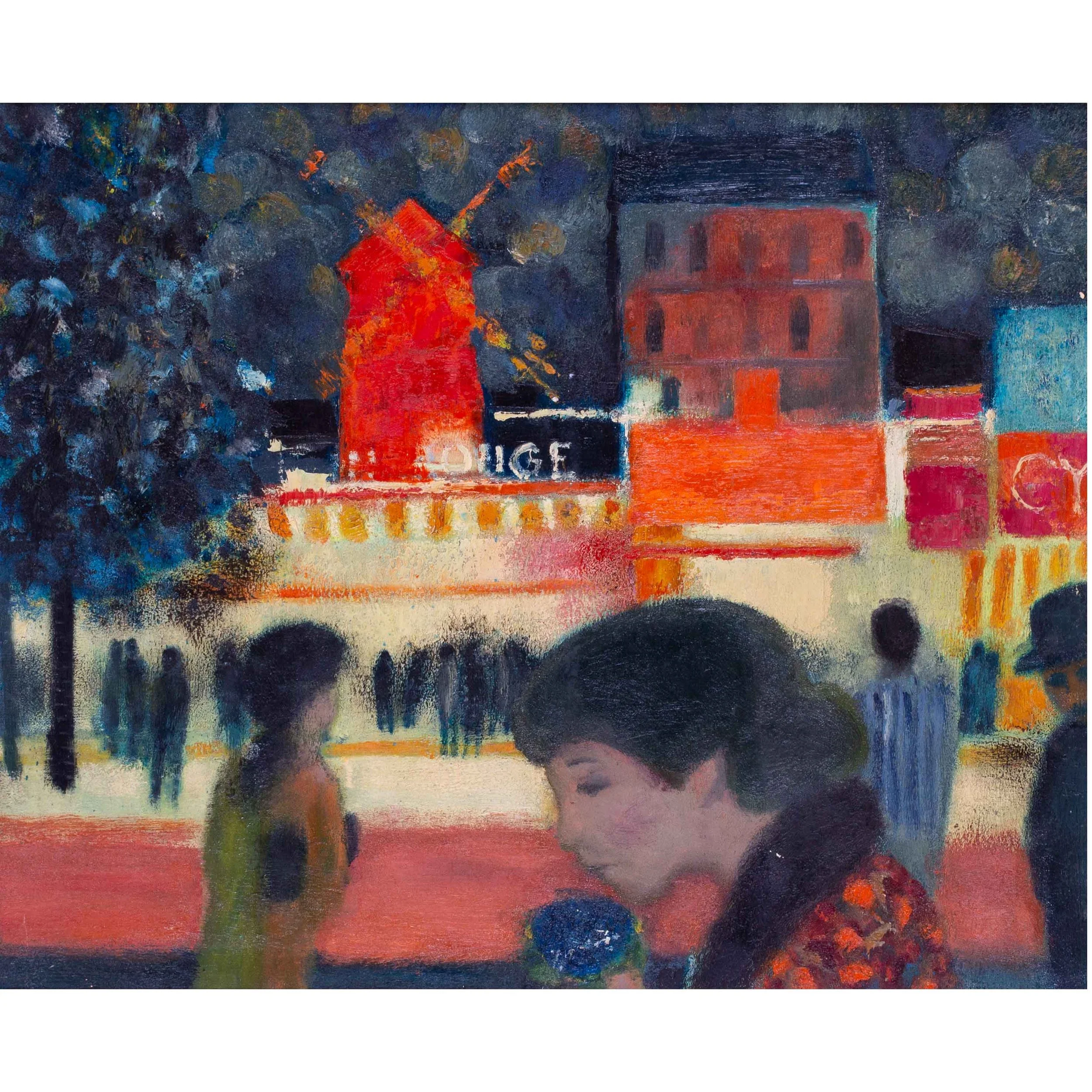
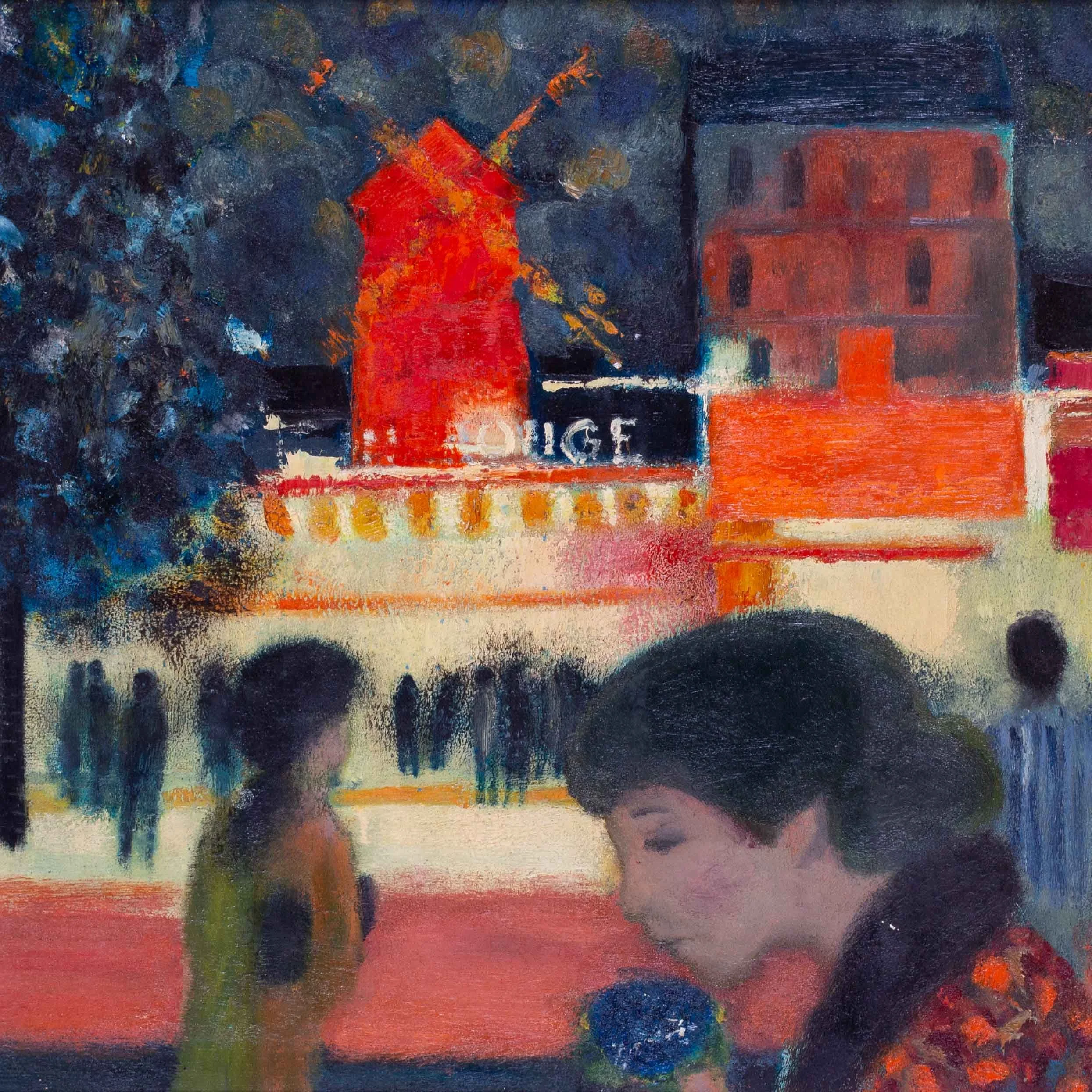
Gines Parra (Spanish, 1896 – 1960)
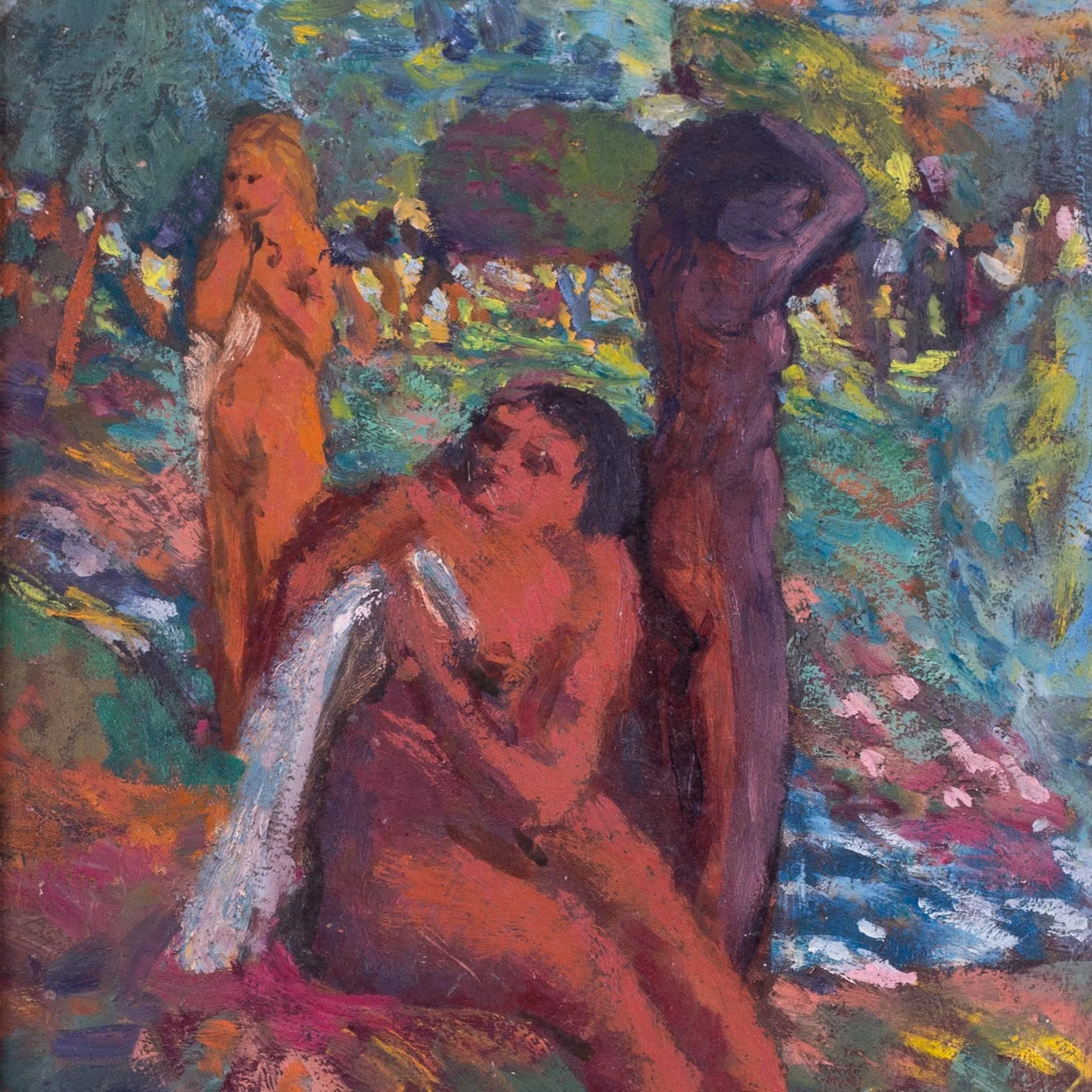
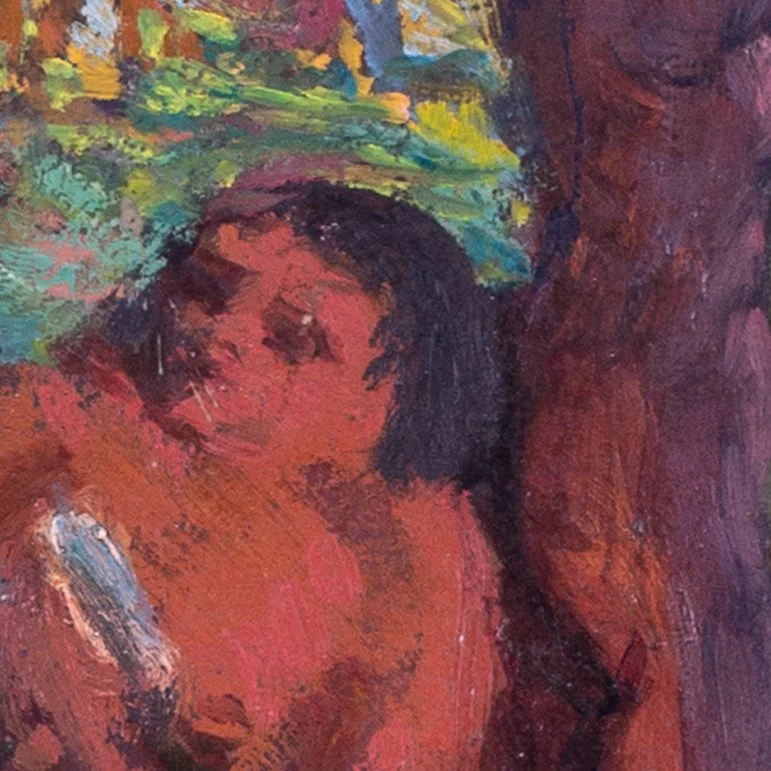
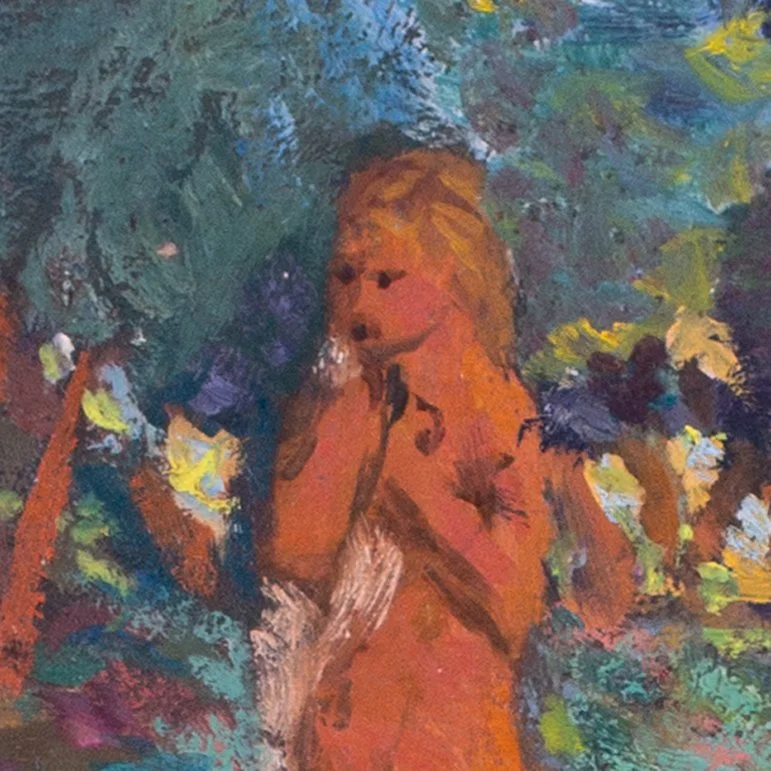
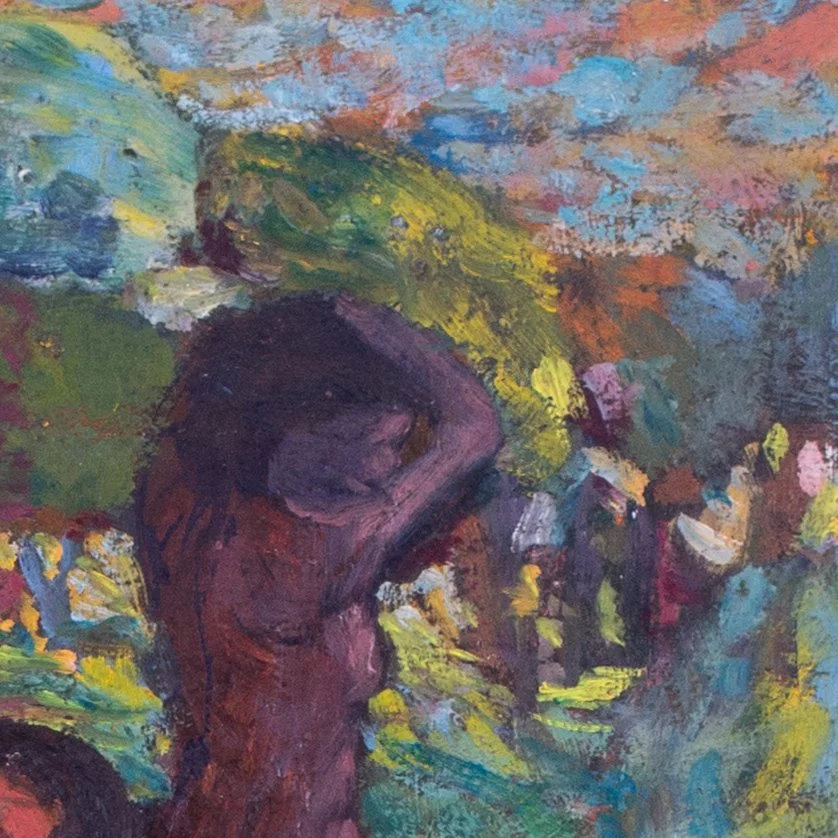
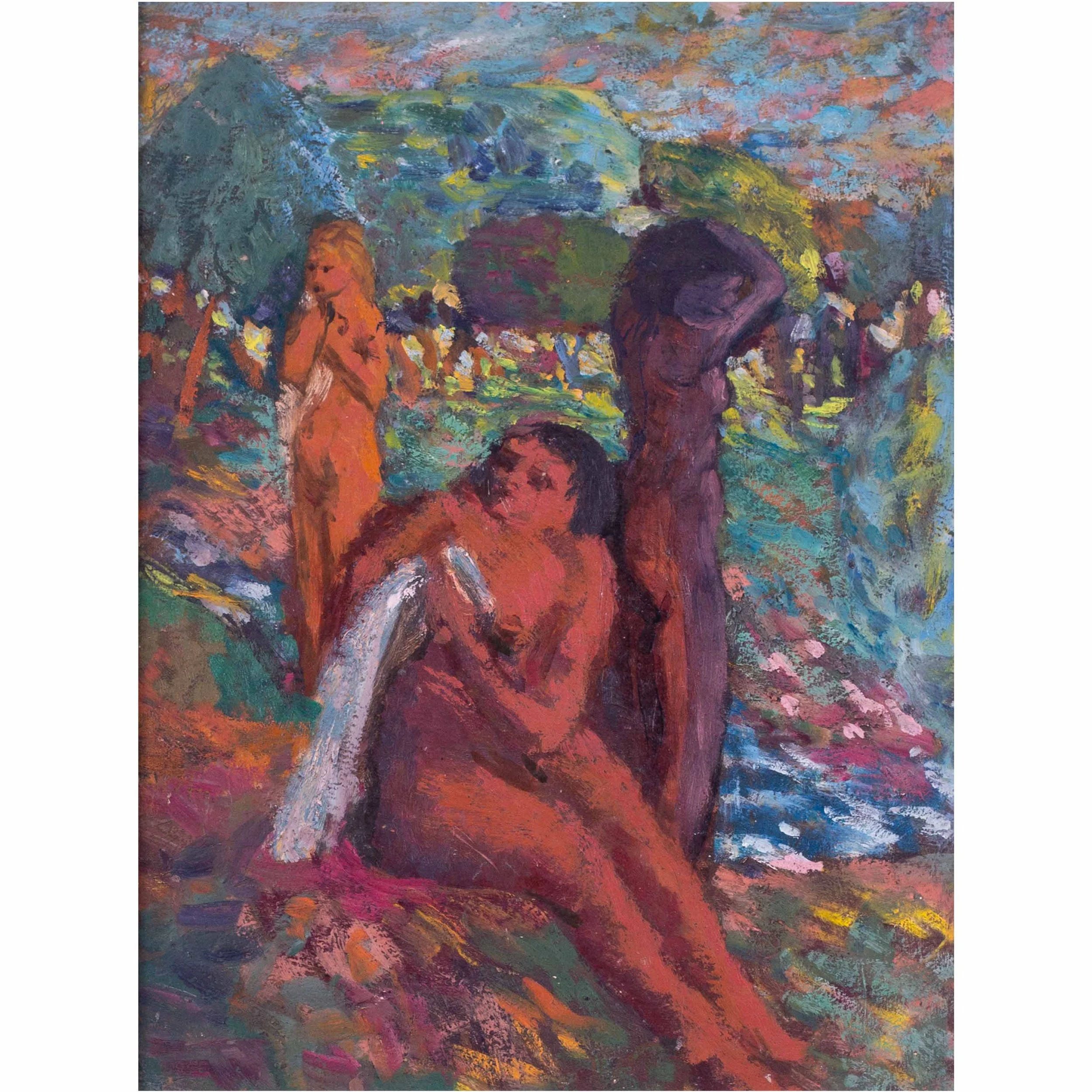
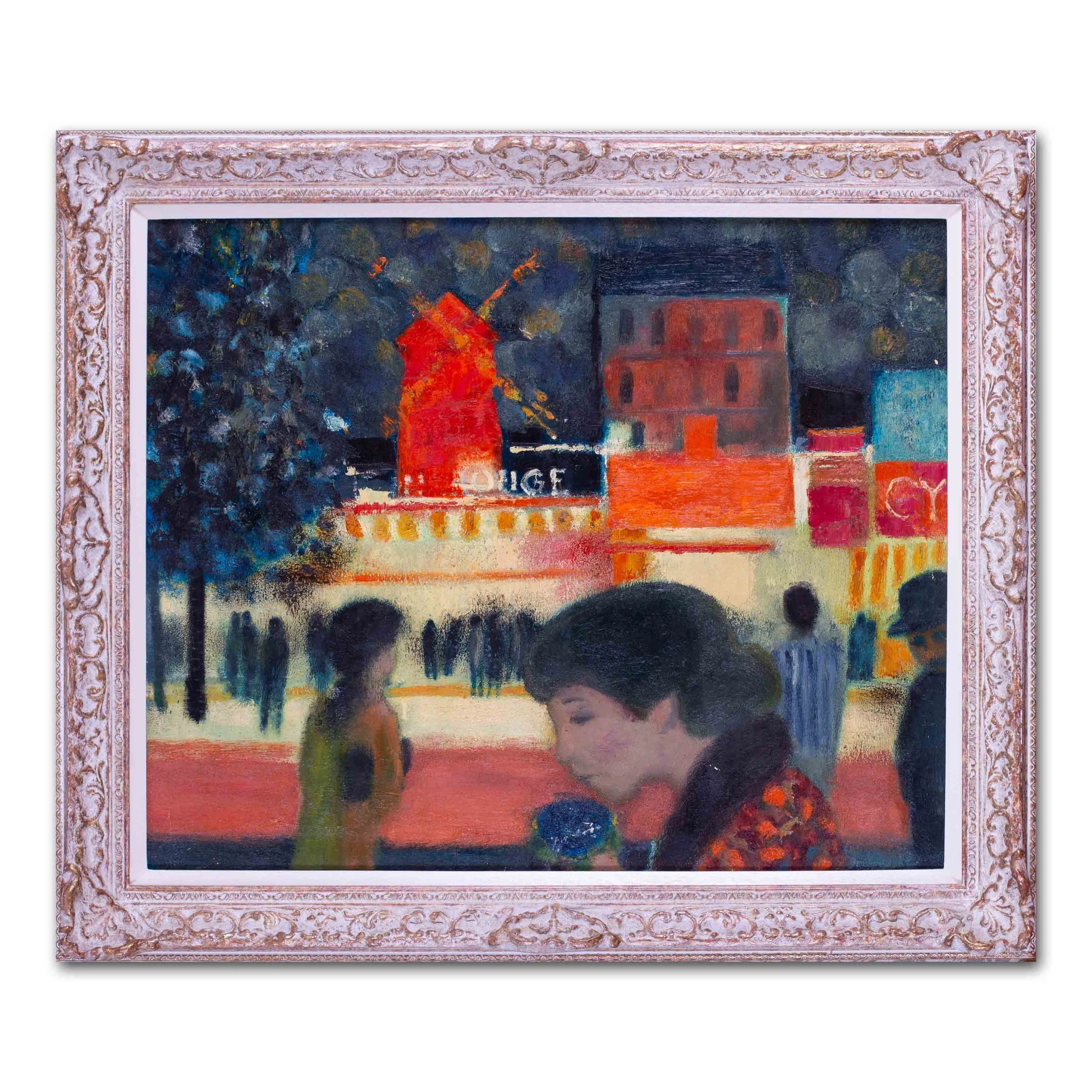
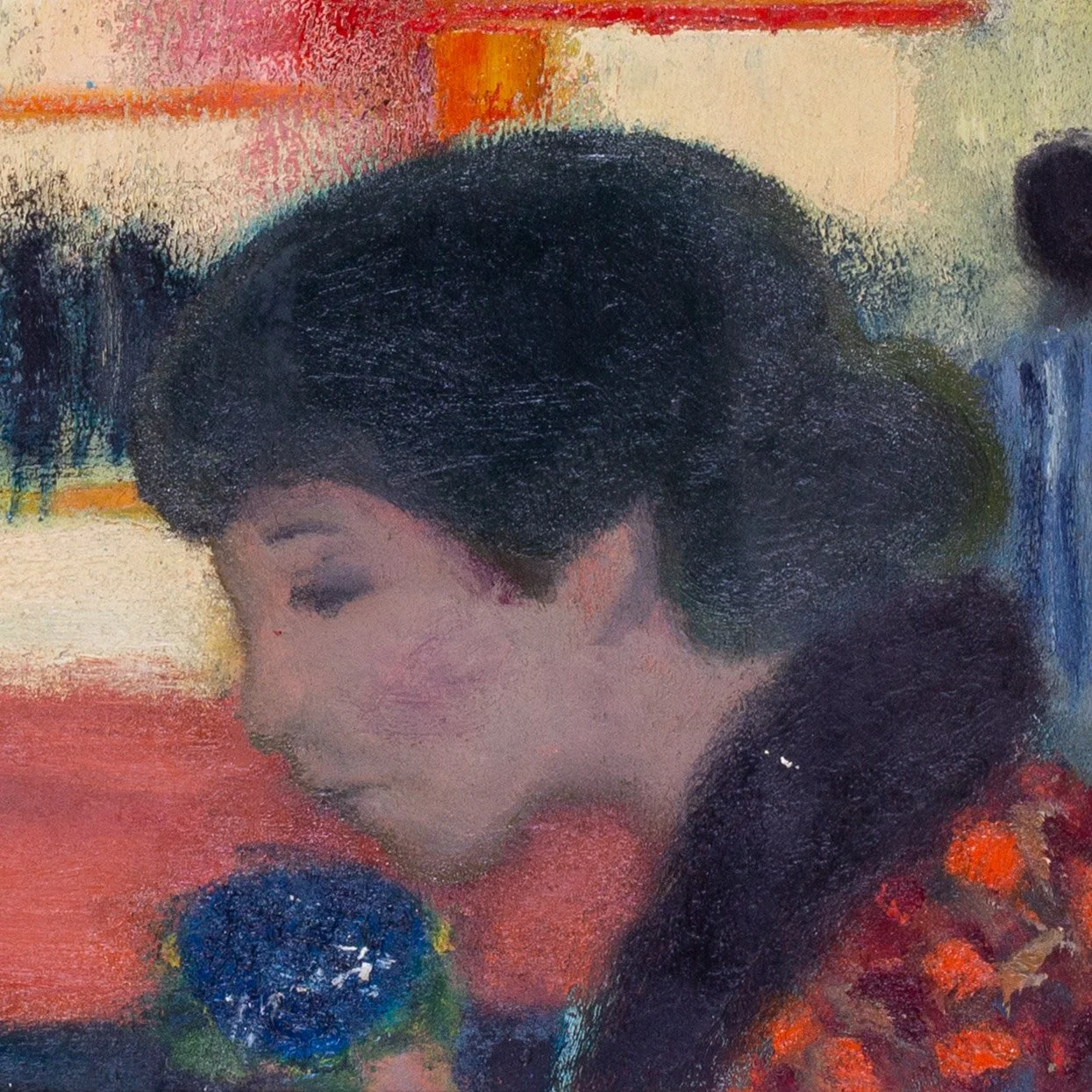
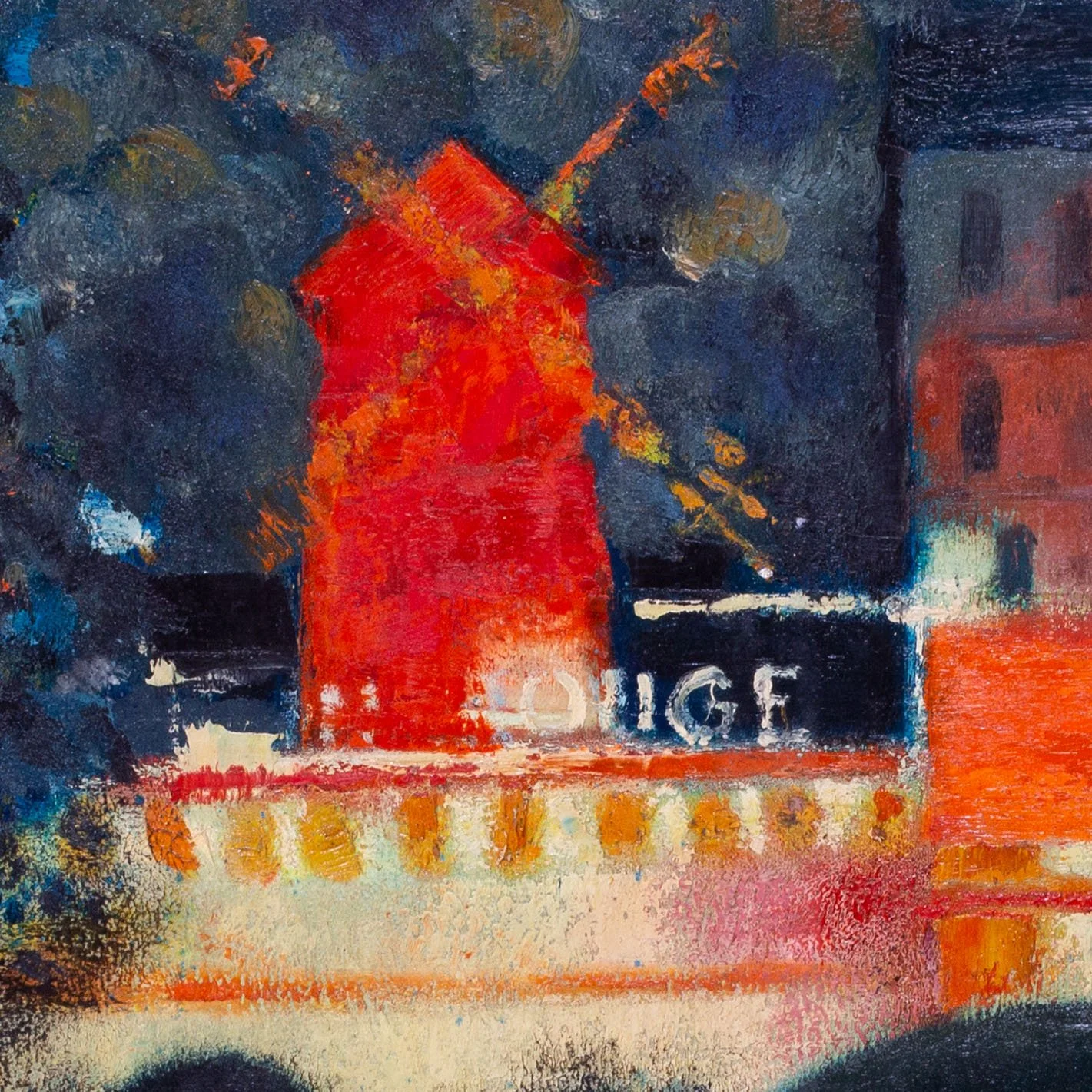
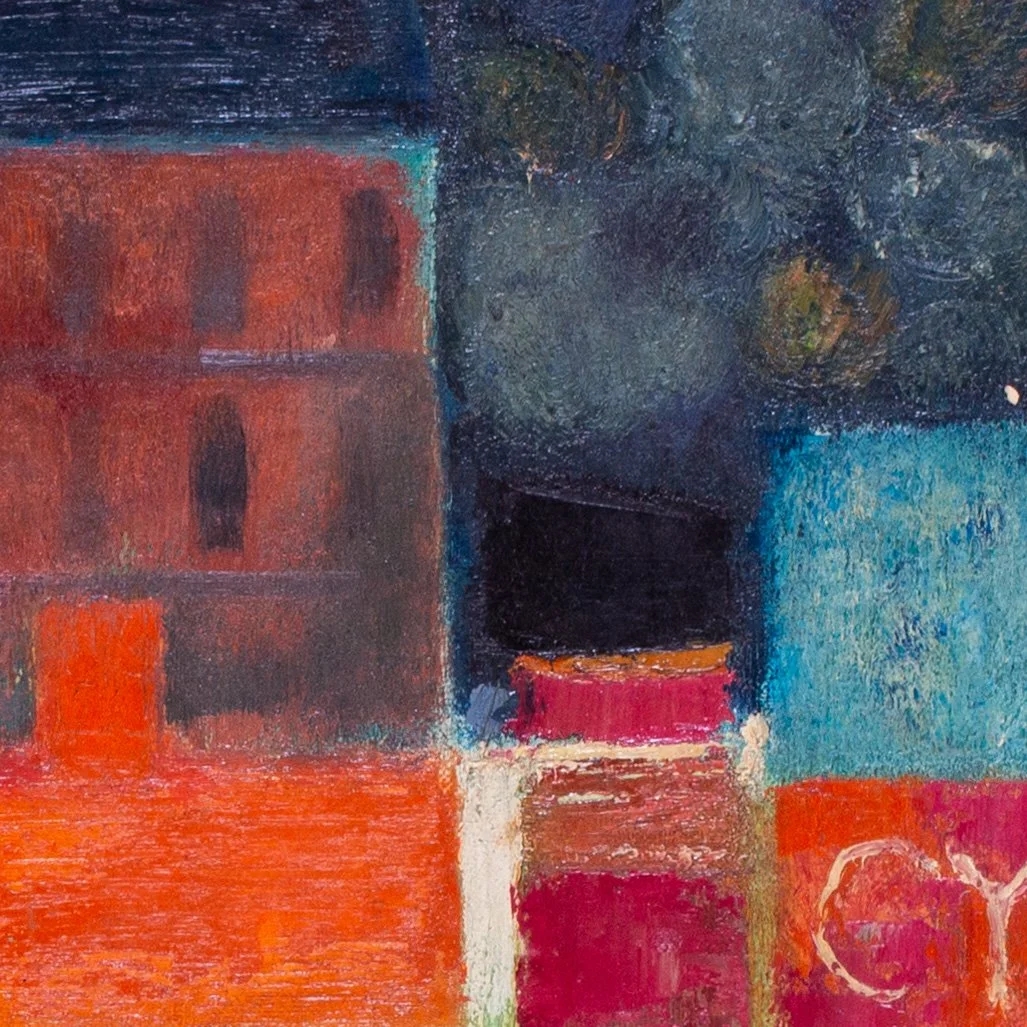
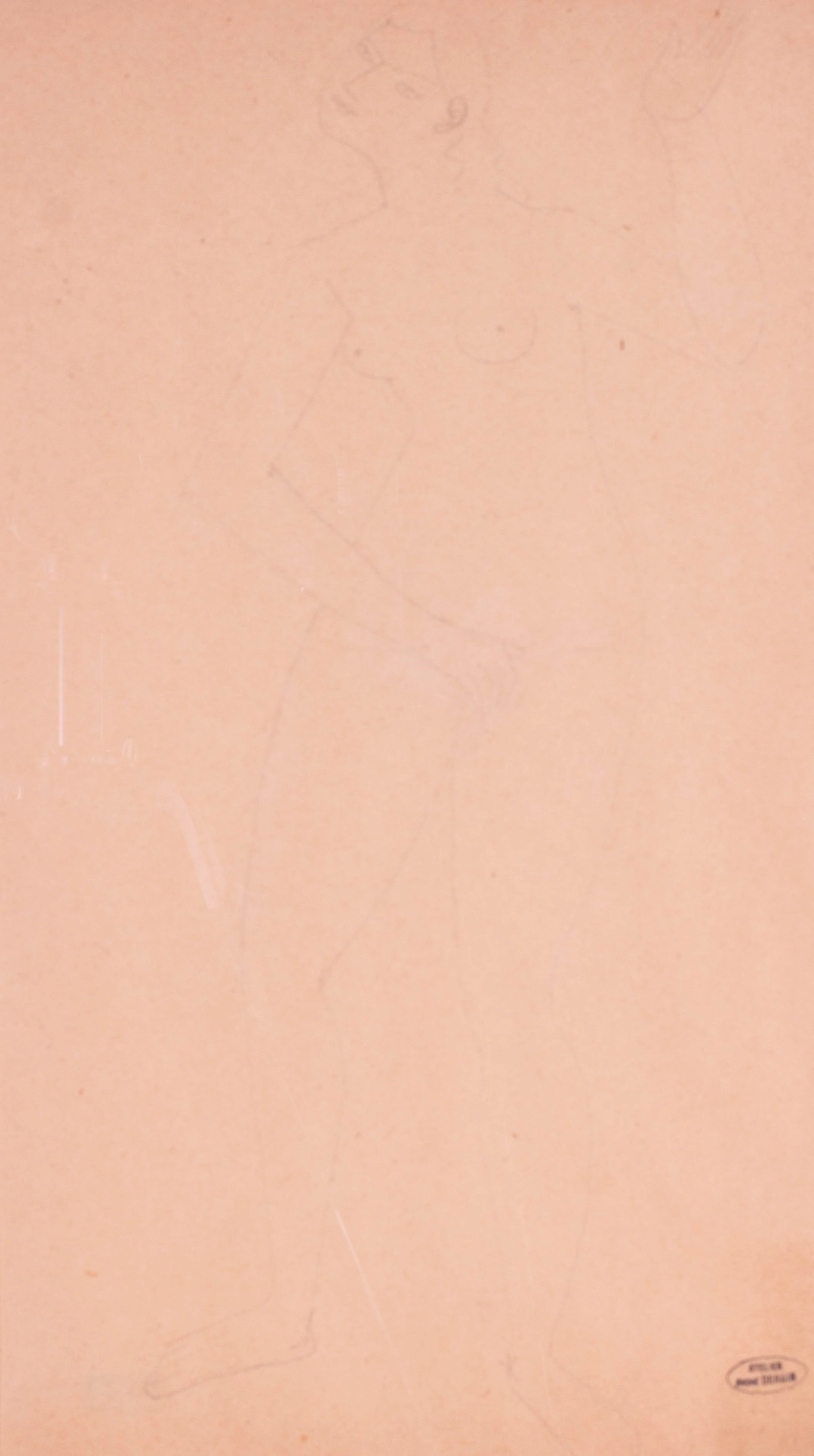
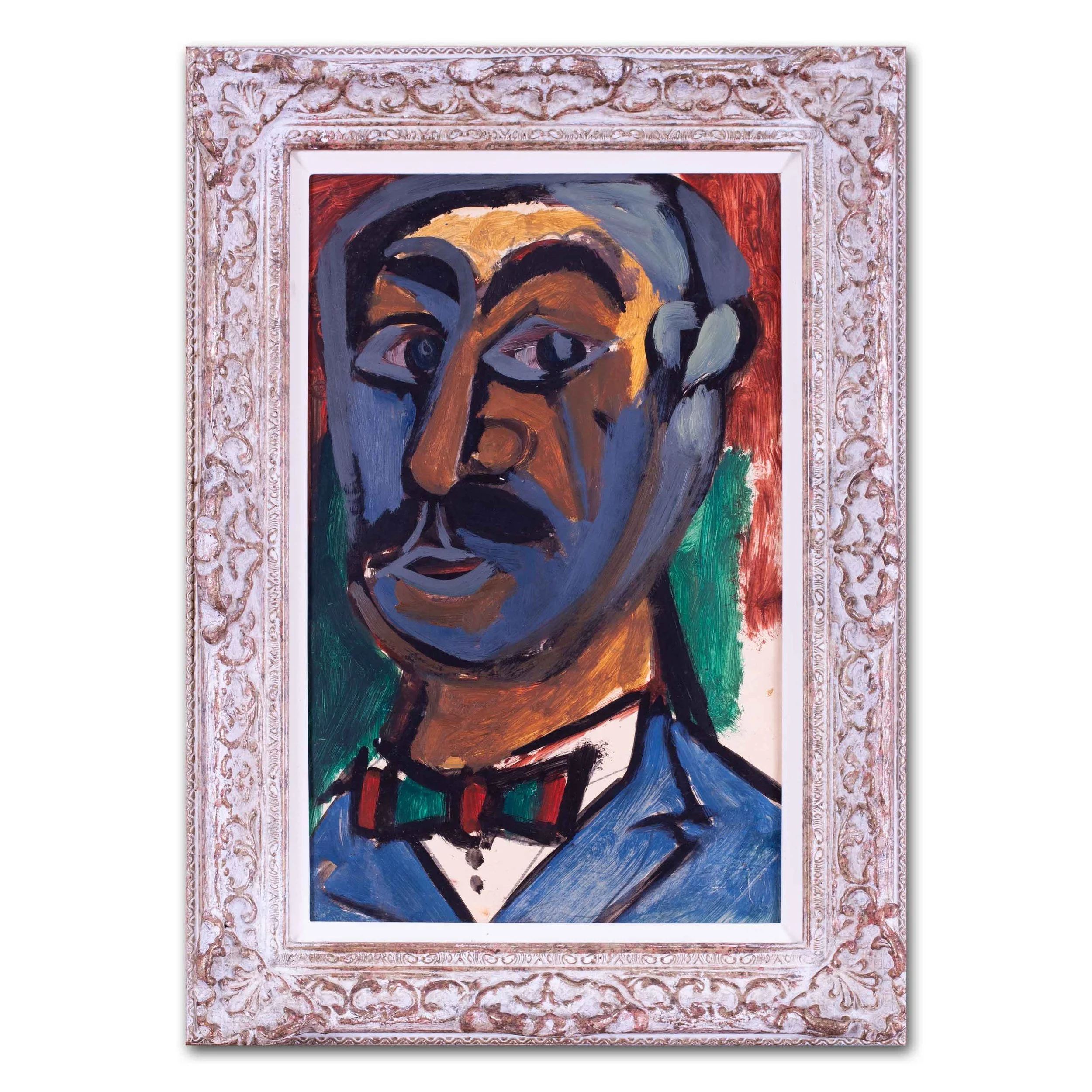
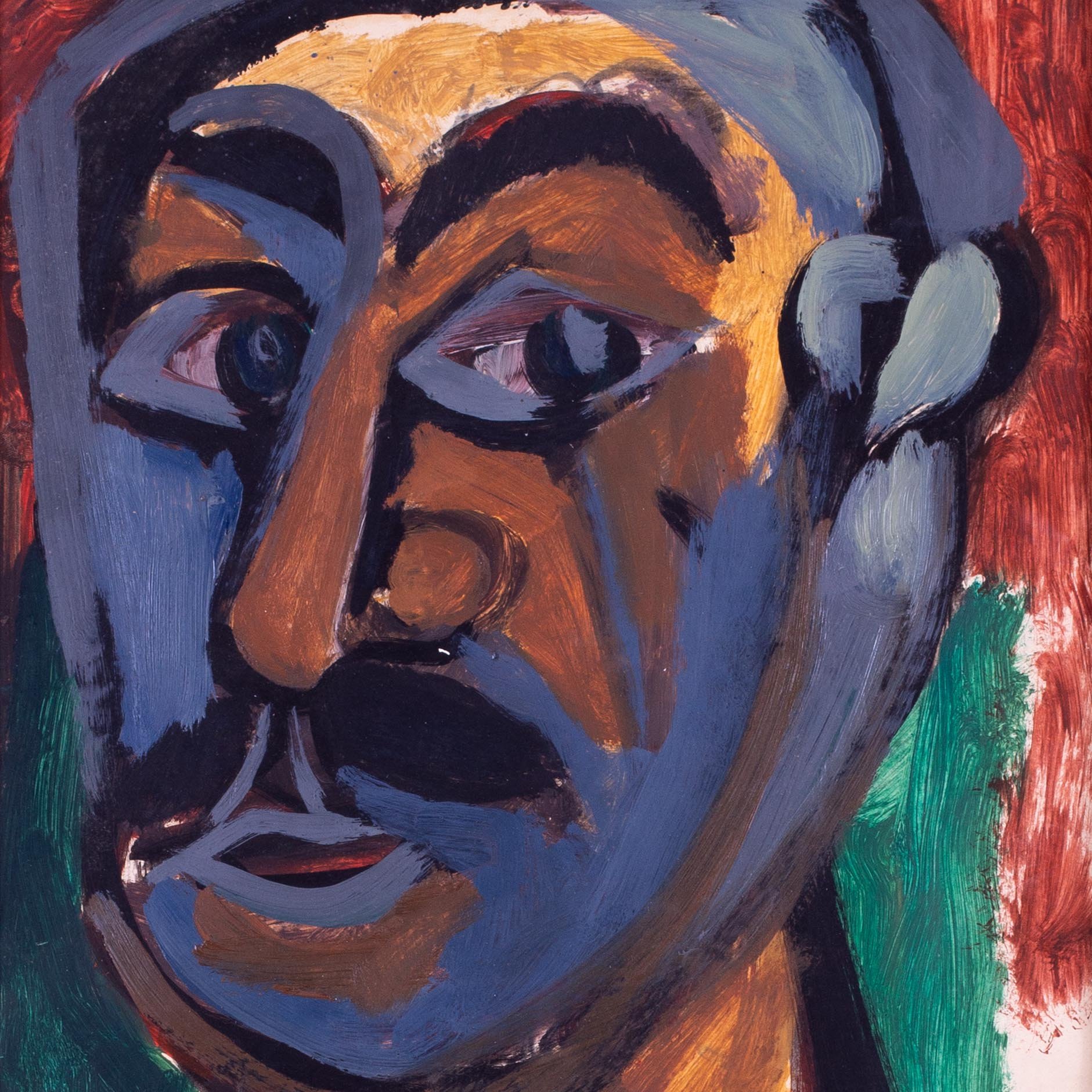
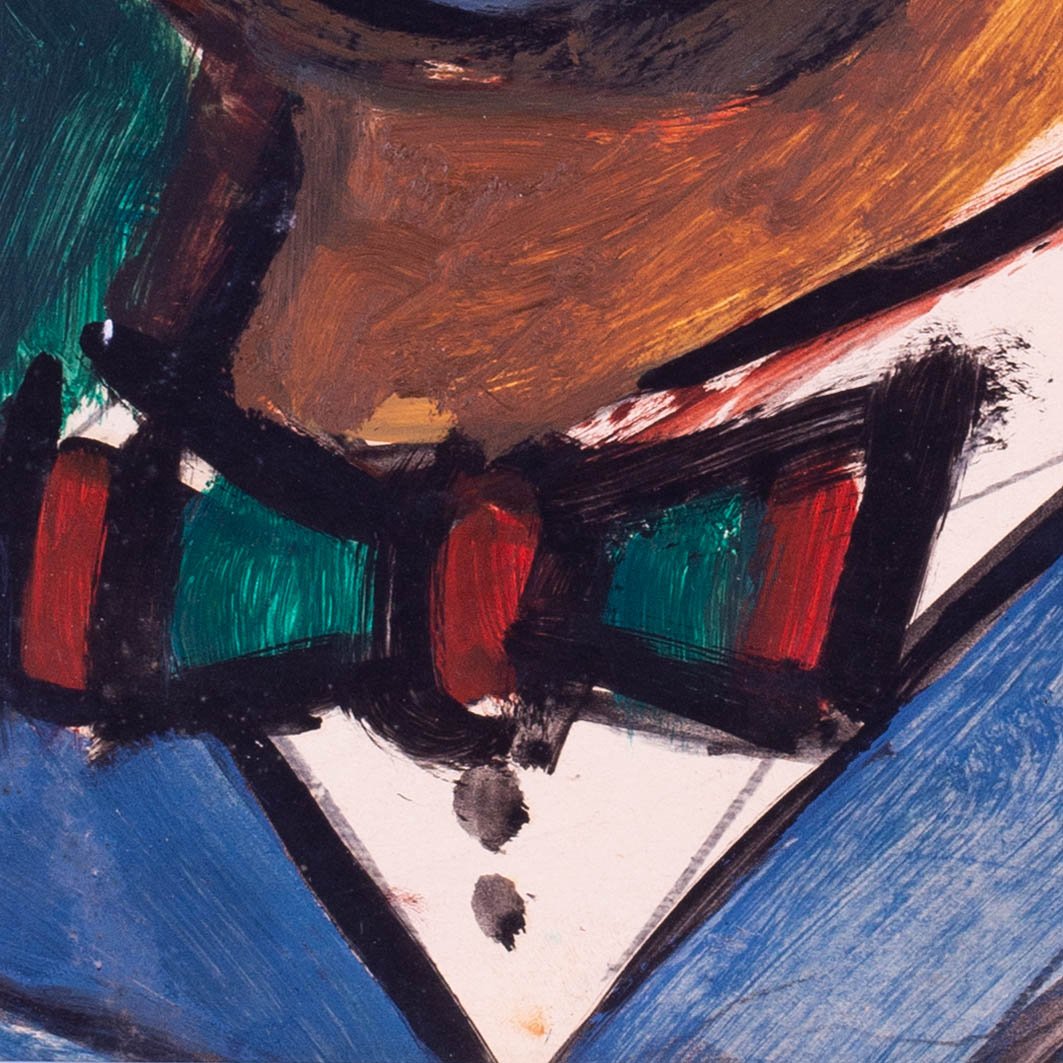
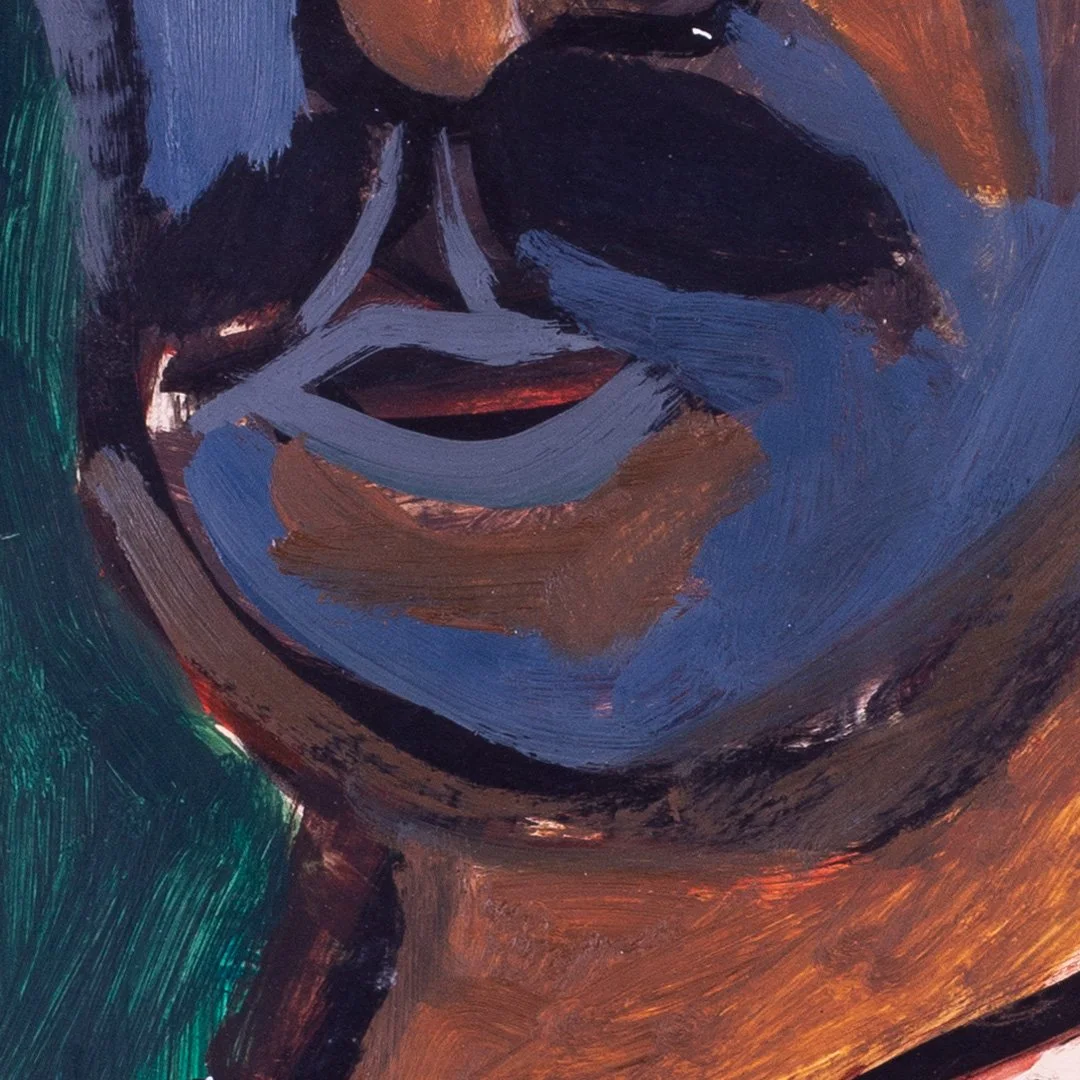
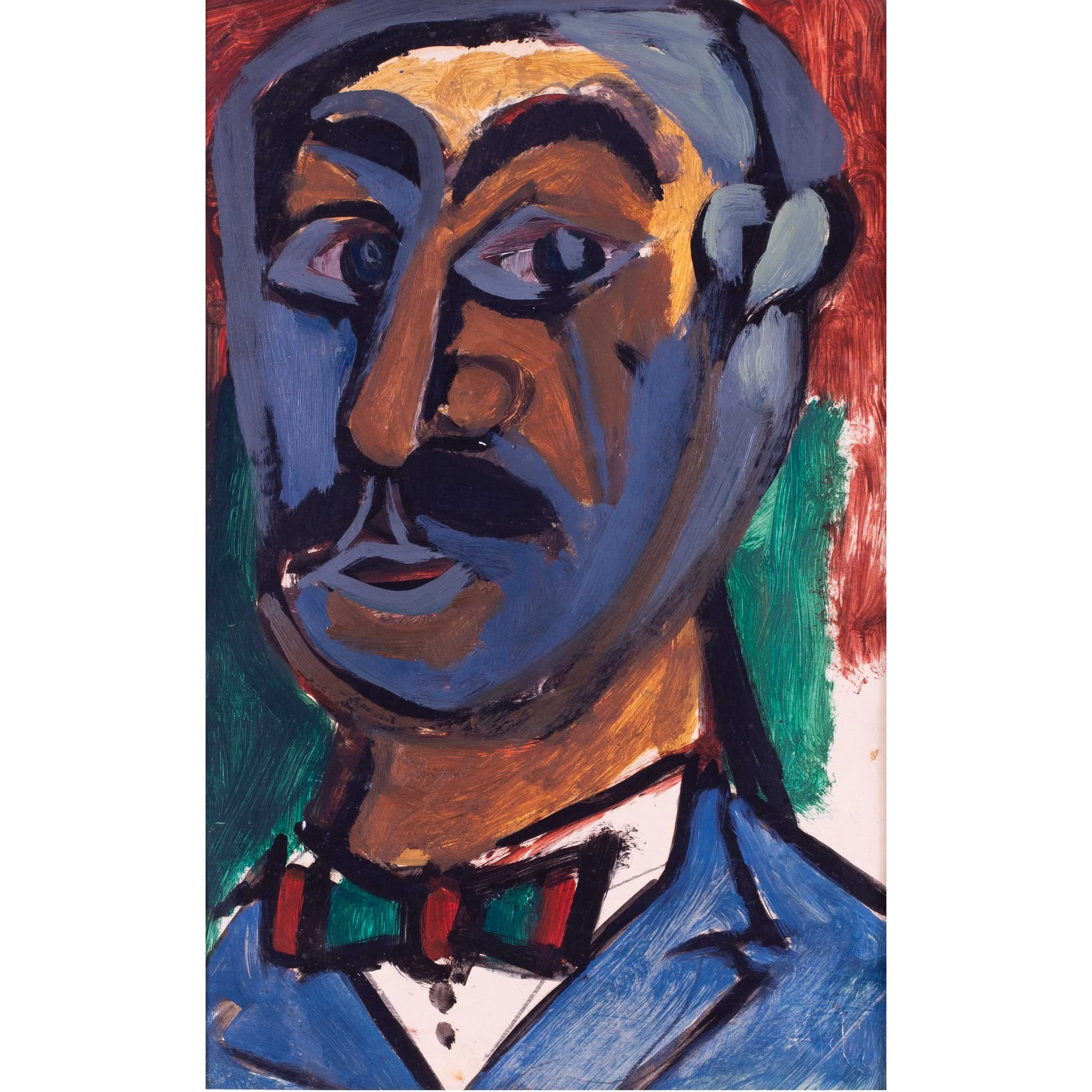
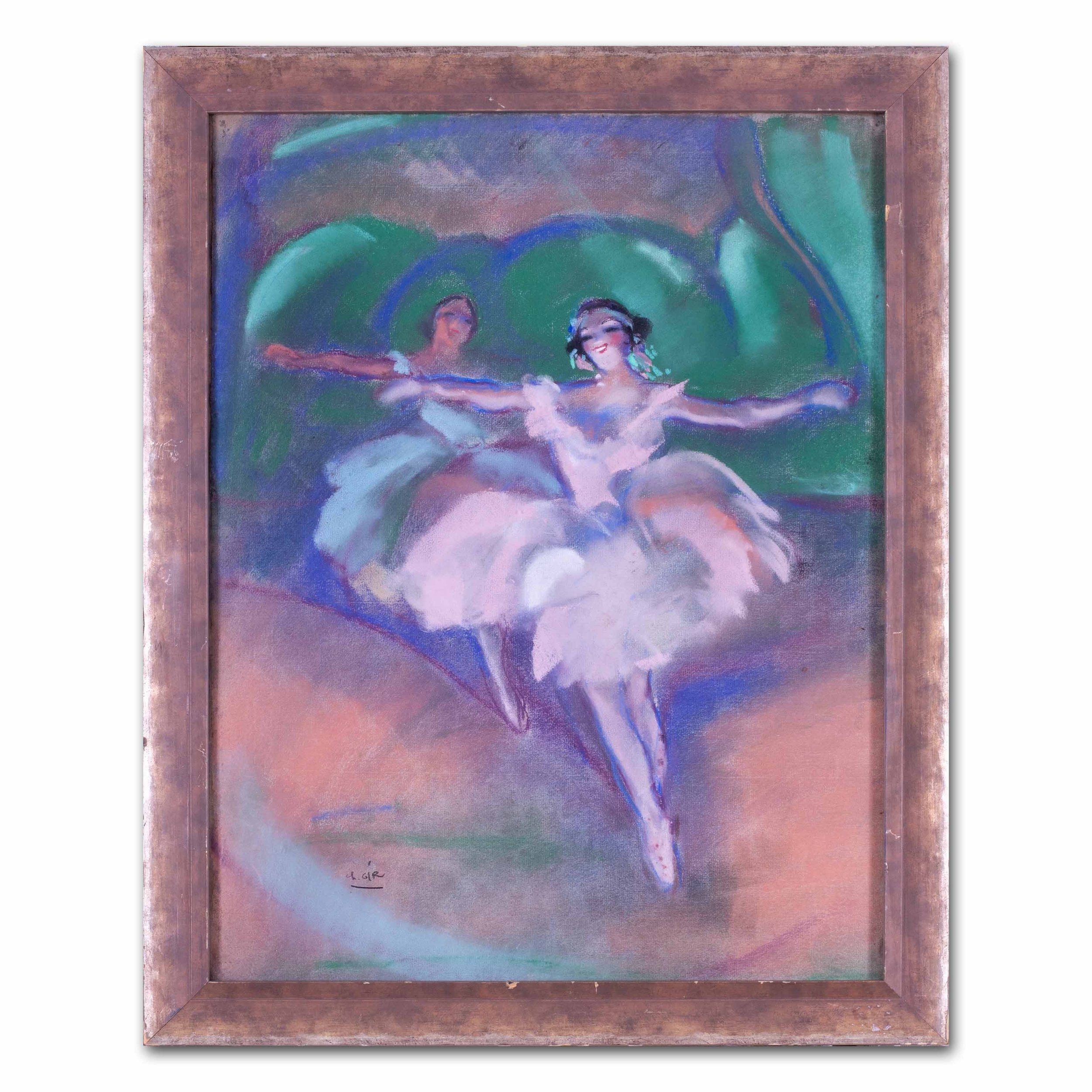
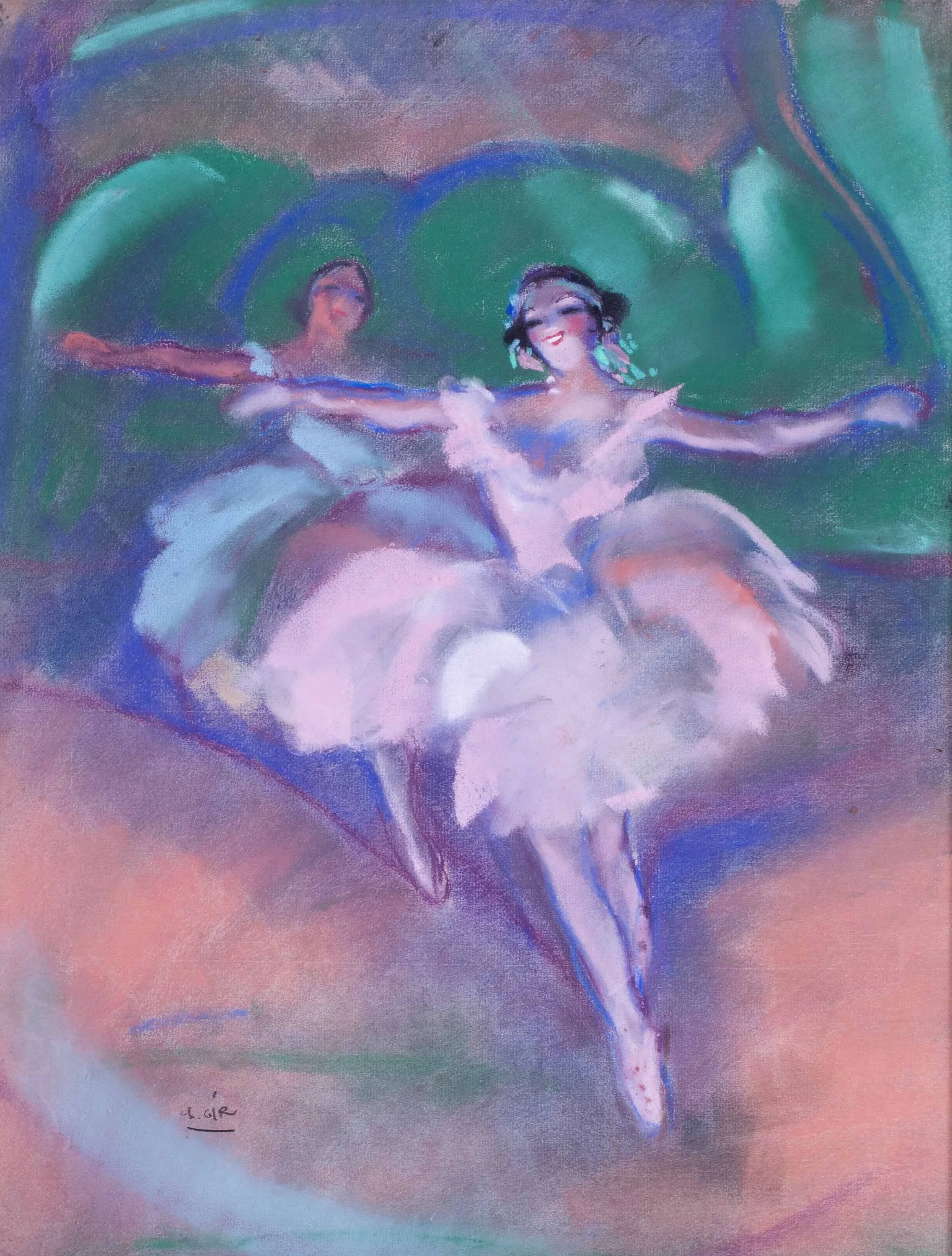
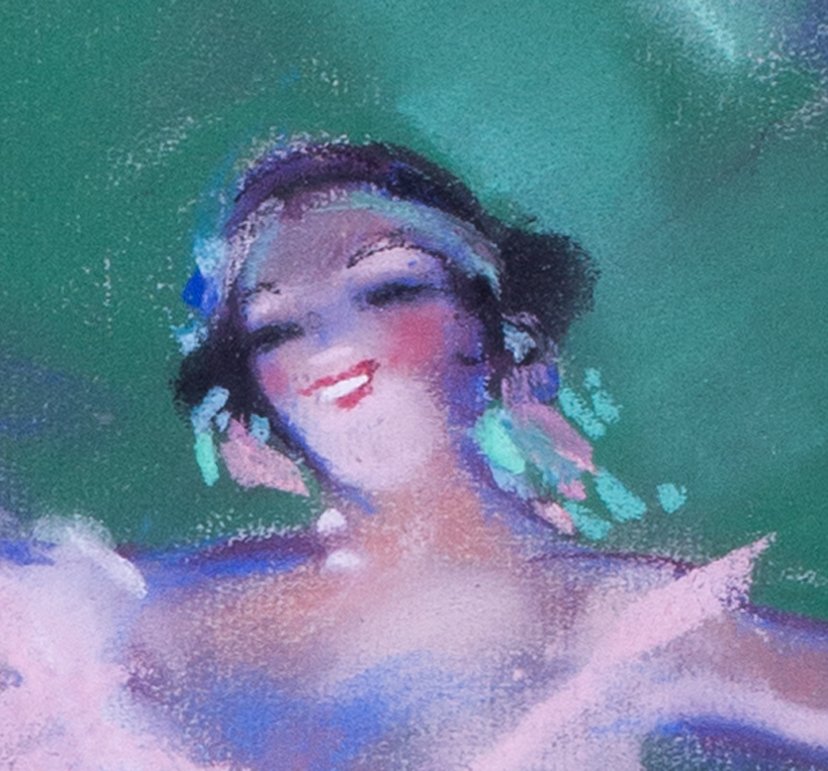
Damas
oil on canvas
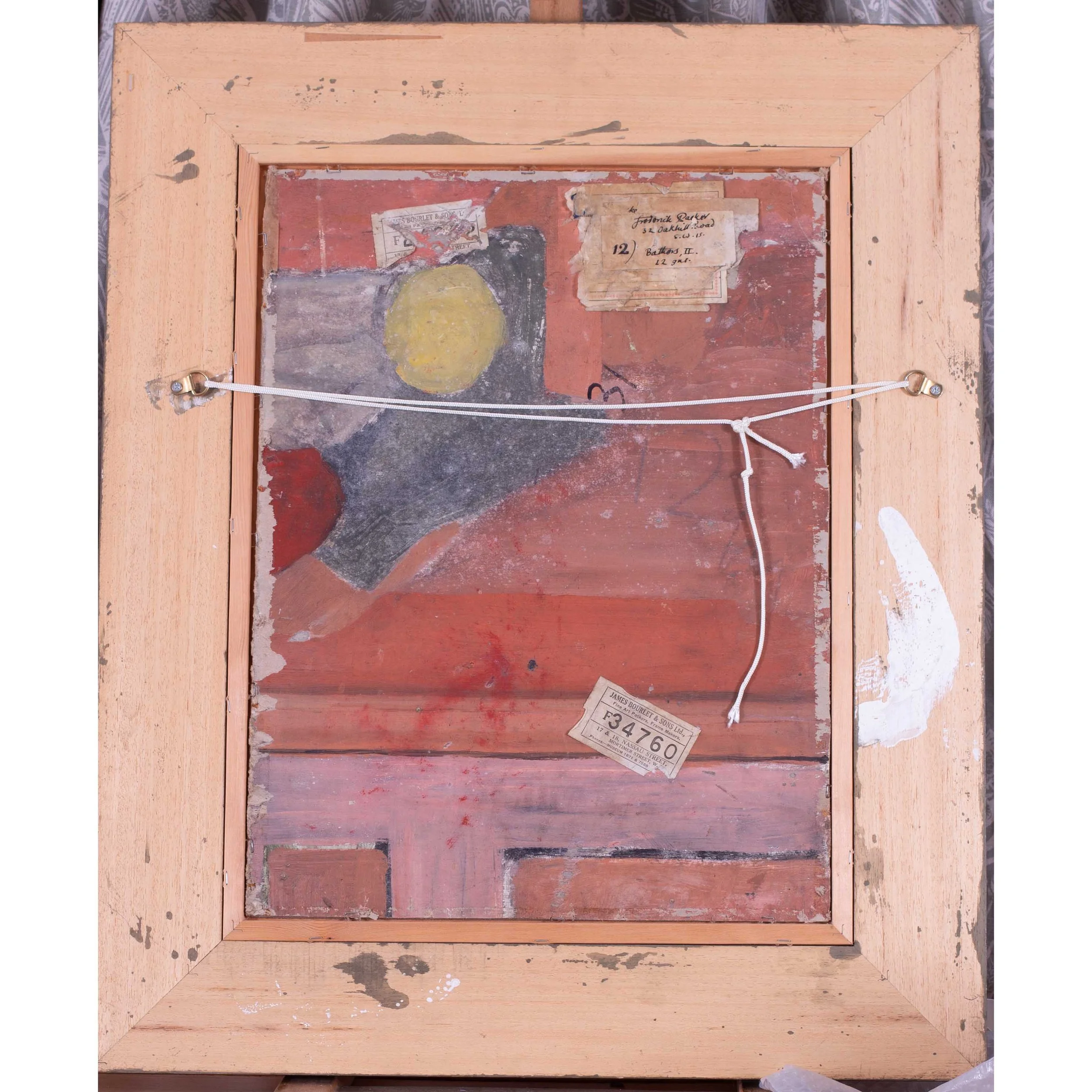
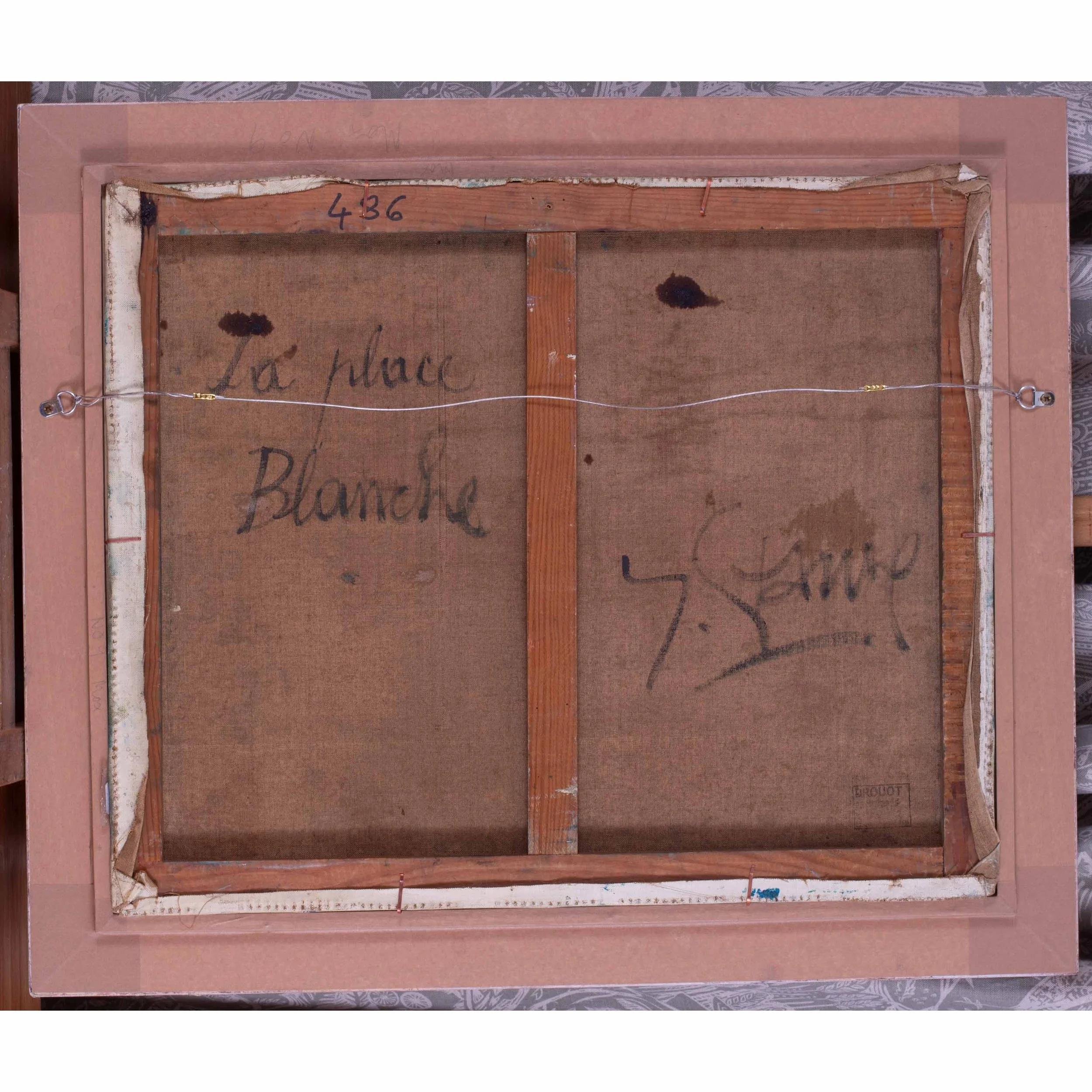
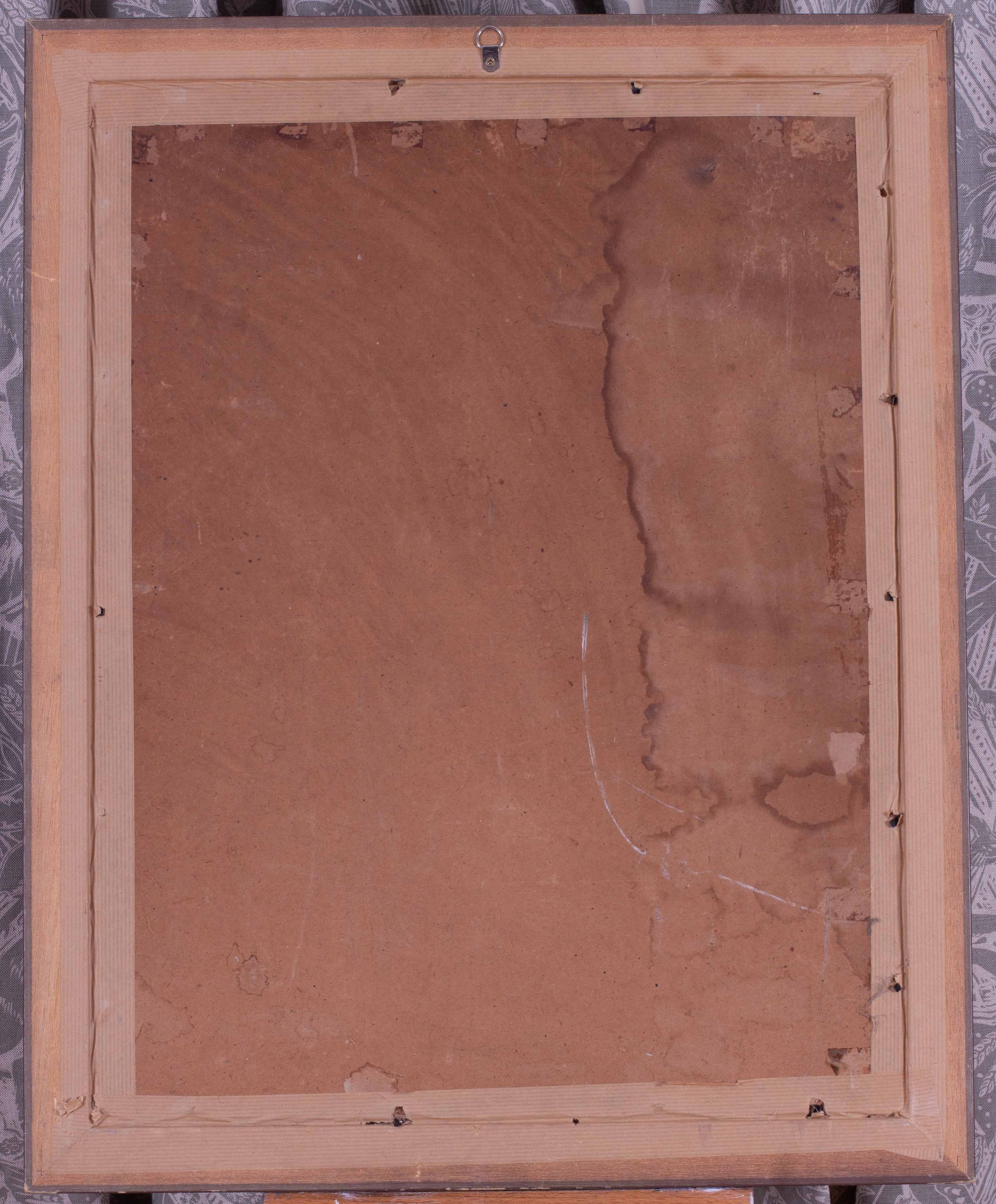
signed ‘PARRA’ (lower left), further signed and inscribed ‘Composition Parra Registra 19’.
25.1/2 x 21.1/8 in. (64.8 x 53.9 cm.)
Provenance: From a private collection of French Naturalist painters
READ MORE »
Ginés Parra (1896–1960)
Ginés Parra, born José Antonio Ramón Parra Menchón in Zurgena, Almería, was a Spanish painter who became an important figure within the cosmopolitan École de Paris. His early life was unusually adventurous: his family emigrated to Algeria when he was a child, where he worked in the mines, before travelling to Argentina and other parts of South America. He later moved to the United States, studying at the Art Students League and National Academy in New York while supporting himself through manual work.
Around 1920 Parra settled in Paris and continued his studies at the École des Beaux-Arts. He quickly became part of the city's vibrant avant-garde community, forming friendships with Pablo Picasso, Julio González and Manuel Ángeles Ortiz. From 1922 he exhibited at the Salon des Indépendants and Salon d'Automne, two of the most important platforms for modern art in Paris. In 1927 he held an exhibition with Joaquín Roca at the Galerie du Taureau, while one of his most acclaimed works, Leda and the Swan, was subsequently acquired by a Boston gallery.
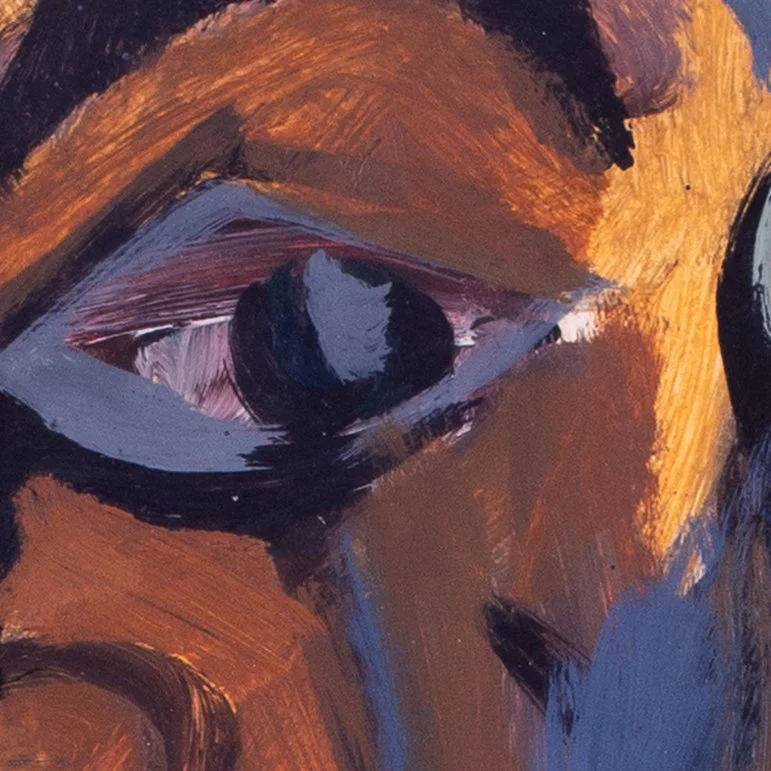
During the 1930s and 1940s Parra's reputation became firmly established, and he was recognised as a member of the Nouvelle École de Paris. His mature style is distinguished by its remarkable simplicity: figures are reduced to broad, monumental forms, with strong outlines, flattened planes and carefully controlled areas of colour. His subjects—often women, workers and ordinary people—are given a quiet, almost sculptural dignity.
Parra exhibited extensively in Europe and internationally, including in Prague, Brussels, Stockholm, London and numerous cities across Latin America. His work is now represented in Spanish museum collections, including the Museo Patio Herreriano and MACVAC.
Gines Parra (Spanish, 1896 – 1960)
Damas
oil on canvas
signed ‘PARRA’ (lower left), further signed and inscribed ‘Composition Parra Registra 19’.
25.1/2 x 21.1/8 in. (64.8 x 53.9 cm.)
Provenance: From a private collection of French Naturalist painters
READ MORE »
Ginés Parra (1896–1960)
Ginés Parra, born José Antonio Ramón Parra Menchón in Zurgena, Almería, was a Spanish painter who became an important figure within the cosmopolitan École de Paris. His early life was unusually adventurous: his family emigrated to Algeria when he was a child, where he worked in the mines, before travelling to Argentina and other parts of South America. He later moved to the United States, studying at the Art Students League and National Academy in New York while supporting himself through manual work.
Around 1920 Parra settled in Paris and continued his studies at the École des Beaux-Arts. He quickly became part of the city's vibrant avant-garde community, forming friendships with Pablo Picasso, Julio González and Manuel Ángeles Ortiz. From 1922 he exhibited at the Salon des Indépendants and Salon d'Automne, two of the most important platforms for modern art in Paris. In 1927 he held an exhibition with Joaquín Roca at the Galerie du Taureau, while one of his most acclaimed works, Leda and the Swan, was subsequently acquired by a Boston gallery.
During the 1930s and 1940s Parra's reputation became firmly established, and he was recognised as a member of the Nouvelle École de Paris. His mature style is distinguished by its remarkable simplicity: figures are reduced to broad, monumental forms, with strong outlines, flattened planes and carefully controlled areas of colour. His subjects—often women, workers and ordinary people—are given a quiet, almost sculptural dignity.
Parra exhibited extensively in Europe and internationally, including in Prague, Brussels, Stockholm, London and numerous cities across Latin America. His work is now represented in Spanish museum collections, including the Museo Patio Herreriano and MACVAC.

 Image 1 of 8
 Image 2 of 8
 Image 3 of 8
 Image 4 of 8
 Image 5 of 8
 Image 6 of 8
 Image 7 of 8
 Image 8 of 8