Edward Gordon Craig, (British, 1872 – 1966)
Army of Fortinbras
Woodcut
Signed with monogram (lower right)
4.3/4 x 8.1/4 in. (12 x 20.8cm.)
Read More »
Edward Gordon Craig (1872–1966), son of the actress Ellen Terry was a pioneering English modernist who used wood-engraving as a visual laboratory to revolutionize 20th-century stage design. Rejecting Victorian realism, he learned wood-carving from the Beggarstaff Brothers, mastering a stark chiaroscuro style where solid black ink and raw paper dictated form. His early prints, like The Peacock (1899), served as architectural blueprints for his minimalist, light-driven theatrical sets.His printmaking closely mirrored his radical performance philosophies and avant-garde circle.
Influenced by his partner, dancer Isadora Duncan, Craig used his self-published journals, The Page and The Mask, to champion abstract art and reduce human figures to geometric silhouettes. This graphic reductionism directly fueled his famous "Über-marionette" theory, which sought to replace unpredictable human actors with ideal, puppet-like forms under total directorial control.
The pinnacle of his graphic work was the 1928 Cranach Press edition of Hamlet, commissioned by Count Harry Kessler. Craig cut over eighty woodblocks, including Ophelia and The Ghost, featuring figures dissolving into geometric lines. These prints perfectly replicated the kinetic, folding screens he designed for his legendary 1912 Moscow Hamlet with Konstantin Stanislavsky, permanently bridging the gap between fine printmaking and radical stage design.

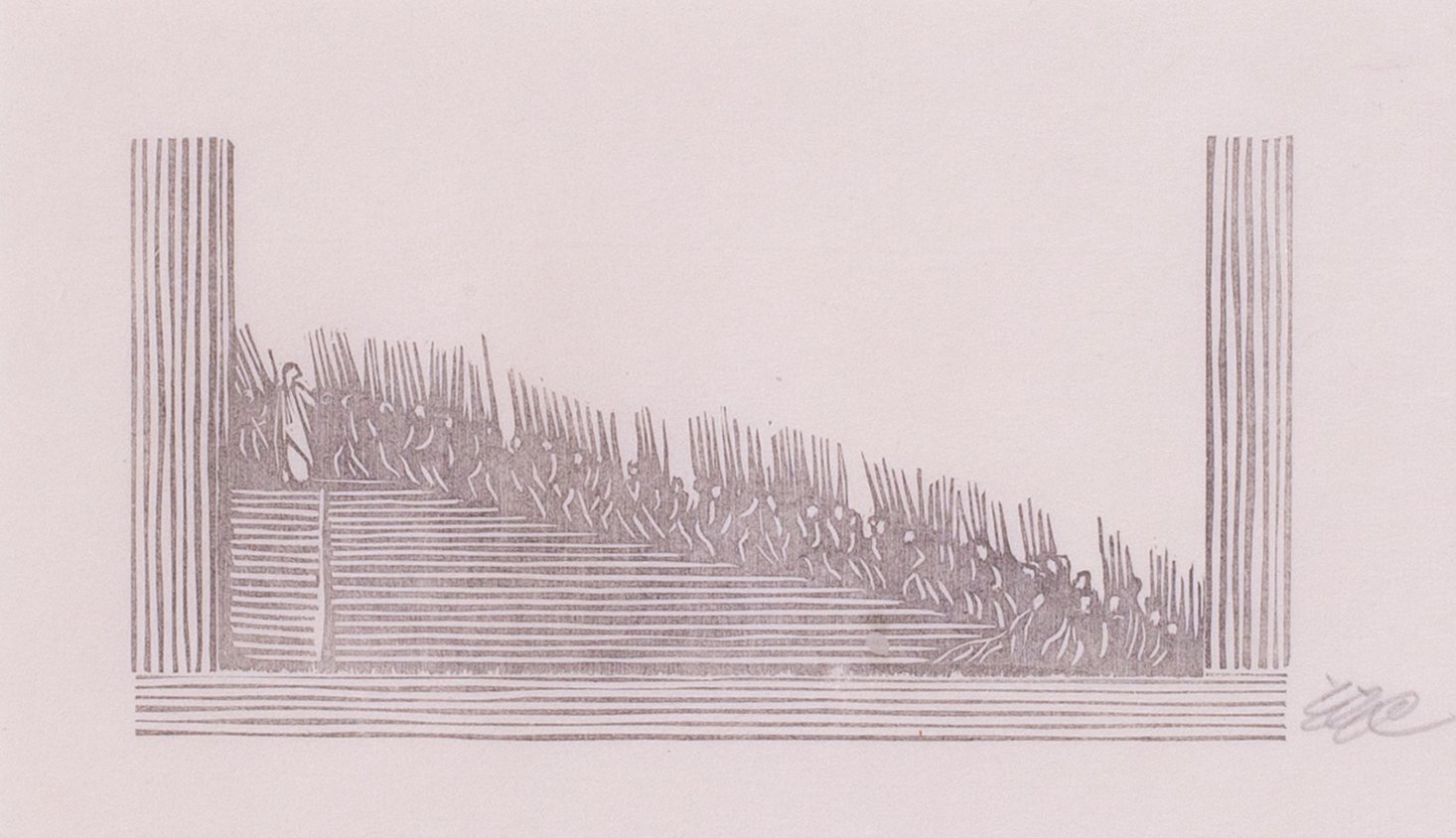 Image 1 of 6
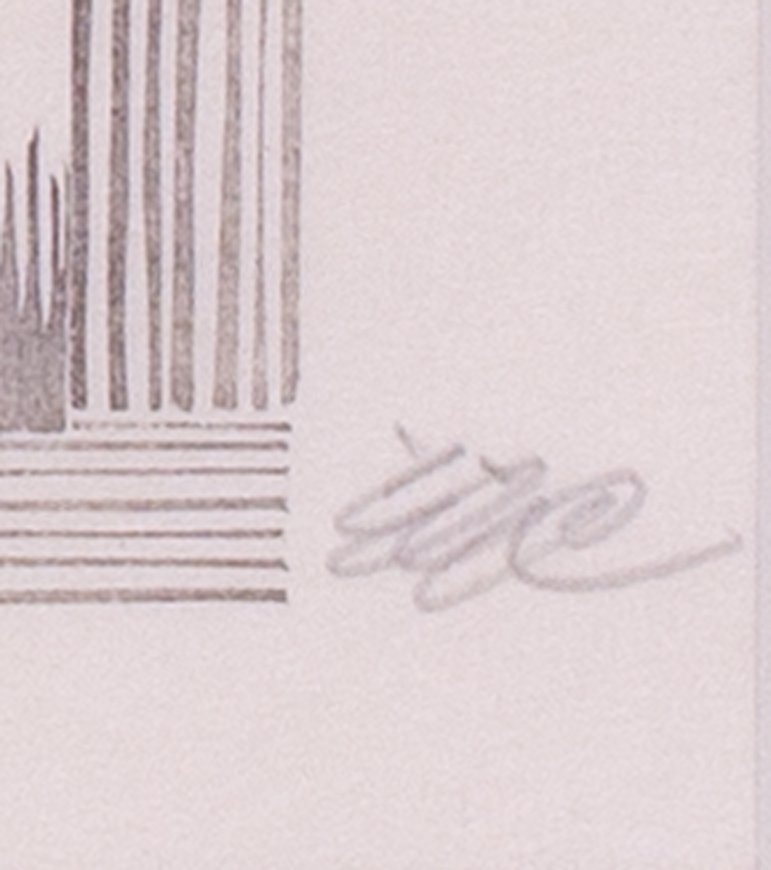 Image 2 of 6
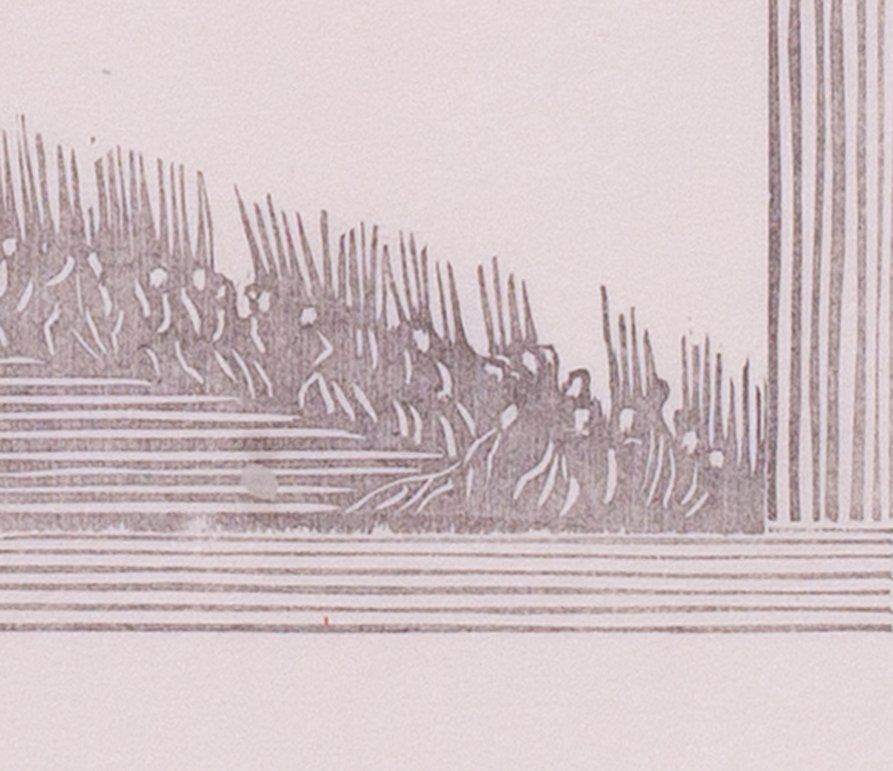 Image 3 of 6
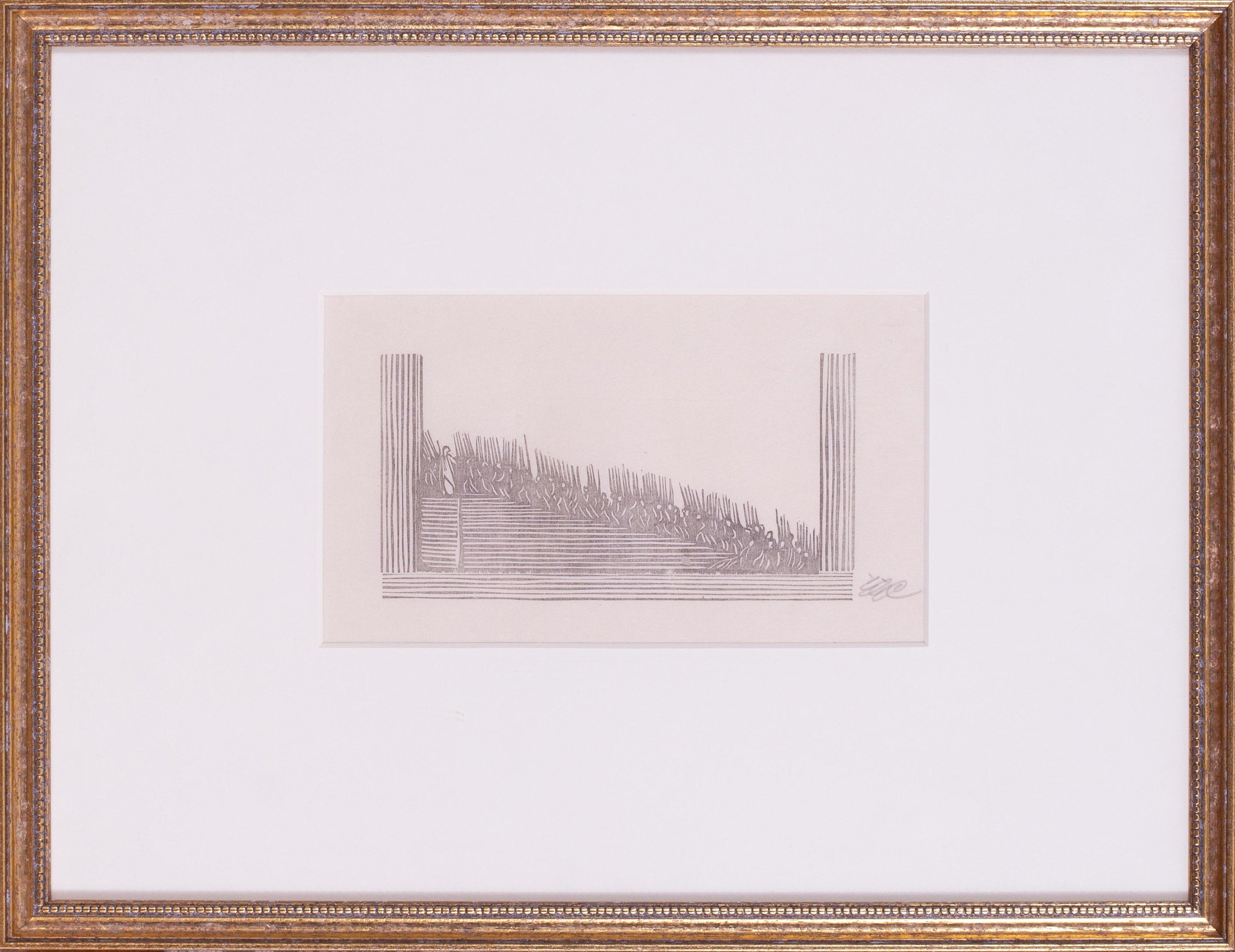 Image 4 of 6
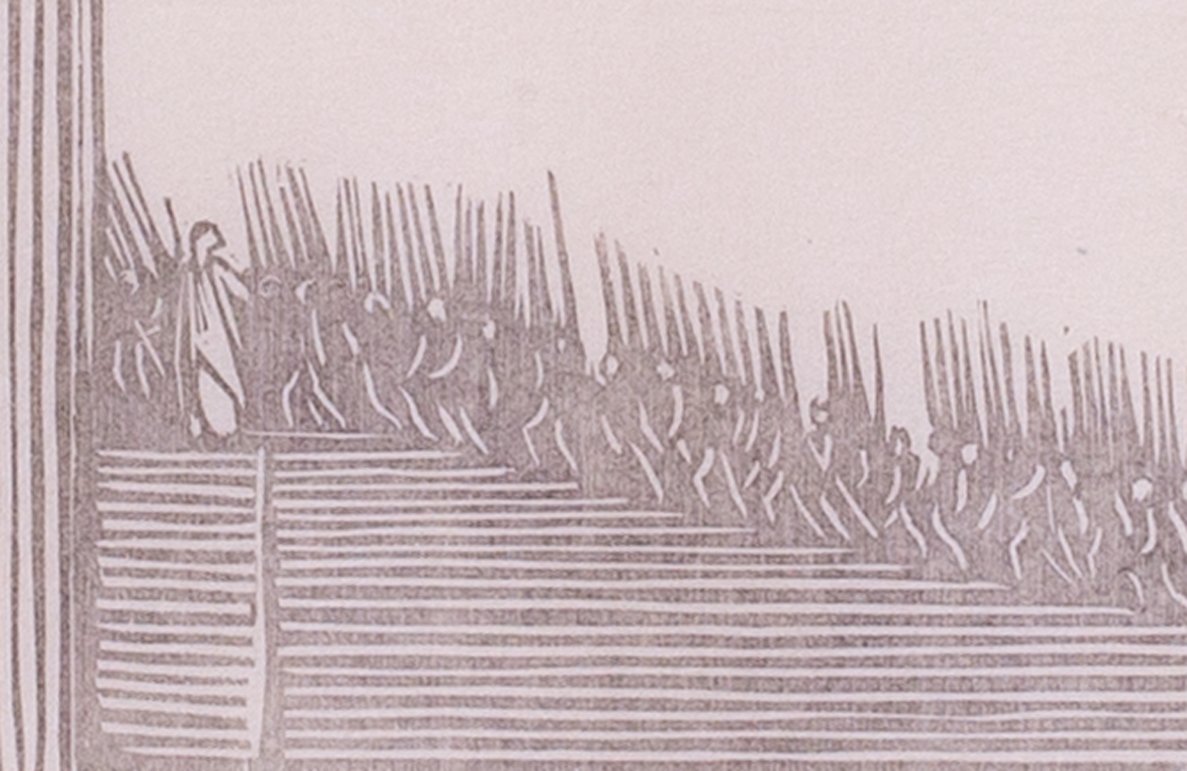 Image 5 of 6
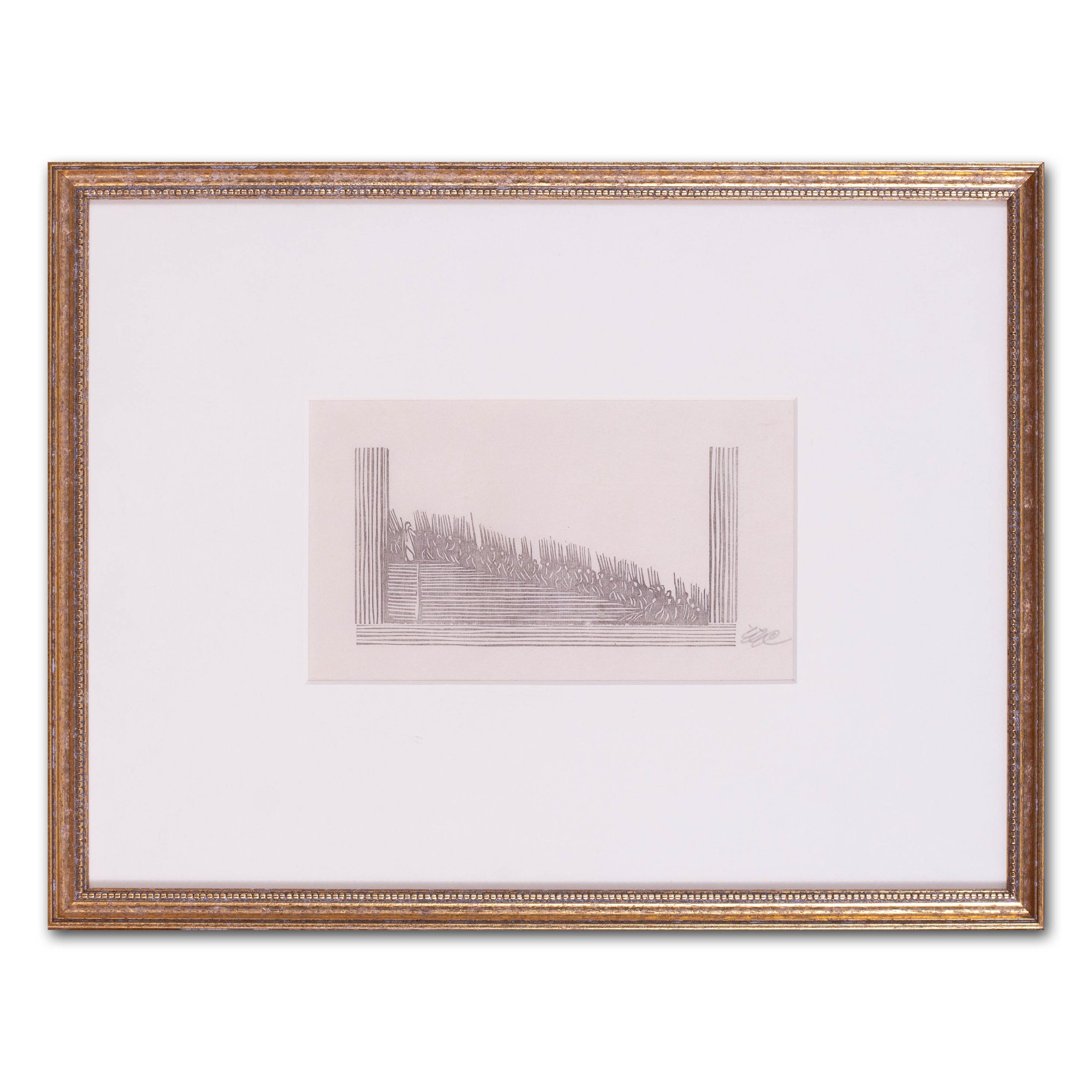 Image 6 of 6