
Walter Sickert : WORKING NOTES EXHIBITION at Charleston Lewes
‘Walter Sickert : Working Notes’ exhibition at Charleston Lewes
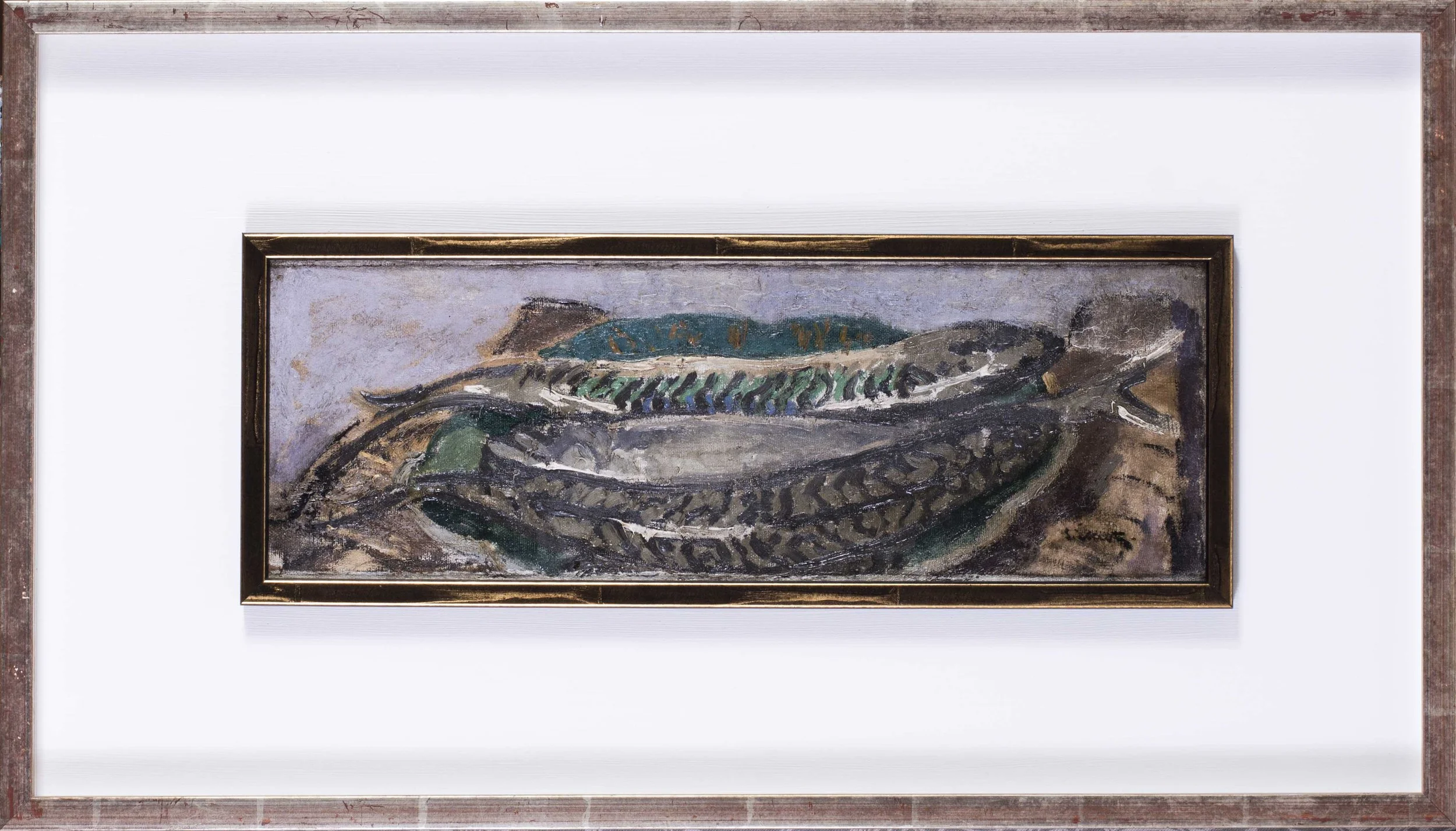
We are delighted to announce that one of our important works by Walter Sickert is currently on display at Charleston Lewes as part of the exhibition Walter Sickert: Working Notes, running from 2 May to 11 October.
The painting, Maquereaux (Mackerel), is a striking example of Sickert’s enduring fascination with still life and his distinctive approach to pictorial structure and tone. Executed in oil on canvasboard, the work reflects the artist’s ability to transform seemingly ordinary subject matter into compositions of psychological depth and modernity.
Sickert, a central figure in the development of British modern art and a member of the Camden Town Group, played a pivotal role in the transition from Impressionism to early Modernism. His innovative handling of space and his interest in the rhythms of everyday life helped shape a distinctly British response to Post-Impressionism.
The subject of Maquereaux (Mackerel) also reflects a key period in Sickert’s career, during which he worked in Dieppe and became closely engaged with scenes of everyday working life. Works from this period often demonstrate his interest in domestic interiors and still-life subjects, rendered with a deliberately understated but highly sophisticated sense of composition.
The painting has a distinguished provenance, having passed through several notable collections and galleries, including early ownership by Durand-Ruel et Fils in Paris in the early 20th century, and later appearing in important London sales and exhibitions over the course of the 20th century. Its exhibition history reflects sustained scholarly and collector interest in Sickert’s work across both Britain and Europe.
We are honoured to have this work included in Working Notes at Charleston Lewes, an exhibition that offers an important exploration of Sickert’s practice and legacy. The show brings together key works that highlight his experimental approach and his lasting influence on British modern art.
We are grateful to the curators at Charleston Lewes for including this painting in such a thoughtful presentation, and we warmly encourage visitors to see the exhibition while it is on display.